All species › Nightjars › Nightjars and nighthawks › Common Pauraque
Common Pauraque | Nyctidromus albicollis
Pauraque | Chotacabras Pauraque
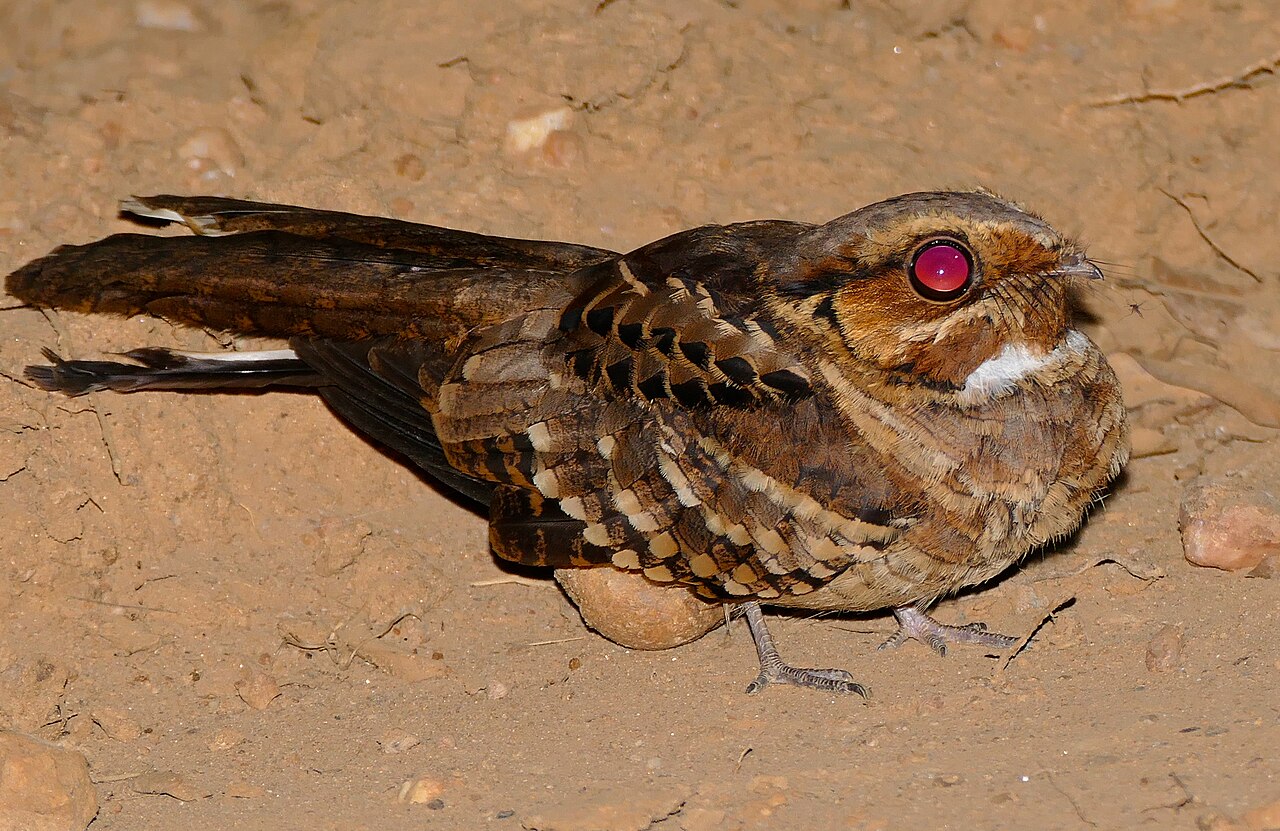
The Common Pauraque is the southernmost of the American nightjars to reach the United States, found in North America only at the very tip of southern Texas. By day it lies motionless on the ground, perfectly camouflaged among dead leaves; at night it gives itself away with two bright red eyes that flash in headlights along quiet roads. Unlike most nightjars it also walks and runs on the ground, on legs unusually long for a nightjar.
Voice
The name is an onomatopoeia of the male's call: a plaintive, far-carrying pur-wheeeer, often ending in a downward flourish, repeated for hours at night from the ground or a low perch. There is also a softer, knocking puk, and during courtship a rapid series of whipped notes. The female answers with a quick succession of whip-like tones.
Recording: Rosa Elena Albornoz @rosaelena_naturaleza — CC0 · Fila De Mariches (near Parroquia La Dolorita), Sucre, Distrito Capital, Venezuela · xeno-canto
Identification
The Pauraque is a squat, ground-hugging bird in a blend of rufous, black and grey, with a broad white band across the throat that stands out like a collar against the rest of the plumage. The large dark eyes and the wide, almost bill-less mouth — built for scooping insects in flight — are only obvious once the bird flushes; by day it merges completely with the leaf litter. In flight the male shows broad white patches on the outer tail feathers, smaller and buffier in the female. The wings are relatively short and rounded compared with the pointed wings of most other nightjars.
Confusion species
Chuck-will's-widow (Antrostomus carolinensis), which winters in the same region, is larger and more rufous, lacks the broad white throat band, and has an entirely different, sustained call. Common Nighthawk (Chordeiles minor) and Lesser Nighthawk (C. acutipennis) instead hunt high in the air on long, pointed wings with a conspicuous wing patch, and are more active by day than the Pauraque, which hunts almost exclusively at dusk and after dark. On the ground, in headlights, the Pauraque's habit of sitting on roads until the last moment often makes it the easiest of the three to identify.
Habitat
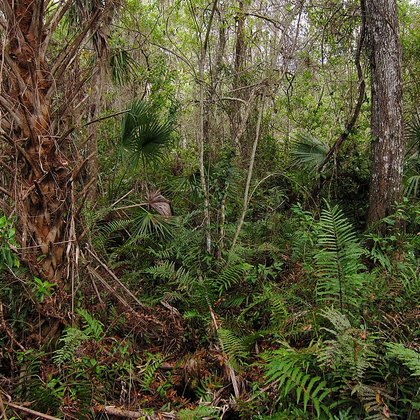
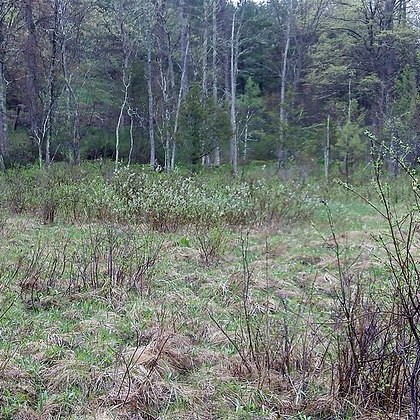
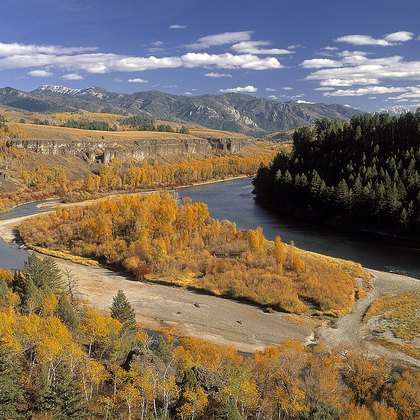
The Pauraque favours the boundary between dense scrub and open ground: the edge of subtropical woodland and thorn scrub, next to fields, roadsides and open grassland over which it hunts. By day it rests on the ground in the shade of dense cover; at night it moves onto open ground, often dirt roads, to catch insects from there. It avoids both closed, tall forest and completely open farmland lacking any scrub edge.
Where the bird is most often found, arranged by the USNVC — the vegetation classification of the United States and Canada — and CMECS for sea and coast.

Range and movements
In the United States the Pauraque breeds only in the southernmost counties of Texas, in the Rio Grande Valley, where it is present year-round. Further south it is one of the most widespread nightjars of the Neotropics, with an almost unbroken range across Mexico, Central America, the Caribbean and South America to Argentina. Over the northern part of its range it is sedentary; only the Texas subspecies merrilli may shift some distance south into Mexico in cold winters.
- Resident
- Breeding (summer)
- Winter
- Passage
- dark = core range, pale = thinly spread
Where and when to look
Drive slowly along a back road in the Rio Grande Valley after sunset and watch for two bright red eyes flashing on the roadway in your headlights: the Pauraque prefers open ground and often sits until a car is nearly on top of it. By day it is nearly impossible to find; the best way to locate one is by its call, heard best in the first hour after sunset.
Conservation
Worldwide the Pauraque is not threatened, with an estimated breeding population of twenty million that is largely stable or even increasing: as an edge-dwelling species it benefits from scattered deforestation across parts of its range. The main threat is being struck by vehicles, since the bird sits on roads at night and flushes only at the last moment.
Scientific name
Nyctidromus albicollis | (Gmelin, 1789)
Gmelin described the species in 1789 as Caprimulgus albicollis, in the then catch-all genus for nightjars; because it has since been moved to another genus, author and year stand in parentheses. Gould introduced the genus Nyctidromus in 1838, from the Greek nyktos, 'night', and dromos, 'runner' — a reference to the bird's unusual habit of running on the ground. The epithet albicollis is compound Latin for 'white-necked', after the broad white throat band. The type locality is Cayenne, French Guiana.