All species › Waders, gulls and terns › Sandpipers and allies › Common Sandpiper
Common Sandpiper | Actitis hypoleucos
Oeverloper | Andarríos chico
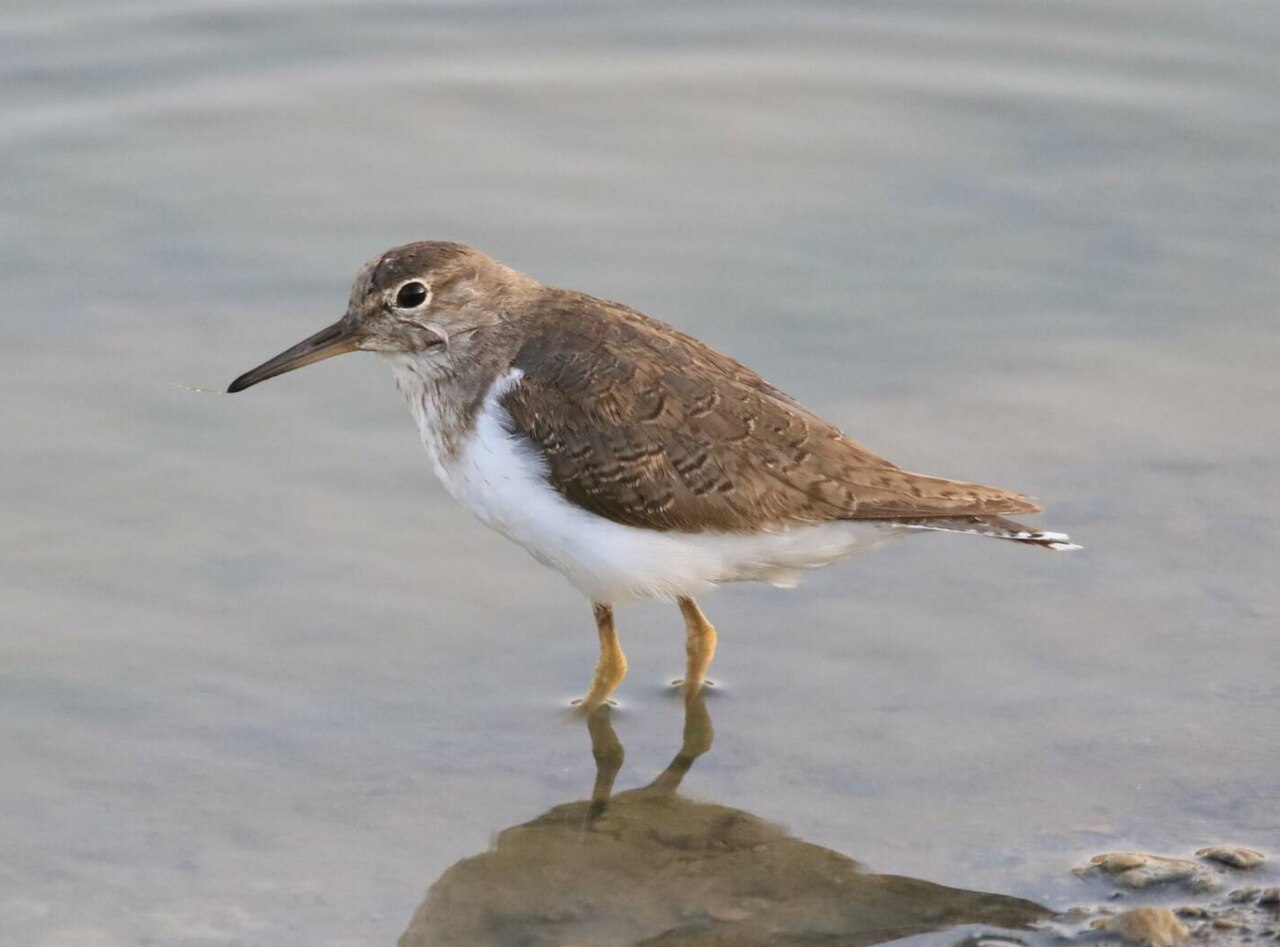
A small brown-and-white wader that teeters ceaselessly at the water's edge and flies off low over the water on stiff, flickering beats with short glides in between. In North America it is a guest from Asia: in small numbers, but in almost every year, it appears in late spring on the outer Aleutians. It is the Eurasian counterpart of Spotted Sandpiper, and out of breeding plumage the two look much alike.
Voice
The call is a high, clear swee-wee-wee that carries over the water and usually sounds at the moment the bird takes off; the pitch rises slightly and the series grows longer the more pressed the bird feels. On the breeding grounds the male sings a repeated kitti-weeti kitti-weeti during a low flight over the stream. Quietly feeding birds give an occasional short tswee. On the Aleutians the flight call is usually the first and only thing you notice; it sounds higher and shriller than that of Spotted Sandpiper.
Recording: Astrid Cervantes — CC BY-NC-SA 4.0 · Arrondissement of Leuven (near Leuven), Vlaams-Brabant, Vlaams Gewest, Belgium · xeno-canto
Identification
Grey-brown on the upperparts, with, on a close look, fine dark vermiculation across the wing coverts and scapulars, and clean white below. On each side of the breast sits a brown patch, between which a white wedge runs up to just in front of the bend of the wing. The bill is dark with a pale base, the legs are grey-green to dull olive, and at rest the tail projects clearly beyond the wing tips. In flight a long white stripe runs across the full width of the inner wing right to the body, and the wingbeat is stiff and shallow, the wings held low over the water. Male and female look alike; juveniles have clearly barred fringes to the wing coverts.
Confusion species
Everything turns on Spotted Sandpiper (Actitis macularius), which is the common species in Alaska. In breeding plumage the difference is clear: that one has round black spots over the white underside and an orange bill with a dark tip. Without those spots you have to watch three things: the legs are yellowish to flesh-coloured in Spotted Sandpiper and grey-green here; the white wing stripe is shorter and narrower there and does not reach the body, while here it runs across the whole inner wing; and the tail projects far beyond the wing tips here, hardly at all in Spotted Sandpiper. Terek Sandpiper (Xenus cinereus), a guest on the same islands, is greyer and has orange legs and an upcurved bill.
Habitat
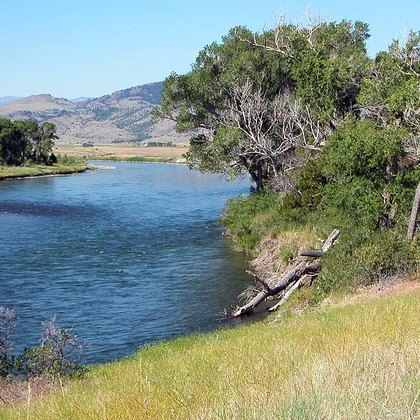
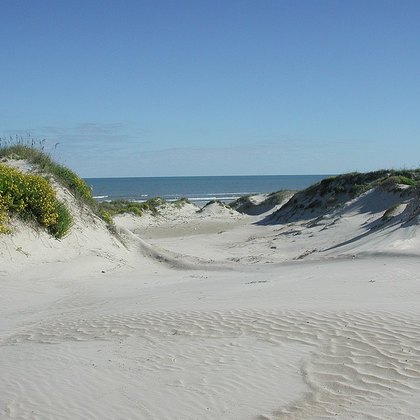
Stony and gravelly banks of streams and rivers, the margins of lakes and pools, and on migration also beaches, river mouths and harbour walls. It walks along the waterline and picks from the surface; what it needs is a hard, open edge with stones or driftwood to search among. On the Aleutians it is usually stream mouths, ditches and the shingle beaches of the bays. Broad soft mudflats and deep water it does not use.
Where the bird is most often found, arranged by the USNVC — the vegetation classification of the United States and Canada — and CMECS for sea and coast.



Range and movements
It breeds from the British Isles and Scandinavia eastward across the whole of Eurasia to Kamchatka and Japan, and winters from southwestern Europe and Africa to southern Asia, Australia and the islands of the Pacific. In North America it appears in almost every year in small numbers on the outer Aleutians — Attu, Shemya and Buldir — and far more rarely on the Pribilofs and elsewhere in western Alaska. Nearly all records fall between mid-May and early June, when birds heading for Kamchatka and Chukotka overshoot to the east. From the rest of the continent only a handful of records are known. As a breeding bird it has not been recorded in North America.
Where and when to look
In the last week of May on Attu or Shemya, check every teetering wader at a stream mouth. Compare the leg colour first, then find the tip of the tail: if the tail projects far beyond the wing tips, you are on the right bird. Then put it up; the long white wing stripe running right to the body settles it.
Conservation
The Red List holds the species as Least Concern (LC); the world population runs into the millions and its centre of gravity lies in Russia. In western and southern Europe numbers have fallen with the canalising and reworking of streams and riverbanks and with disturbance along the shore. For North America there is nothing to manage: the number of visitors depends on numbers in Asia and on the weather in May.
Scientific name
Actitis hypoleucos | (Linnaeus, 1758)
Linnaeus described the species in 1758 as Tringa Hypoleucos; because it was later moved to another genus, author and year stand in parentheses. The genus Actitis was introduced by Illiger in 1811 and comes from the Greek aktites, 'dweller on the coast', from akte, 'shore'. hypoleucos is likewise Greek and means 'white beneath'. The type locality is Europe, later restricted to Sweden.