All species › Passerines › Tyrant flycatchers and allies › Fork-tailed Flycatcher
Fork-tailed Flycatcher | Tyrannus savana
Vorkstaartkoningstiran | Tijereta Sabanera
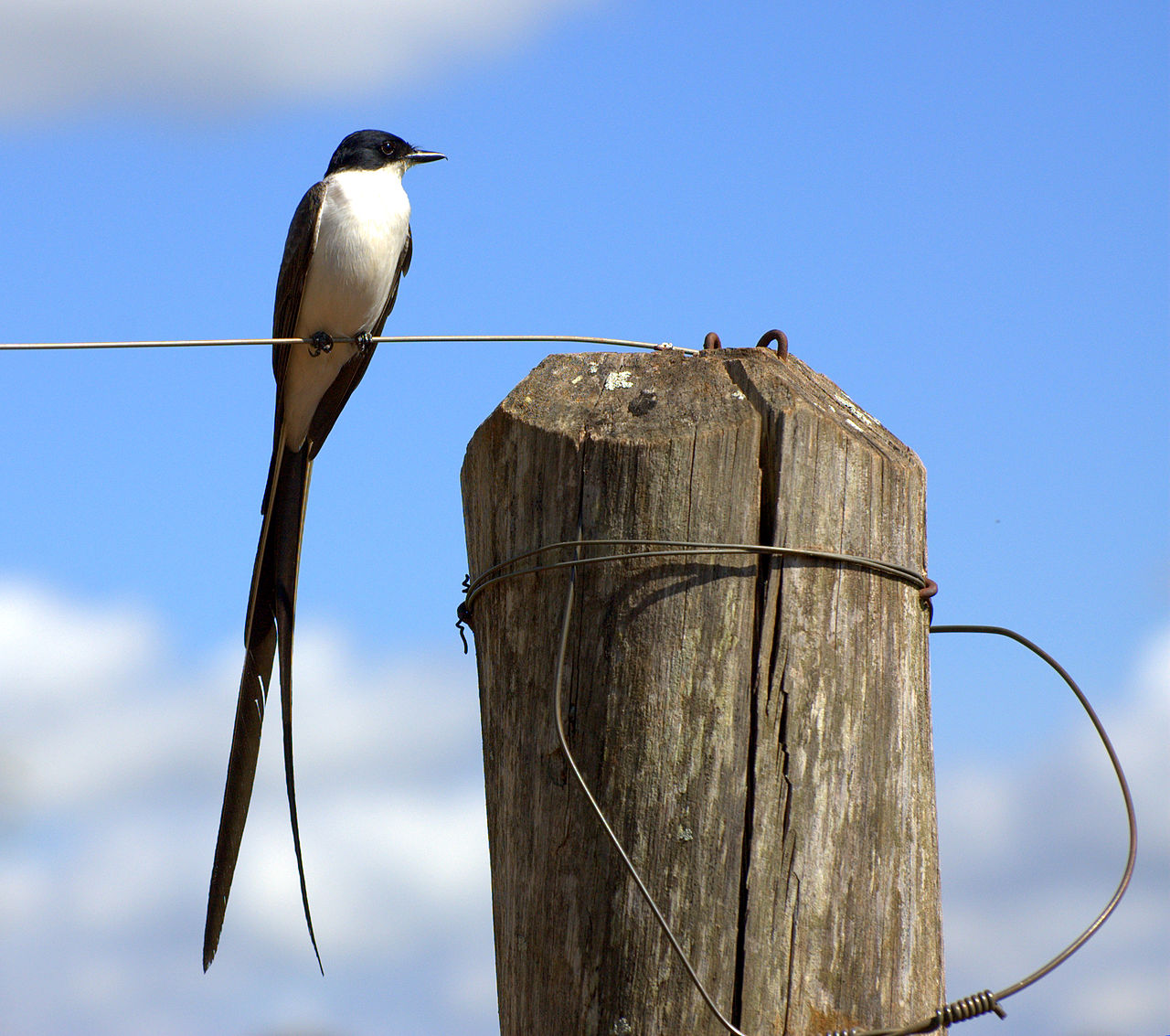
The Fork-tailed Flycatcher has the longest tail of any tyrant flycatcher: in the male it is two to three times the length of the body. In the guide area it is a resident of the savannas of southern Mexico and Central America; further north, as far as Canada, it appears as a vagrant, almost entirely in late summer and autumn.
Voice
The voice is limited: a dry, buzzy call and a weak tic in flight. More telling is the mechanical sound of the wings — the notched outer primaries produce a whistling tone in flight, whose pitch differs between subspecies. That difference is one of the indications that the migratory and resident forms are diverging. In display the male flutters with the tail streamers spread.
Recording: JAYRSON ARAUJO DE OLIVEIRA — CC BY-NC-SA 4.0 · Santa Rita do Novo Destino, Goiás, Chácara Jayrson, Brazil · xeno-canto
Identification
White below, grey above, with a black cap that extends below the eye and cuts sharply against the white throat. Wings and tail are black; the tail is deeply forked and made up of long, ribbon-like outer feathers. With the tail, the male measures 37 to 41 centimetres and the female 28 to 30. Among the crown feathers the male sometimes carries a yellow patch, visible only when excited. Young birds have a much shorter tail and a browner cap.
Confusion species
Scissor-tailed Flycatcher, the only North American species with a comparable tail, has a pale grey head without a black cap, salmon-pink flanks and axillaries, and white rather than black tail edges; its tail is also shorter. Tropical Kingbird and Western Kingbird have yellow underparts and a short, straight tail. On young Fork-tailed Flycatchers that have not yet grown their tail, the black cap and the plain white underparts remain the separation from Scissor-tailed.
Habitat
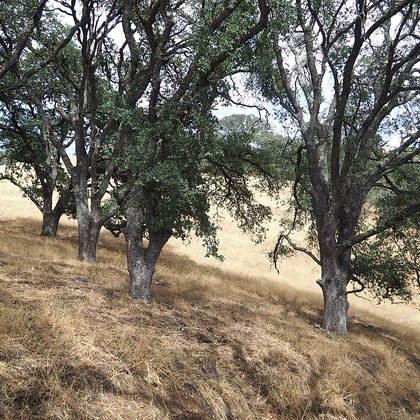
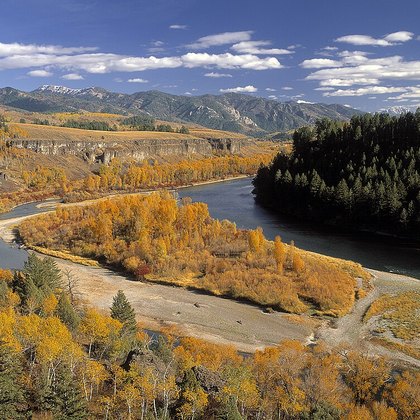
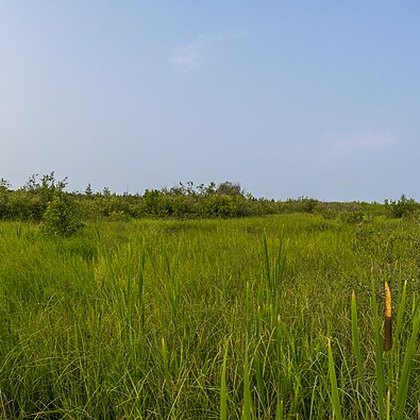
Open country: savanna, grassland with scattered trees, pasture and cattle country, forest edge and riparian woodland, mostly below 1000 metres. Mangrove and village edges with scattered trees as well. It hunts from a post or low branch in open ground and takes insects in flight; outside the breeding season it also eats a good deal of fruit. Vagrants in North America are usually found in comparable open terrain: pastures, field edges and coastal grassland.
Where the bird is most often found, arranged by the USNVC — the vegetation classification of the United States and Canada — and CMECS for sea and coast.


Range and movements
Four subspecies. In the guide area the bird is monachus, resident from southern Mexico — from roughly southern Veracruz and Oaxaca — through Central America to Colombia, Venezuela and northern Brazil. The nominate form breeds in southern South America and moves north after the austral breeding season to Amazonia and the Orinoco basin; on that migration it forms flocks of up to ten thousand birds. Birds that overshoot reach the eastern seaboard states of the United States and even New Brunswick almost annually, usually from September to November.
- Resident
- Breeding (summer)
- Winter
- Passage
- dark = core range, pale = thinly spread
Where and when to look
In the resident range it can be found year-round on posts and wires along pastures. For North America, September to November is the most likely period, at open coastal grassland on the Atlantic side; such birds often stay several days in the same field. With any long-tailed flycatcher, check the head colour first: a black cap or a pale grey head settles the matter, even when the tail has broken off.
Conservation
The IUCN lists the species as Least Concern (LC). The range is large and the species benefits from the conversion of forest to pasture and cattle country. For North America there is no separate conservation task, since the numbers there consist of vagrants. Research centres on whether the migratory nominate form and the northern residents should be treated as separate species.
Scientific name
Tyrannus savana | Daudin, 1802
Daudin fixed the scientific name in 1802; author and year stand without parentheses because the species is still in its original genus. Tyrannus is Latin for 'tyrant' or 'absolute ruler', after the driving of much larger birds from the nesting area. The species name savana goes back to Buffon's le savana of 1780 and refers to the savanna habitat. The specimen described came from the shore of the Río de la Plata and the woods near Montevideo.