All species › Passerines › Tits, chickadees and titmice › Grey-headed Chickadee
Grey-headed Chickadee | Poecile cinctus
Bruinkopmees | Carbonero lapón
The Grey-headed Chickadee is the only chickadee of the willow fringe at and above treeline in northern Alaska and northwestern Canada. In Eurasia it is widespread from Scandinavia to Kamchatka; in North America it has not been confirmed since 2018.
Voice
The voice consists of low, nasal and drawn-out tschee-tschee notes, slower and more drawling than in Boreal Chickadee, alternating with thin high seee calls. Little recorded material exists from the North American part of the range, because observers rarely get there; the descriptions rest largely on Eurasian birds.
No freely licensed recording has been found for this species yet; what to listen for is described below.
Identification
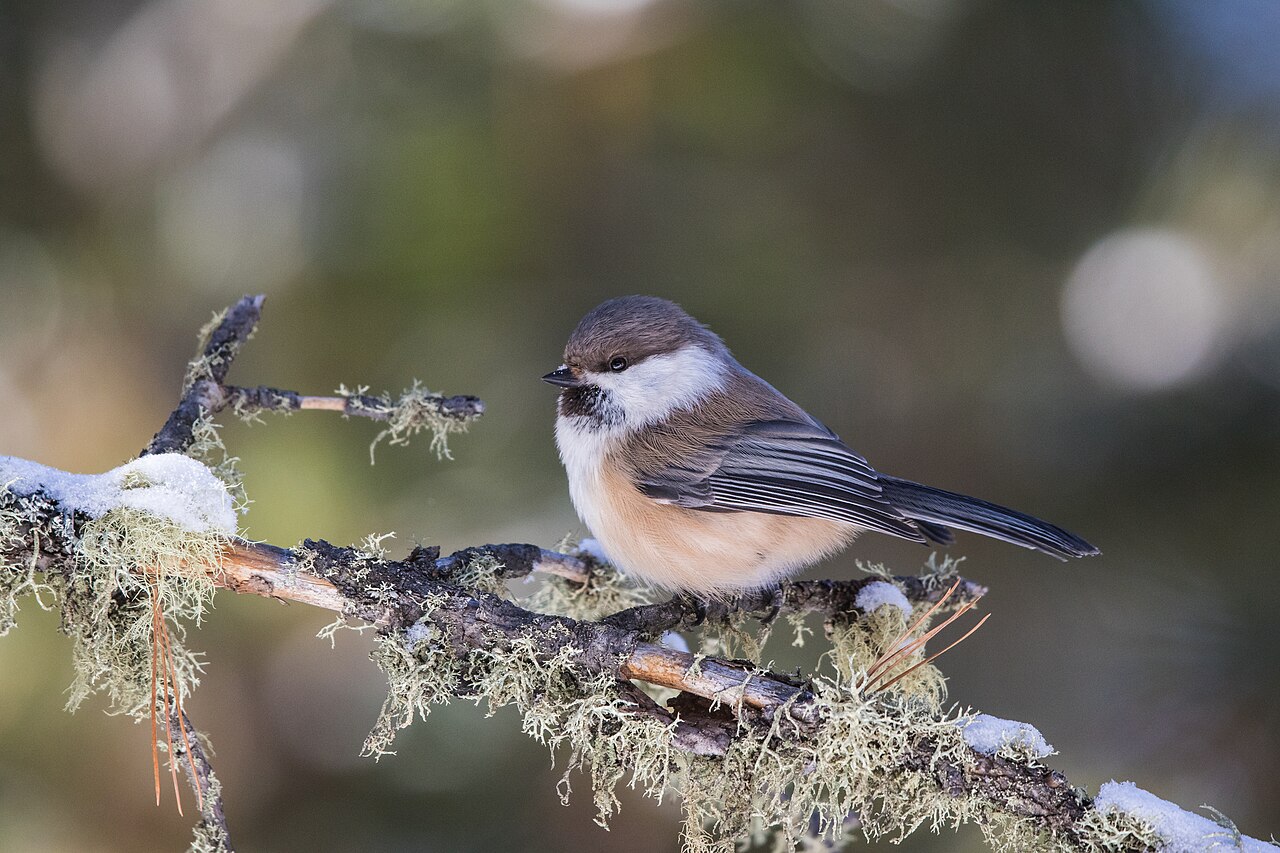
A chickadee of 13 to 14 cm and 11 to 14 grams, with a large fluffy head. The crown is grey-brown, not black, and the white cheek is very extensive, running far back onto the neck. The throat carries a black bib, the mantle is cinnamon-brown, and the pale edges to the secondaries form a light wing panel. The flanks are rusty brown, strongest in winter. The species tolerates temperatures down to about -60 °C and lays in large stores of seeds and insects in late summer and autumn for that, tucked into bark crevices and among needles.
Confusion species
Boreal Chickadee is the only real pitfall and overlaps with it in interior Alaska. It is smaller, with a darker, more sooty-brown crown, a smaller and duller cheek patch that does not run so far onto the neck, duller brown flanks and no pale wing panel. Black-capped Chickadee has a black cap and a pure white cheek with no brown. For a bird in the far north of Alaska the range helps: Boreal Chickadee rarely reaches the willow fringe above treeline.
Habitat
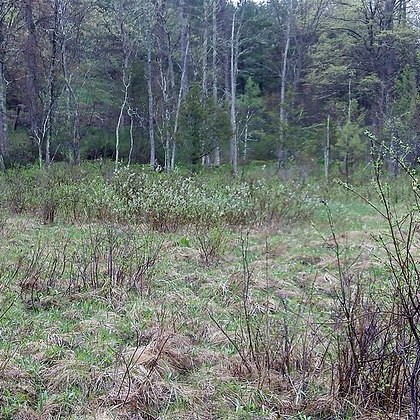
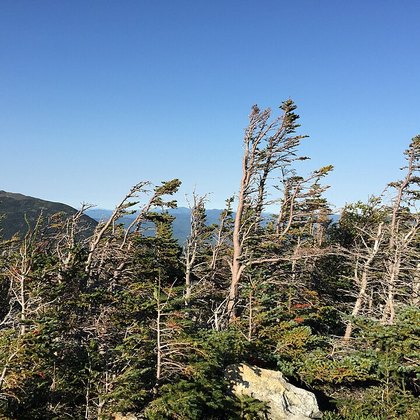
Open willow and dwarf-birch scrub along river floodplains and at the foot of mountains, and thin spruce stands at treeline. In Eurasia it is old, lichen-clad conifer and birch forest; mature stands are preferred over young ones. The nest is in a cavity in a dead spruce or willow, often low down. The species is resident and stays in the same area all year; outside the breeding season pairs and families move in small parties and join mixed flocks.
Where the bird is most often found, arranged by the USNVC — the vegetation classification of the United States and Canada — and CMECS for sea and coast.



Range and movements
In North America confined to the Brooks Range and the river plains north of it in Alaska, northern Yukon and the western Northwest Territories. The Eurasian range runs from subarctic Scandinavia through the northern Palearctic to Kamchatka and northern Mongolia. The North American birds belong to the subspecies lathami, of which there has been no confirmed record since 2018.
- Resident
- dark = core range, pale = thinly spread
Where and when to look
In North America the odds are slim. Targeted searches focus on willow scrub along rivers on the north side of the Brooks Range, reached by bush plane, and on the surroundings of the Dempster Highway in Yukon. On any chickadee there, watch the extent of the white cheek: in this species it runs far back onto the neck, in Boreal Chickadee it does not.
Conservation
Worldwide the species is listed as Least Concern, thanks to the large Siberian range, but it is declining at both edges. At Folldal in Norway its share of the tit population fell from 64 percent in 1982 to one percent in 2011, attributed to competition, climate change and the logging of old forest. Canada placed it in the endangered category in 2024, with modelling indicating fewer than 250 mature birds, almost all in Yukon. In Alaska confirmed records have been absent since 2018; in June 2026 the Center for Biological Diversity filed a petition to list the species under the US Endangered Species Act, citing climate change and increasing icing at treeline as the main reasons, alongside mining and the proposed Ambler road project through the Brooks Range.
Scientific name
Poecile cinctus | (Boddaert, 1783)
Boddaert described the species in 1783 as Parus cinctus; because it was later moved to another genus, author and year stand in parentheses. The species name cinctus is Latin for 'girdled' or 'banded'. The genus Poecile goes back to Greek poikilos 'pied, spotted', the name of a small bird in classical authors. The specimen described came from Siberia. The English name Grey-headed Chickadee and the Eurasian name Siberian Tit refer to the same species.