All species › Passerines › Finches, euphonias and allies › Hawaii Amakihi
Hawaii Amakihi | Chlorodrepanis virens
Hawaii-amakihi | Amakihi de Hawái
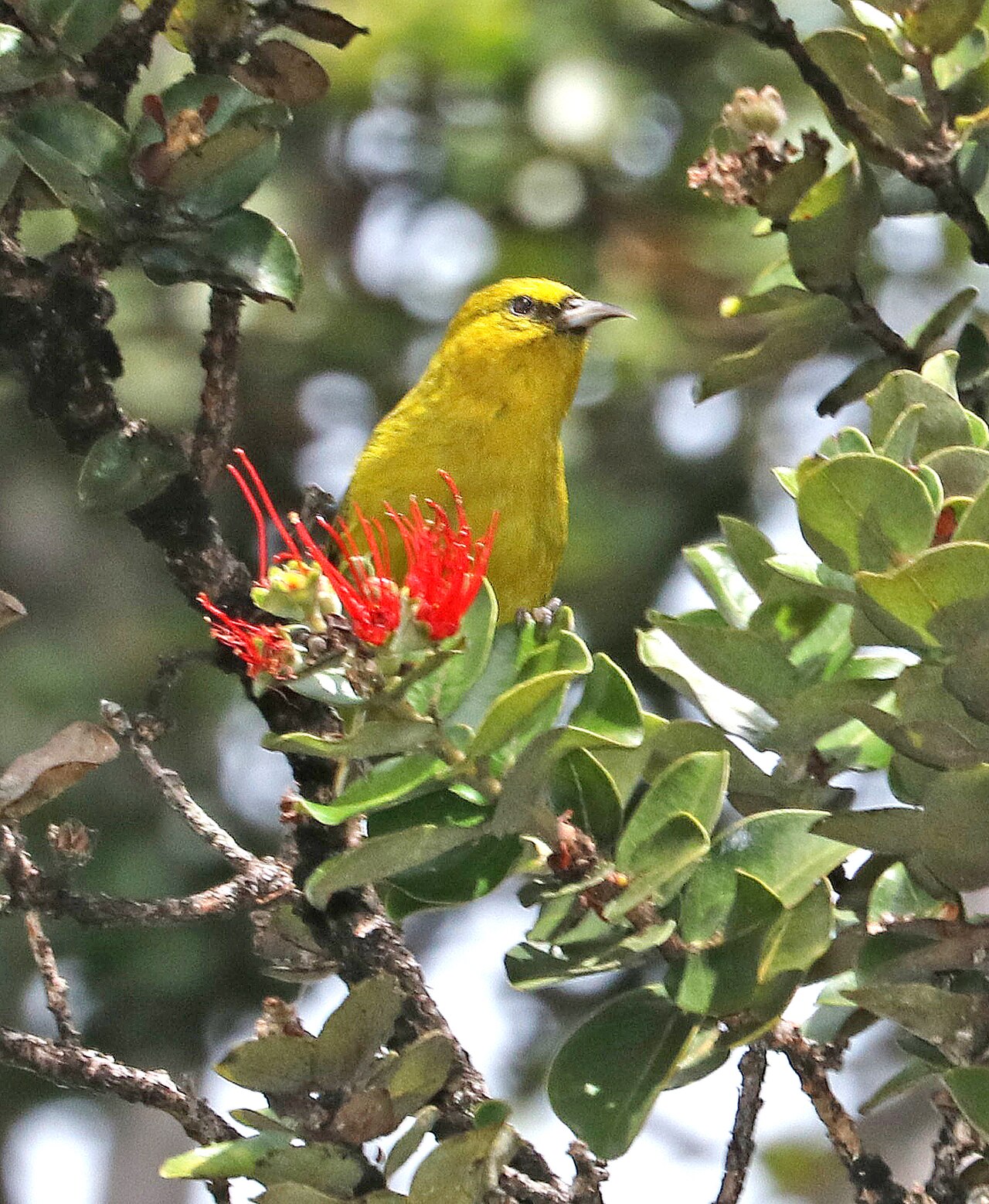
The Hawaii Amakihi is one of the most numerous native forest birds of the Hawaiian Islands: yellow-green, with a short, evenly decurved bill and a black patch between bill and eye. It drinks nectar from ʻōhiʻa blossom and gleans insects from leaf and bark at the same time, which ties it less closely to a single flowering season than the other honeycreepers. It also tolerates avian malaria, and so it lives in low forest from which the other native birds have gone.
Voice
The song is a dry, even trill on one pitch, about a second long, trrrrrrr, heard in the canopy of ʻōhiʻa forest all year, with most singing from January to June. There is also a slower, looser warble of a few seconds in which the notes rise and fall. The call, and usually the first thing you pick up, is a short nasal tsweet, dropped as it works through the branches. Males sing from a bare branch above the crown, often the same branch for days on end.
No freely licensed recording has been found for this species yet; what to listen for is described below.
Identification
The male is yellow-green: brighter yellow on breast and belly, greener on back and wings, with a black patch between bill and eye that looks like a small mask at close range. The female is duller and greyer green, yellowish white below, with two faint pale wingbars and less black around the eye. Juveniles are the dullest, with clearer buff wingbars and a pale base to the bill. The bill is short, black and evenly decurved, the tail short and slightly notched. It climbs and hangs along twigs, puts its bill into flower cups and picks caterpillars off the underside of leaves in between. Flight between crowns is short, straight and fast.
Confusion species
Warbling White-eye is the commonest mistake: as yellow-green and about the same size, but with a sharply drawn white eyering, a straight thin bill and no black around the eye; it travels in parties and calls a thin tseee. Young Iiwi are also yellow-green and in the same forest, but larger and spotted, and their bill is long, salmon-pink and far more strongly curved. Hawaii Elepaio is brown with white in wing, rump and tail and holds its tail cocked; it works the middle storey, while the amakihi keeps to the flowering crowns. Japanese Bush Warbler is plain brown, stays in the lowest layer and hardly ever comes into the open.
Habitat
Native forest of ʻōhiʻa lehua and koa, from the coast to nearly three thousand metres, and beyond that the dry māmane-naio woodland on the upper slopes of Mauna Kea. It seeks flowering crowns — nectar of ʻōhiʻa, māmane and ʻāhihi — but takes most of its food as insects and spiders from twigs, bark and leaves. Unlike most honeycreepers it also uses planted forest of introduced trees, gardens with flowering trees and rank edges. It does not use treeless lava field or open grassland.
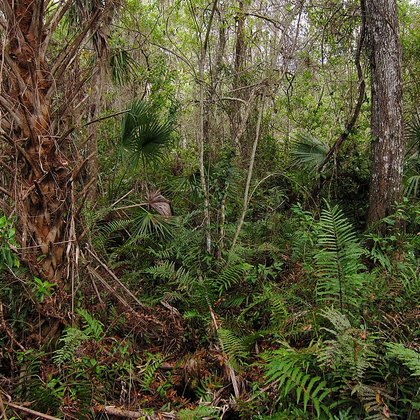
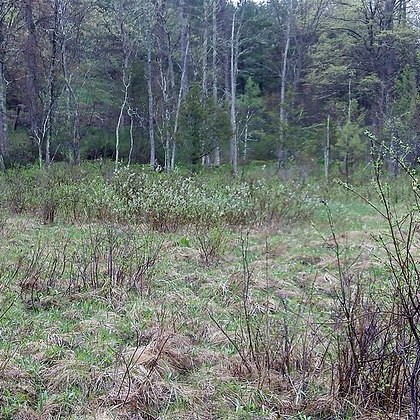
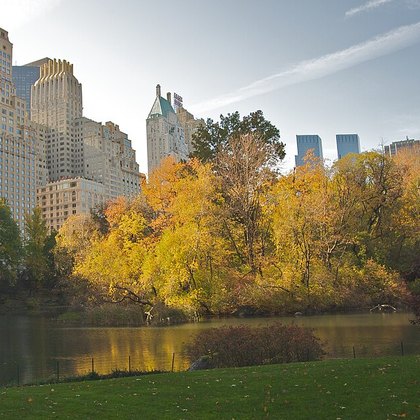
Where the bird is most often found, arranged by the USNVC — the vegetation classification of the United States and Canada — and CMECS for sea and coast.
Range and movements
Resident on Hawaii, Maui and Molokai; on Lanai it is gone. It does not migrate, but follows the flowering within its island: in a year when the ʻōhiʻa blooms high on the slope it moves up the mountain, and the other way round. Into the 1980s it was largely confined to forest above the mosquito line, at around a thousand to fifteen hundred metres; since then it has returned to low forest on the east side of Hawaii, down to close to the sea. The amakihi of Kauai and of Oahu are counted as separate species.
- Resident
Where and when to look
Go at sunrise to a flowering ʻōhiʻa beside a road or a forest track and stay at that one tree: the amakihi come to the blossom, and you hear the dry trill before you see the bird. Watch the bill — short and curved against the straight little bill of the white-eye — and the absence of a white eyering. In the lowlands of eastern Hawaii you can now also find it down at sea level, in forest of introduced trees.
Conservation
Least Concern on the Red List, and with several hundred thousand birds one of the most numerous native forest birds of the islands; numbers on Hawaii are stable to increasing, those on Maui and Molokai smaller. Its resistance to avian malaria sets it apart from most honeycreepers, but the disease keeps moving further up the mountain as the climate warms. Loss of native forest to feral cattle and pigs, and rats and cats at the nest, go on eating into the population.
Scientific name
Chlorodrepanis virens | (Gmelin, 1788)
Gmelin described the species in 1788, in the thirteenth edition of Linnaeus's Systema Naturae, as Certhia virens, among the treecreepers, from material brought back by Cook's third voyage; because it was later placed in Chlorodrepanis, author and year stand in parentheses. The genus name Chlorodrepanis is made from Greek chlōros, 'green', and drepanē, 'sickle', after the curved bill. virens is Latin for 'becoming green'. The type locality is given as the Sandwich Islands, Cook's name for the Hawaiian Islands. In Hawaiian the bird is ʻamakihi; no Dutch name has been formed for it, and Dutch, English and Spanish all take the Hawaiian name over unchanged, with the name of the island in front of it.