All species › Passerines › Tyrant flycatchers and allies › La Sagra's Flycatcher
La Sagra's Flycatcher | Myiarchus sagrae
La Sagra's tiran | Copetón de La Sagra
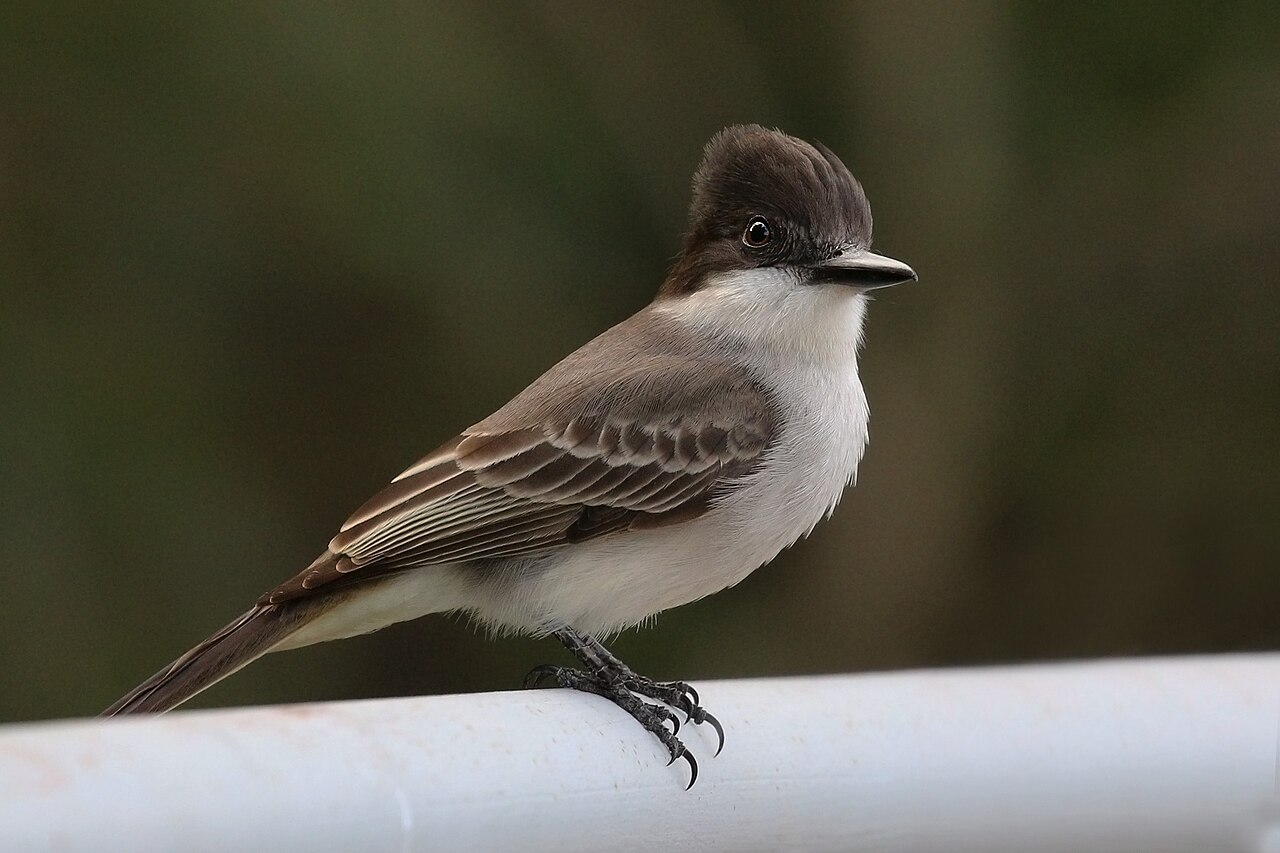
La Sagra's Flycatcher is the Myiarchus of Cuba, the Bahamas and Grand Cayman: paler than any of its relatives, with a nearly white belly instead of yellow and a flat crown that is seldom raised. In North America it is a rare visitor, almost entirely in southeastern Florida.
Voice
The call is a short, bright wheet, often extended into a three-syllable wheet-ze-weer. There is also a buzzy, rolling brrr. The Bahamian subspecies lucaysiensis combines the wheet notes with rolls and lacks the pure whistled element of Cuban birds. For a vagrant in Florida the call is the decisive character, since plumage alone is rarely enough.
Recording: FREDERIC Lionel — CC BY-NC-SA 4.0 · Cienaga de Zapata--San Tomas, Matanzas, Cuba · xeno-canto
Identification
Upperparts olive-brown, crown smoky brown and flat — the crest is rarely raised, which makes the head look angular. The face is ashy grey, throat and breast pale ashy grey, and the belly white to faintly cream-yellow; in good light the clear yellow that most Myiarchus show is absent. The primaries have thin rufous edges and the secondaries pale greyish-white edges forming two faint wing bars. Rufous in the tail is limited; in lucaysiensis it sits mainly on the outer tail feathers. Bill, legs and iris are dark.
Confusion species
Great Crested Flycatcher, the common species in Florida, is larger, has a clearly yellow belly, far more rufous in tail and wing, and gives a rising wheep!. Ash-throated Flycatcher, a rare winter visitor to Florida, also has pale underparts, but a pale yellow belly rather than white, more rufous in the tail with a dark edge along the outer feather tip, and a dry ka-brick call against the clear wheet-ze-weer. Stolid Flycatcher of Hispaniola and Jamaica was formerly treated as the same species; it falls outside the guide area, but the two are separated mainly on call and tail pattern.
Habitat
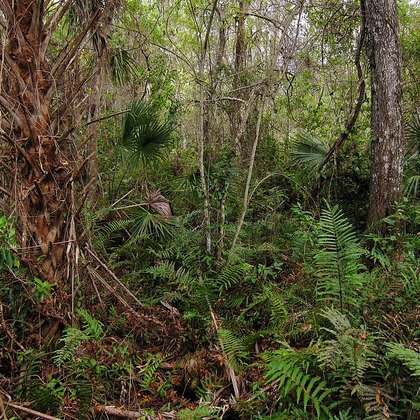
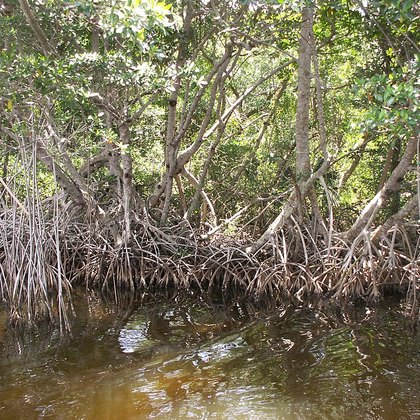
Woodland and scrub from sea level to about 1500 metres: Caribbean pine forest, hardwood forest, mixed conifer and broadleaf woodland, mangrove, coastal scrub and overgrown edges. In the Bahamas the pine belt of Grand Bahama, Abaco, Andros and New Providence is the core. The species also uses gardens and parks with tall trees. It hunts from an open perch at mid-canopy and picks insects off leaves and branches.
Where the bird is most often found, arranged by the USNVC — the vegetation classification of the United States and Canada — and CMECS for sea and coast.



Range and movements
Resident without migration: Cuba including Isla de la Juventud, the northern Bahamas and Grand Cayman, each with its own form. There is no seasonal movement of any consequence. In the United States it is a rare visitor: since the early 1980s a few birds have turned up almost annually in southeastern Florida and the Florida Keys, in winter and early spring, most likely from the Bahamas. Alabama holds a single record, with no follow-up.
- Resident
Where and when to look
In Florida, December to April is when most birds are found; coastal hammocks and parks in Miami-Dade, Broward and the Keys produce most records. Wait for the call rather than the plumage: the lack of yellow on the belly seems a clear mark, but pale Ash-throated Flycatchers in winter look comparable in the field. Record the sound if you can.
Conservation
The IUCN lists the species as Least Concern (LC), with a large island range; the population size has not been established and the trend is assessed as decreasing. On the smaller islands the species is exposed to loss of woodland, both from hurricanes and from clearance. The Bahamian pine forests, with their own subspecies, are the most exposed part of the range.
Scientific name
Myiarchus sagrae | (Gundlach, 1852)
Juan Gundlach described the species in 1852 as Muscicapa sagrae, on the basis of an egg description from Cuba; because it was later moved to Myiarchus, author and year stand in parentheses. The genus Myiarchus comes from Greek muia 'fly' and arkhos 'ruler'. The species name honours Ramón de la Sagra, the Spanish naturalist who first made the bird known and whose work on Cuba laid the basis for knowledge of the island's fauna.