All species › Waterfowl › Ducks, swans and geese › Northern Shoveler
Northern Shoveler | Spatula clypeata
Slobeend | Cuchara común
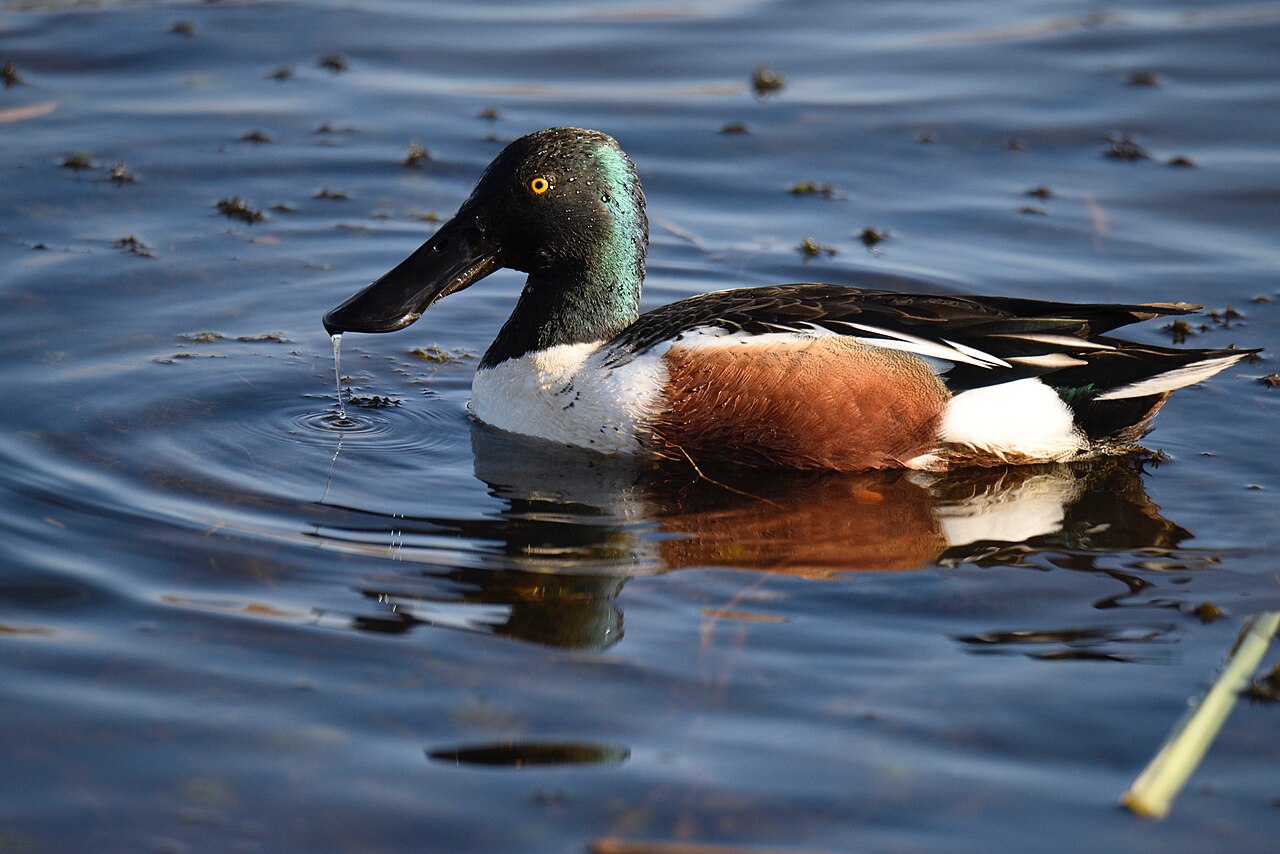
Northern Shoveler cannot be confused with any other duck thanks to its large, spoon-shaped bill, used to filter tiny food from the water. On shallow lakes and ponds across almost all of North America it is one of the most numerous ducks in winter, while in summer it breeds mainly in the north.
Voice
The male gives a low, two-note took-took, often repeated during display. The female quacks softly and hoarsely, quieter than a Mallard's. Feeding groups make a soft, rhythmic splashing sound with the bill as they turn in tight circles, stirring up food. Outside display, the species is generally quiet.
Recording: Sonothèque ADVL — CC0 · Miniac-Morvan, Ille-et-Vilaine, Bretagne, France · xeno-canto
Identification
The breeding male has a glossy green head, a white breast, chestnut flanks and belly, a black back, and a pale-blue shoulder patch. The female is streaky light brown like other duck females, but is instantly recognisable by the large bill, widened and drooping at the tip — in no other species in this guide does the bill so dominate the silhouette. Behaviour is also distinctive: small groups swim low with the bill pointed down, turning in a circle while filtering. In flight, the pale-blue forewing, as in the teal species, is visible.
Confusion species
The bill alone rules out confusion with almost any other duck: no other regularly occurring North American species has such a large, spoon-shaped bill. At a distance a female is sometimes mistaken for a female Blue-winged Teal (Spatula discors) or Cinnamon Teal (Spatula cyanoptera) because of the overall brown colouring, but the shoveler is larger, and the bill is visibly heavier and longer as soon as the bird is seen side-on.
Habitat
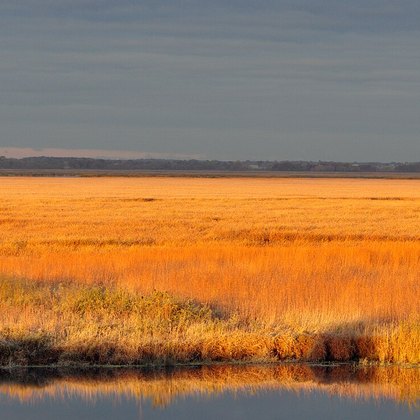
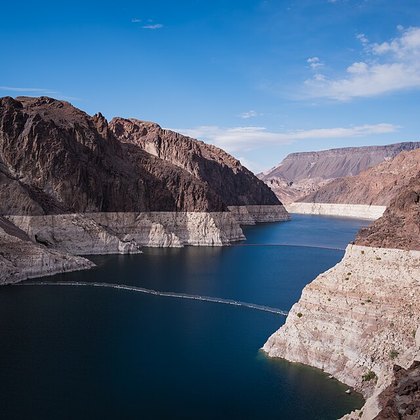
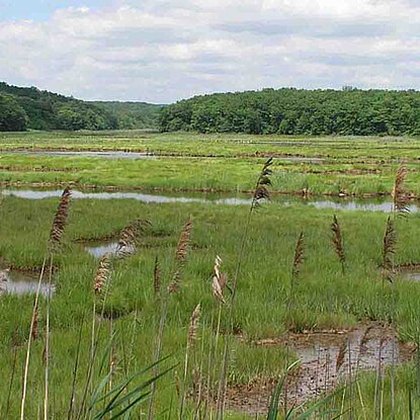
Shallow, nutrient-rich lakes, marshes, sewage ponds and flooded fields are its favoured habitat, both for breeding and wintering. It feeds while swimming, with the bill just below the surface, filtering small invertebrates and seeds. It avoids fast-flowing rivers and deep, food-poor water.
Where the bird is most often found, arranged by the USNVC — the vegetation classification of the United States and Canada — and CMECS for sea and coast.


Range and movements
Breeds in the prairie potholes of the northern Great Plains, prairie Canada and the Great Basin. In winter the species is widespread across almost the entire southern half of the continent, from California and the Gulf Coast states south through Mexico, Central America and the Caribbean. Across much of that wintering range, Northern Shoveler is one of the most numerous ducks.
- Resident
- Breeding (summer)
- Winter
- Passage
- dark = core range, pale = thinly spread
Where and when to look
Look on shallow, muddy ponds and flooded fields for a group of ducks turning in a circle while stirring the water — a feeding flock of shovelers. The bill is recognisable in silhouette or backlit, even when the rest of the pattern cannot be seen.
Conservation
Least Concern (LC); abundant, and one of the most common dabbling ducks in North America, with a large population that is broadly stable to increasing. The same prairie wetland conservation programmes that benefit the teal species also protect the shoveler's breeding habitat.
Scientific name
Spatula clypeata | (Linnaeus, 1758)
Linnaeus described the species in 1758 as Anas clypeata, within the then catch-all genus for nearly all ducks. Boie established the genus Spatula in 1822, Latin for 'spoon' — a name that fits this species more literally than most of its relatives — but only DNA research in 2009 placed the shoveler firmly within it, hence the parentheses around author and year. clypeata is Latin for 'shield-bearing', from clypeus, 'shield', after the broad bill. The type locality lies on the coasts of Europe, restricted by Linnaeus himself to southern Sweden in 1761.