All species › Passerines › Shrike-babblers, Erpornis and vireos › Plumbeous Vireo
Plumbeous Vireo | Vireo plumbeus
Loodkleurige vireo | Vireo plomizo
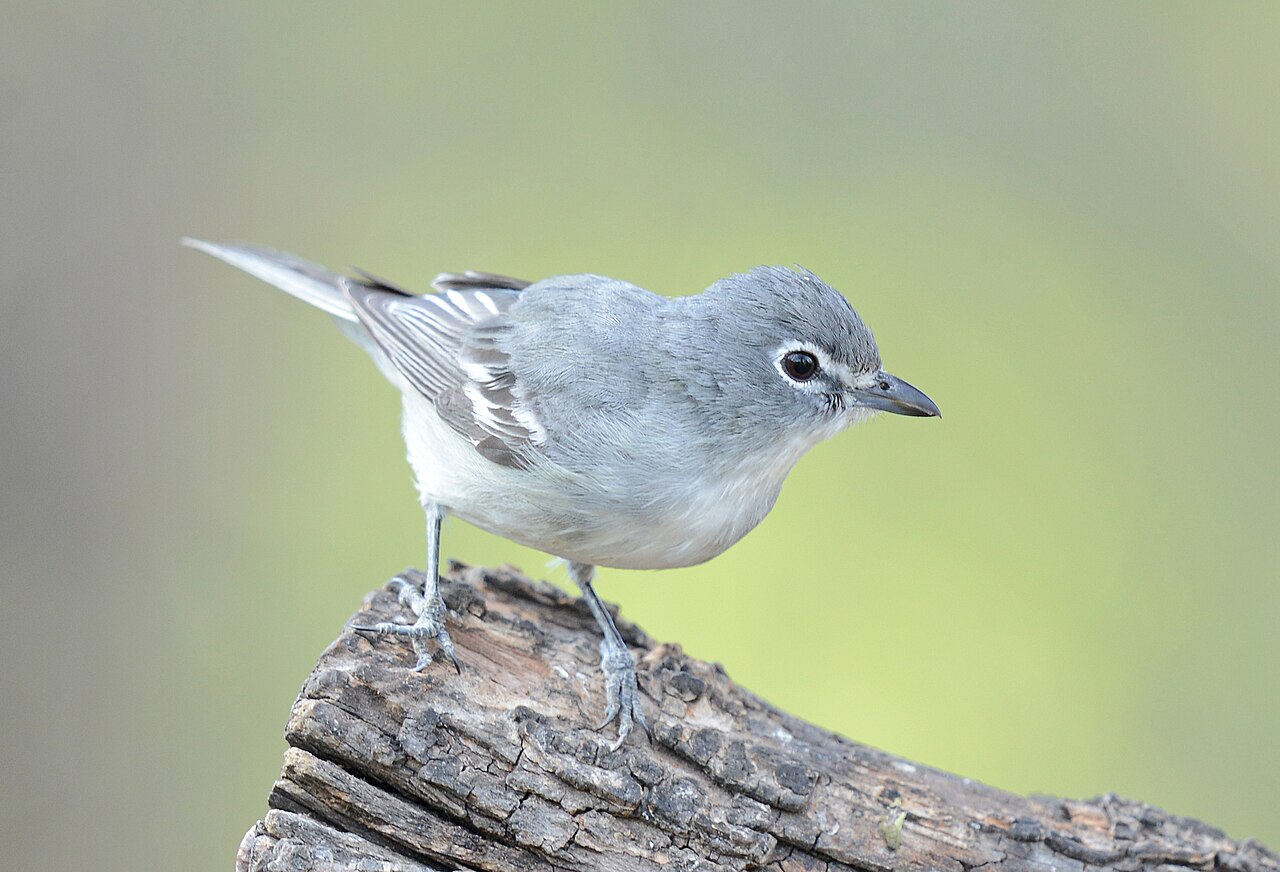
The Plumbeous Vireo is the grey member of the three species treated until 1997 as a single Solitary Vireo: no olive on the mantle, no yellow on the flanks, only grey, white and broad white spectacles. It breeds in the dry montane woodland of the Great Basin, the Rockies and the southwest, and is resident in the Mexican highlands.
Voice
The song is a series of short, burry phrases with a pause between each, alternately rising and falling, held at the same pace for as long as the bird sings. The tone is hoarse and rough, audibly coarser than Blue-headed Vireo's and on average coarser than Cassin's too, though that last line cannot always be drawn. The phrases are somewhat longer and slower than in the two relatives. It also has a rasping chatter and a grating scold when the nest is disturbed.
Recording: Diana Doyle — CC BY-SA 4.0 · Grass Shack Campground, Saguaro Nat'l Park, Rincon Mtns, Arizona, United States · xeno-canto
Identification
The largest and longest-tailed of the three former Solitary Vireos, with a thick black bill with a grey base to the lower mandible and blue-grey legs. Crown, nape and mantle are plain grey, with no olive. The underparts are largely white with grey flanks; some subspecies show a trace of green or yellow on the flanks and mantle. Broad white spectacles ring the eye and run as a stripe over the lores, standing out against the grey head. Two white bars cross the dark wing. The iris is brown. The sexes are alike. It forages slowly and methodically in conifers and oaks.
Confusion species
Cassin's Vireo is smaller and shorter-tailed, with a grey-green rather than plain grey head, an olive wash on the mantle and yellow-green flanks; its spectacles are narrower and less bright white. Blue-headed Vireo has a blue-grey head, an olive mantle and clearly yellow flanks, and does not breed in the west. In dull autumn Cassin's the difference can be slight; then look at the mantle, since any green all but rules out Plumbeous. Gray Vireo of the same dry mountains is slimmer, has only one faint wingbar, a thin white eyering without a stripe over the lores, and moves its long tail constantly.
Habitat
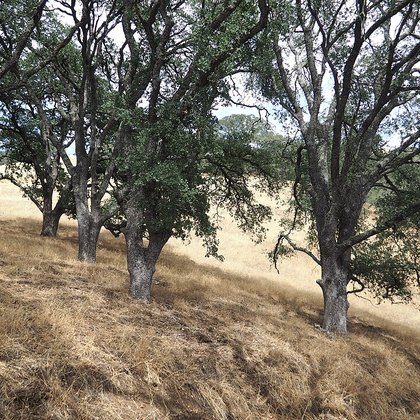
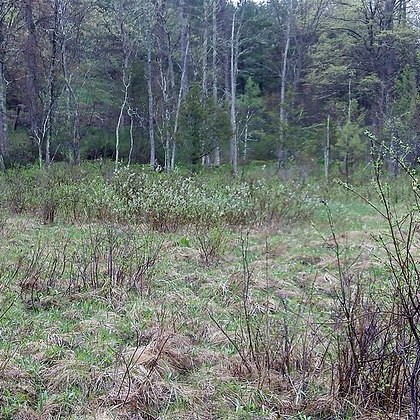
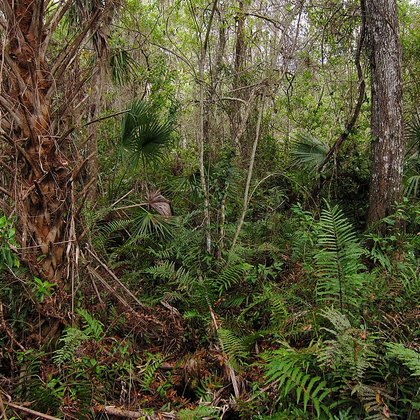
Dry montane woodland roughly between 1150 and 2500 metres, in Mexico to 3000 metres: ponderosa pine, Douglas-fir, pine-oak woodland and piñon-juniper, plus riparian woodland with cottonwood and oak in canyons. In Mexico also oak scrub. On migration it uses gallery forest, mangrove and evergreen forest.
Where the bird is most often found, arranged by the USNVC — the vegetation classification of the United States and Canada — and CMECS for sea and coast.



Range and movements
Breeds in the interior west, from southeastern Montana, southwestern South Dakota and south-central Idaho through Wyoming, Nevada, Utah, western Colorado, eastern California, Arizona and New Mexico to West Texas. In the Mexican mountains, from Chihuahua, Coahuila and Nuevo León south over the Sierra Madre and the Trans-Mexican Volcanic Belt to Oaxaca and Chiapas, it is largely resident. Northern populations move out and winter in western and southwestern Mexico; small numbers reach Belize, Guatemala and Honduras.
- Resident
- Breeding (summer)
- Winter
- Passage
- dark = core range, pale = thinly spread
Where and when to look
In May and June a ponderosa pine slope in Arizona, New Mexico or Colorado is the best place; listen for hoarse phrases with pauses between them, coarser than a Cassin's. For identification one look at the mantle is enough: entirely grey, without any green, means Plumbeous.
Conservation
Partners in Flight puts the population at at least 3.5 million mature birds and rates the species as low concern. Even so, the Breeding Bird Survey shows a decline of about 2.4 percent per year between 1968 and 2015, a cumulative fall of roughly 70 percent. The pressures named are woodland loss to development and clearcutting; the removal of old ponderosa pines and the thinning of piñon-juniper woodland bear on it directly.
Scientific name
Vireo plumbeus | Coues, 1866
Elliott Coues described the species in 1866 as Vireo plumbeus, from a specimen taken at Fort Whipple, Arizona; since it has never changed genus, author and year stand without parentheses. The species name is Latin plumbeus 'lead-coloured', after the plain grey plumage. Until the late 1990s the bird was treated as a subspecies of Vireo solitarius; molecular work led to a split into three species, which together form a superspecies. The genus Vireo was introduced in 1808 by Vieillot, from Latin vireo, the name of a green bird.