All species › Cranes, rails and allies › Rails, gallinules and coots › Purple Gallinule
Purple Gallinule | Porphyrio martinica
Amerikaans purperhoen | Gallineta Morada
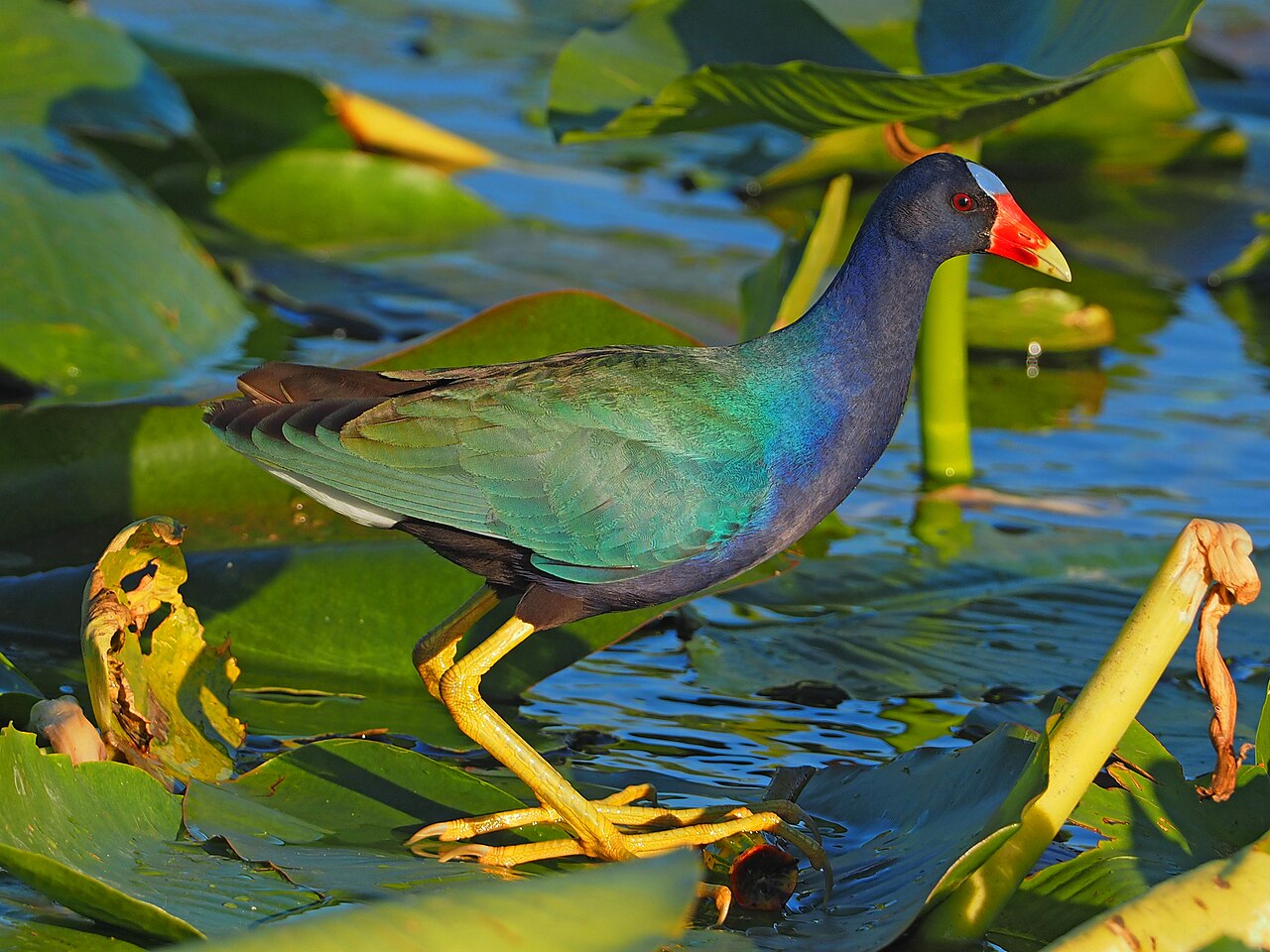
Purple Gallinule walks over floating water-lily leaves as if they were solid ground: purple-blue from head to breast, bronze-green on back and wings, with a pale blue frontal shield above a red bill tipped in yellow. The legs and the long toes are yellow, and they spread the bird's weight across the leaves. Of all the marsh hens of the continent this is the one that wanders furthest, with records reaching Canada, Iceland and South Africa.
Voice
The voice is a run of hard, guttural, cackling notes, usually in short bursts of a few seconds: kek-kek-kek, with a hoarse kerr and a nasal barking among them. Single sharp kek calls serve as alarm and come at the moment a bird drops into the sedge. The whole effect is higher and drier than the voice of Common Gallinule and lacks that bird's laughing, falling series. Calling is heaviest around sunrise and sunset, and on warm nights it carries on in the dark.
Recording: Juan Freile — CC BY-NC-SA 4.0 · entre laguna Paikawe y Sinchi Warmi, Tena, Napo, Ecuador · xeno-canto
Identification
The adult has head, neck and underparts deep purple-blue with a turquoise sheen, and back and wings bronze-green; in sunlight that colour shifts from green to blue. The frontal shield is pale blue, the bill red with a yellow tip, and the legs and toes bright yellow. Under the tail is a clean white patch, shown at every step as the short tail flicks up. The sexes look alike; the female averages slightly smaller. Young birds are warm sandy brown with olive-bronze wings, a dull green bill and pale legs, but already have the white under the tail; through their first year blue blotches come in on breast and flanks. In flight the legs trail well beyond the tail, and with its long toes it climbs into bushes and reed stems.
Confusion species
The adult can be mistaken for nothing else; only the young birds resemble other species. A young Common Gallinule is greyer, has a broken white line along the flank and two white patches under the tail with a black stripe between them, while the young Purple Gallinule is warm sandy brown, has no flank line and leaves the white under the tail undivided. Gray-headed Swamphen of southern Florida is nearly twice as heavy, with a grey-blue head, a massive red shield and red-orange legs. A young Northern Jacana walks on the same leaves, but is dark brown above with a white eyebrow and shows a large yellow wing patch in flight.
Habitat
Freshwater marshes with a dense layer of floating leaves — water lily, lotus, water hyacinth, pickerelweed — and standing sedge, cattail and reed among them. On those leaves it takes seeds, buds, snails and frogs; without floating leaves to walk over, a marsh is of little use to it. Rice fields, canals, fish ponds and the vegetated edges of swamp forest are used as well. It avoids salt water, and deep open water without plants gives it nothing.
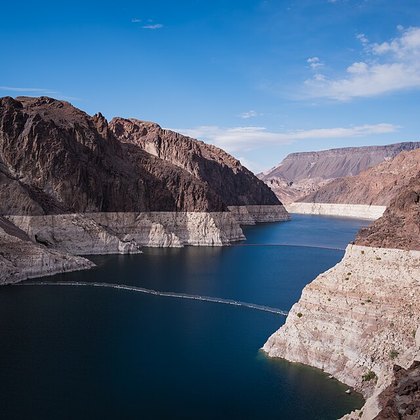
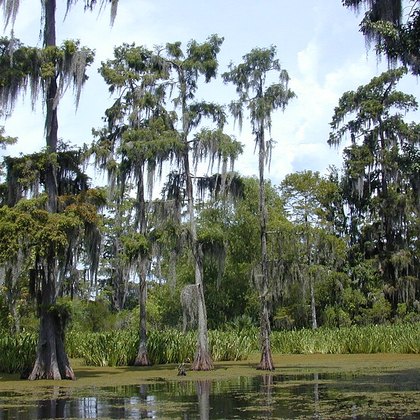
Where the bird is most often found, arranged by the USNVC — the vegetation classification of the United States and Canada — and CMECS for sea and coast.



Range and movements
In the United States it breeds from east Texas along the Gulf coast to Florida and north to South Carolina and Arkansas; only on the Florida peninsula does part of the population stay through the winter. The rest leaves for Mexico, Central America, the Antilles and South America, where the species is present all year; south of the area covered by this guide the range continues into northern Argentina. Outside the breeding season it wanders far: there are records from Canada, the Galápagos, Iceland and southern Africa, often in years when the marshes of the core range dry out. The breeding range in the United States has shrunk as coastal marshes were drained.
- Resident
- Breeding (summer)
- Winter
- Passage
- dark = core range, pale = thinly spread
Where and when to look
Look for it between May and August at the edge of a pond or marsh with plenty of floating leaves, in the Gulf states and Florida; morning is the best time. Follow the edge of the leaf mat with binoculars: a bird climbing a pickerelweed stem catches the eye sooner than one walking. At range the flicking white patch under the tail is the mark that names it, even before the colours come through.
Conservation
The North American population is put at about 390,000 birds and the species counts as not threatened (LC). Draining and building over freshwater marsh has pulled the range back within the United States, and where floating water plants are cleared with herbicide the bird loses the surface it walks on. Rice fields and constructed stormwater wetlands provide new breeding places against that loss.
Scientific name
Porphyrio martinica | (Linnaeus, 1766)
Linnaeus described the species in 1766 as Fulica martinica, in the twelfth edition of his Systema Naturae; because it was later moved to another genus, author and year stand in parentheses. Porphyrio goes back to Greek porphyrion, the name classical writers gave a purple waterbird, from porphyra ('purple dye'). martinica refers to Martinique, the island in the Lesser Antilles the described specimen came from. The genus Porphyrio was introduced by Brisson in 1760.