All species › Passerines › Chats, Old World flycatchers and allies › Red-flanked Bluetail
Red-flanked Bluetail | Tarsiger cyanurus
Blauwstaart | Ruiseñor coliazul
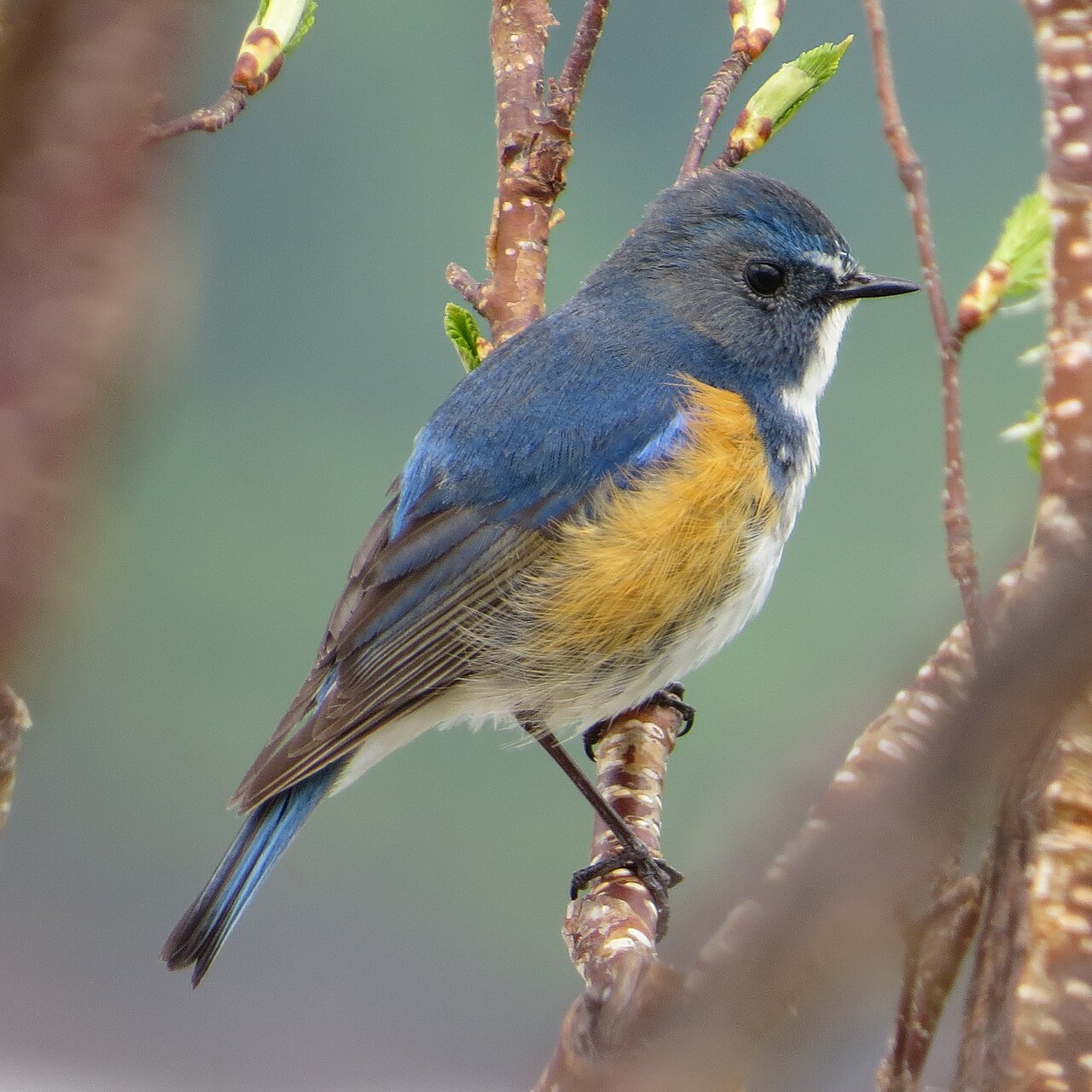
The Red-flanked Bluetail is a small chat of the Eurasian conifer forest, recognisable by the blue tail and orange flanks that both sexes share. In the guide area it is a vagrant to the islands of western Alaska, with a few recent records along the west coast and even in the east. It keeps low, moves over the forest floor in short hops and often quivers the tail.
Voice
In North America it is usually silent; the call most often heard is a dry, hard tak, like a Stonechat's, sometimes preceded by a thin drawn-out heet. On the breeding grounds the male sings from a high spruce top a short, plaintive trill of two or three descending whistles, repeated at dawn and dusk.
Recording: Stanislas Wroza — CC BY-NC-SA 4.0 · Iivara national Park, Finland · xeno-canto
Identification
A small, round-headed chat with a fine bill and an upright stance. Both sexes have a bright blue tail and rump, orange to rusty flanks, a white throat and greyish white underparts. The adult male is dark blue above, with a brighter blue shoulder patch and supercilium. Females and young males are plain olive-brown above, only the rump and tail staying blue, and have a brownish wash across the breast that leaves the white throat standing out as an outlined patch. A narrow pale eye-ring makes the eye look large.
Confusion species
No other songbird in the guide area combines a blue tail with orange flanks. Siberian Rubythroat, which turns up on the same islands, has a plain brown tail and a double white face stripe. Bluethroat has an orange-red tail base with a black terminal band rather than a wholly blue tail. In poor light a female may suggest a female-type redstart, but those have a rusty, not blue, tail and no orange flank patch.
Habitat
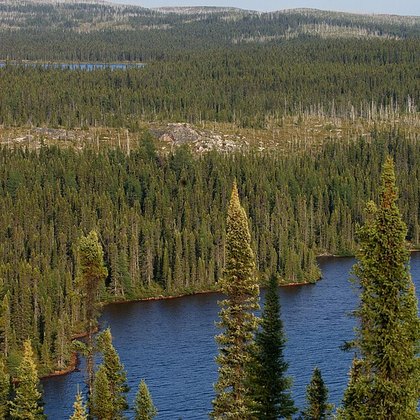
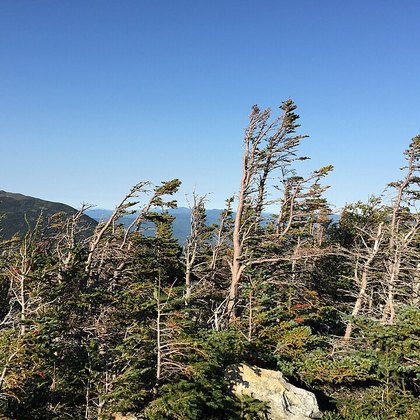
Breeds in damp, shaded conifer and mixed forest of spruce and larch, with moss, dead wood and dense undergrowth; in the south of the range in montane forest up to the treeline and in the dwarf scrub above it. It winters in evergreen forest, bamboo and scrub in South-East Asia, often in humid valleys. Vagrants in Alaska are forced into low scrub, the edges of buildings and herb cover.
Where the bird is most often found, arranged by the USNVC — the vegetation classification of the United States and Canada — and CMECS for sea and coast.



Range and movements
It breeds from Finland and north-western Russia eastward across Siberia to Kamchatka, Mongolia, north-eastern China, Korea and Japan; in Japan outside Hokkaido it is resident, while the rest of the population winters in southern China, Taiwan, Indochina, Myanmar and Thailand. The European breeding range has been expanding westward for decades. In the guide area there are multiple records from western Alaska, plus a record on San Clemente Island for southern California, a bird that wintered on the central California coast and one record in New Jersey.
Where and when to look
On the Bering Sea islands most records fall in late May and June. Search low down, along the foot of bushes and around buildings; the bird moves in short hops and shows the blue tail at each one. Away from Alaska the birds involved are winterers that return to the same spot for days, so a reported bird can usually still be found.
Conservation
The species is numerous and the range is vast; even after the split of Himalayan Bluetail, the Red List classifies it as Least Concern (LC). In Europe the breeding range is growing and shifting west. In the guide area only vagrants are involved; records have increased in recent years, which goes with more observers and better recognition of female-type birds.
Scientific name
Tarsiger cyanurus | (Pallas, 1773)
Pallas described the species in 1773 as Motacilla Cyanurus, from material from the Yenisei; because it was later moved to another genus, author and year stand in parentheses. The genus Tarsiger was introduced in 1845 by Brian Houghton Hodgson, from Greek tarsos 'sole of the foot' and Latin gerere 'to carry'. The species name cyanurus is from Greek kuanos 'dark blue' and -ouros '-tailed'. The Dutch name refers to that same tail, the English Red-flanked Bluetail to both tail and flanks.