All species › Waders, gulls and terns › Sandpipers and allies › Sanderling
Sanderling | Calidris alba
Drieteenstrandloper | Correlimos tridáctilo
The Sanderling is the small white bird that runs after the retreating wave and darts away before the next one, as though it were on wheels. Its name in several languages points at something it lacks: alone among sandpipers it has no hind toe. Some birds cover more than ten thousand kilometres in a single journey between the high Arctic and Tierra del Fuego.
Voice
On the beach it is largely silent; what you hear is a short, hard kwip or twick, usually as a party lifts and swings low over the surf. On the breeding grounds a displaying male hangs over the tundra on shivering wings and delivers a sustained low churring rattle, frog rather than bird, with a thin pleet between the phrases. That song is never heard outside the Arctic, which leaves the species all but wordless for most observers.
Recording: Sonothèque ADVL — CC0 · Embouchure du Thar (Saint-Pair-sur-Mer), Manche, Normandie, France · xeno-canto
Identification
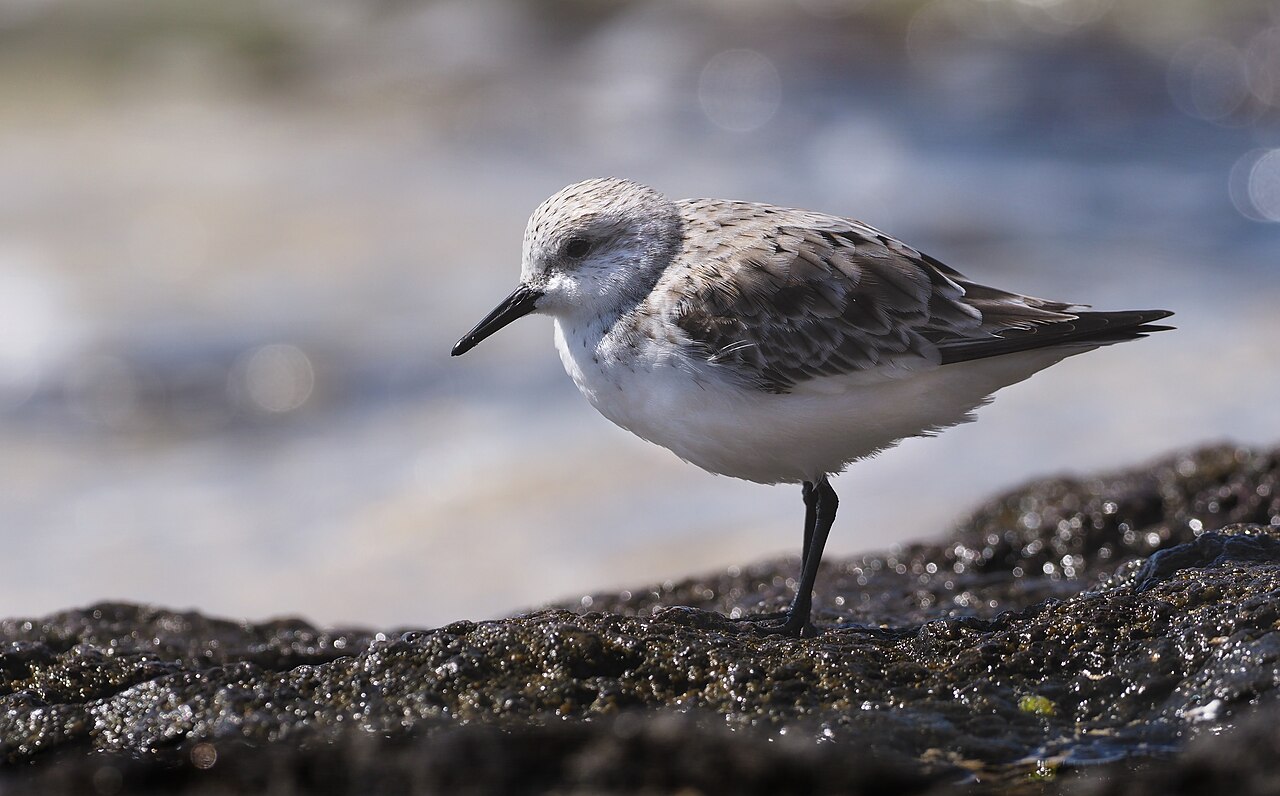
In winter plumage this is the whitest sandpiper there is: clean white from head to belly, with a pearl-grey back and a black mark at the bend of the wing that stands out like a dark shoulder. Bill and legs are black, short and straight, and the hind toe is missing, which is what makes the running so smooth. In flight a broad white wingbar shows against an otherwise dark wing — at distance the clearest mark of all. In breeding plumage head, breast and back are rufous with black spotting, and the bird looks like another species altogether. Juveniles in autumn are white below with a chequered black-and-white upperside.
Confusion species
Dunlin (Calidris alpina) is the same size but darker, with a longer bill drooping at the tip and, in summer, a black belly patch. Semipalmated Sandpiper (C. pusilla) is clearly smaller and greyer and lacks both the white wingbar and the black shoulder. Red Knot (C. canutus) is larger and more thickset, with a short neck and a grey rump. Behaviour helps most: no other sandpiper runs so fast, so low and so close to the waterline.
Habitat
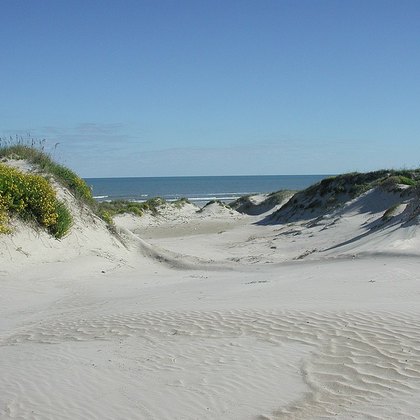
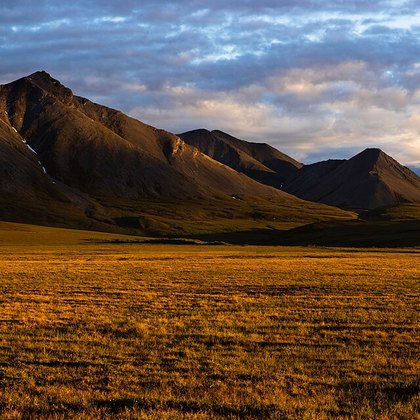
Outside the breeding season this is a bird of sand: wide, flat surf beaches, and to a lesser extent sandbars, mudflats and river mouths. Where the coast is rocky or overgrown it is nearly absent; a shingle beach or a saltmarsh serves at most as a roost. On passage inland it appears along the sandy shores of large lakes and reservoirs, always in small numbers and seldom for more than a few days. It breeds on bare stony ground in the far north, on gravel flats and dry ridges with scattered tundra plants, usually within a day's walk of the sea.
Where the bird is most often found, arranged by the USNVC — the vegetation classification of the United States and Canada — and CMECS for sea and coast.



Range and movements
It breeds in the high Arctic of Canada — the islands of Nunavut and the Northwest Territories — and in Greenland, while in Alaska it is almost purely a migrant. It winters along virtually every sandy coast of the continent: from Massachusetts and southern British Columbia south along both seaboards, through Mexico and Central America, across the whole chain of Caribbean islands and far into South America. Inland it occurs only on passage, in small parties. Birds that winter on one beach come back to it year after year, sometimes to the same kilometre of sand for life.
- Resident
- Breeding (summer)
- Winter
- Passage
- dark = core range, pale = thinly spread
Where and when to look
Walk a wide sand beach in September or October, when the autumn passage is under way: young birds are then often approachable enough for the missing hind toe to be seen, provided you sit down low and wait for them to run towards you. With a flock, watch for the wingbar the moment they lift; it identifies the species right out into the surf.
Conservation
The global breeding population is put at some 650,000 birds and the Red List treats the species as of least concern. Even so, more than half of the birds have gone in fifty years, and the loss has speeded up over the past decade; in North America it now stands on the list of species that have reached a tipping point. The causes lie on the beach itself: recreation, building and coastal defence take away the roosting places, and where horseshoe crab eggs are harvested the food that should build it up in spring disappears.
Scientific name
Calidris alba | (Pallas, 1764)
Pallas described the species in 1764 as Trynga alba; since it was placed in the genus Calidris, author and year stand in parentheses. Calidris goes back to the Greek kalidris, in Aristotle the name of a grey speckled bird of the waterside; the genus was introduced by Merrem in 1804. alba is Latin for 'white'. That suits the type locality, the coast of the North Sea: the bird that carried the name was a wintering or migrating one in its palest dress, thousands of kilometres from where it breeds.