All species › Passerines › Accentors › Siberian Accentor
Siberian Accentor | Prunella montanella
Bergheggenmus | Acentor siberiano
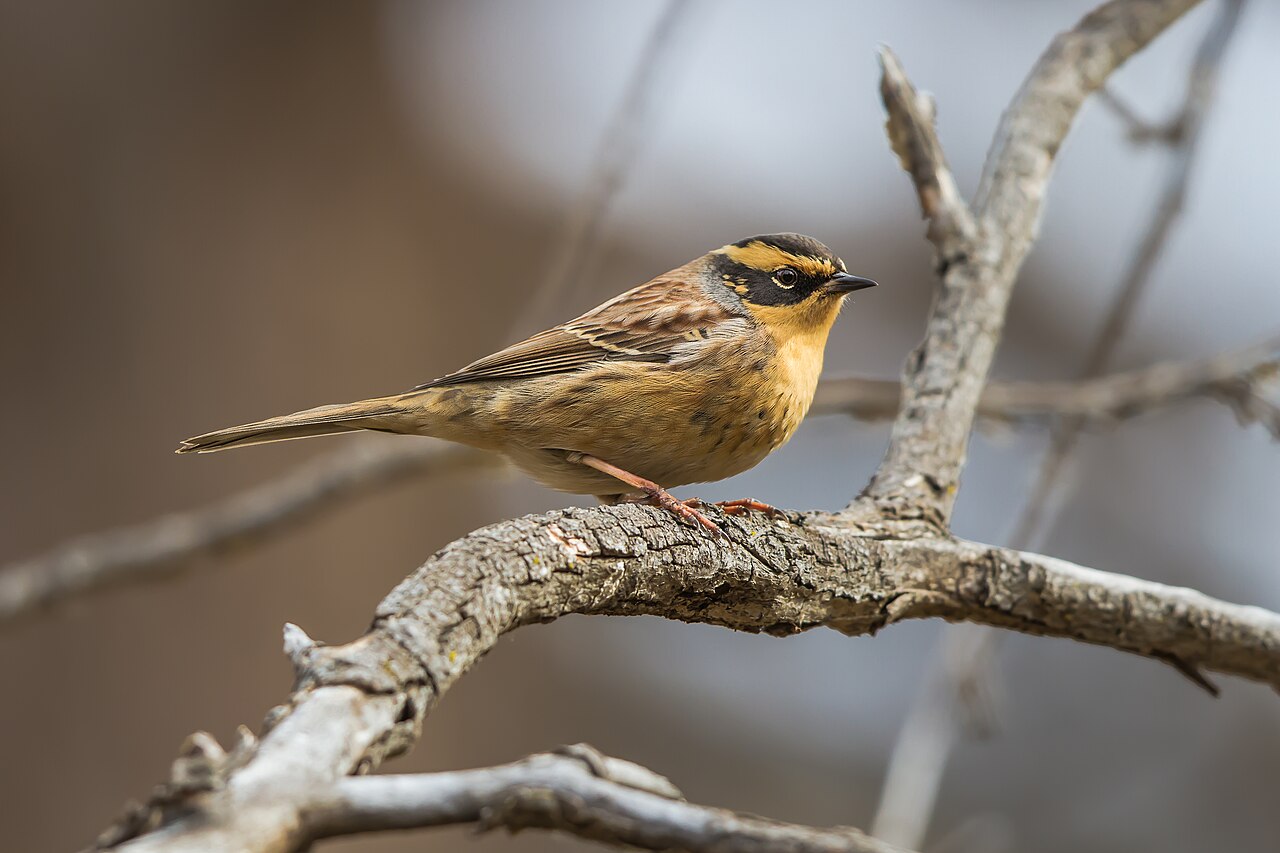
A small brown bird with a broad ochre-yellow eyebrow standing out like a lamp in a dark brown head, and with chin, throat and breast the same ochre. It breeds in Siberia and winters in eastern China and Korea; in this region it is a stray, turning up mainly in autumn on the islands of western Alaska. In the autumn of 2016 hundreds reached Europe at once, and since then this side of the Pacific has been watched more closely too.
Voice
Anyone who meets it here usually hears no more than the call: a thin, high, slightly trilling ti-ti-ti of three notes, coming from a bush or from a bird passing over and easily drowned by the wind. Alarm is a short, sharp chek. The song, a high, rapidly rattling phrase of a few seconds, is delivered on the breeding grounds from the top of a dwarf birch or a dead spruce, above all in the first hours after sunrise and early in the season; in North America it is never to be expected. Migrants and wintering birds are all but silent.
No freely licensed recording has been found for this species yet; what to listen for is described below.
Identification
The head settles it: a dark brown to blackish crown and ear-coverts with, between them, a broad and sharply drawn ochre-yellow eyebrow running back to the nape. Chin, throat and breast are unmarked ochre, the flanks carry rusty streaks and the belly is dirty white. The back is warm brown with chestnut streaks, the rump grey-brown, and the wing shows two narrow pale tips to the coverts. Male and female look much alike; the female is slightly duller, and young birds have a spotted breast. The bill is thin and pointed, which is obvious at once at close range.
Confusion species
Rustic Bunting (Emberiza rustica), which comes from the same country and turns up in the same places, has a conical bill, a short crest, a white throat and rusty streaks on a white breast. Native sparrows such as Song Sparrow are larger, longer-tailed and finely streaked on a pale breast, without the ochre head. In a hurried view the risk is greatest with a young native sparrow; the plain ochre throat and breast and the thin bill decide it. Dunnock (Prunella modularis) of Europe, with a grey head and no eyebrow, is not to be expected in this region.
Habitat
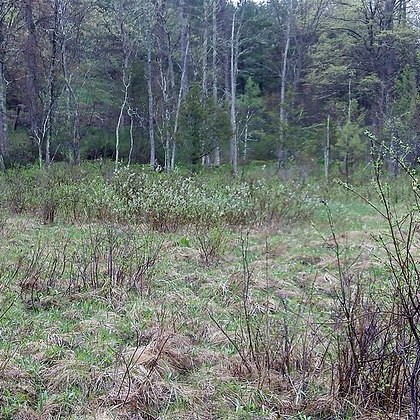
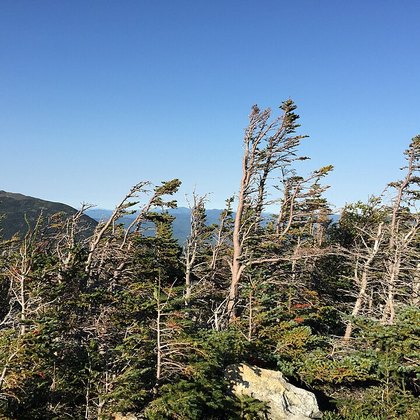
Breeding takes place in Siberia, in dwarf birch and willow scrub at the edge of the conifer forest and along streams up beyond the treeline. In this region it is found wherever a lost bird can find cover and seed: a willow bush in a village on a Bering Sea island, a shelterbelt, a tangle along a creek. Birds that appear inland in the northwest are strikingly often at garden feeders, scratching among the fallen seed beneath.
Where the bird is most often found, arranged by the USNVC — the vegetation classification of the United States and Canada — and CMECS for sea and coast.



Range and movements
The breeding range runs from the Urals east across the whole of Siberia to the Pacific; the winter is spent in eastern China and Korea and in smaller numbers in Mongolia. In this region it is a rare but almost annual visitor to the islands of western Alaska in autumn; further inland and further south there are scattered records in British Columbia, Washington, Idaho and Montana, in autumn, winter and spring, with a bird sometimes staying a whole winter in one place. In October and November 2016 it appeared in unprecedented numbers in Europe — well over two hundred birds, with first records for the Netherlands, Germany and Britain among others — an irruption linked to persistent easterly winds out of Siberia. The map therefore shows only Alaska, as a passage bird; the other records lie too scattered to colour a unit.
Where and when to look
The chance comes above all in the last third of September and in October, in the willow patches of Gambell on Saint Lawrence Island and in the Aleutians, after days of wind from the west. Look low: the bird shuffles over bare ground along the edge of the scrub and, when disturbed, flies a few metres further into cover. Away from Alaska the report usually comes from a garden with a feeder, and then the bird often stays for days.
Conservation
The species is listed as of least concern: the breeding range is enormous and numbers are large and stable. Few threats are in view; the breeding grounds lie largely beyond the reach of farming and building. For this continent there is nothing to conserve — the bird does not breed here, and its appearance depends on wind and weather on the far side of the Bering Sea.
Scientific name
Prunella montanella | (Pallas, 1776)
Pallas described the species in 1776 as Motacilla montanella, among the wagtails; because it was later moved to another genus, author and year stand in parentheses. The genus Prunella was introduced by Vieillot in 1816 and goes back to German Braunelle, formed on braun 'brown'. The species name montanella is a diminutive of Latin montanus, 'of the mountains'. The type locality is Dauria, the country east of Lake Baikal in southern Siberia, where Pallas collected on his journey through the Russian empire.