All species › Passerines › Thrushes and allies › Veery
Veery | Catharus fuscescens
Veery | Zorzalito rojizo
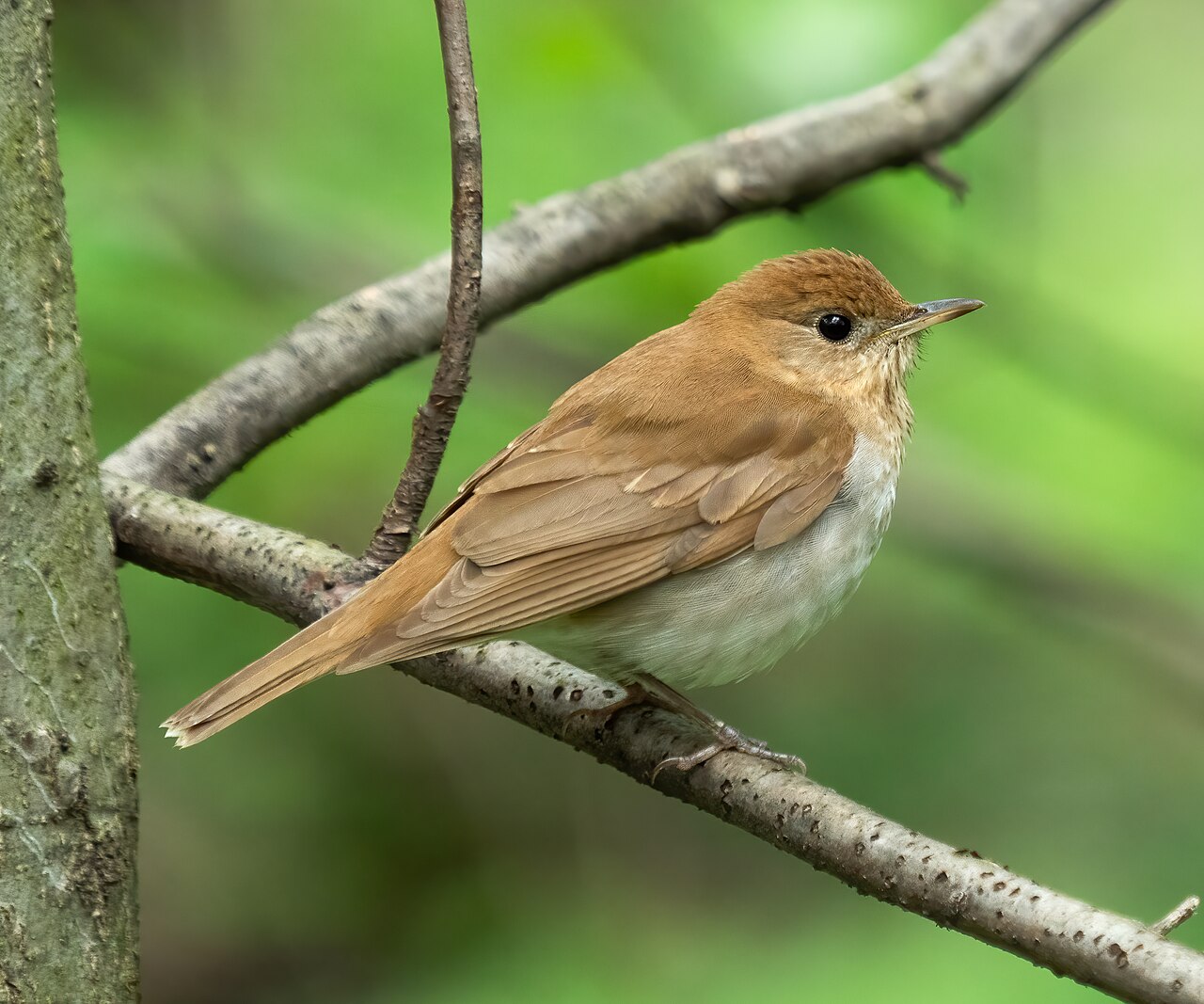
The Veery is the least spotted of the North American Catharus thrushes: warm cinnamon-brown above, with no more than a wash of faint spots on the upper breast. It breeds in moist deciduous forest with dense undergrowth from southern Canada to the northern United States and is the only member of the genus to winter almost entirely in the Amazon basin.
Voice
The song is a downward spiral of fluting notes, two to three seconds long, each note lower than the last and with a resonant overtone because the bird uses both sides of its syrinx at once. It sings from a low, hidden perch, mainly at dusk. The commonest call is a harsh, descending vee-ur, from which the English name comes; also a dry chuckle, a sharp wuck and a slow wee-oo.
Recording: Stanislas Wroza — CC BY-NC-SA 4.0 · Tadoussac dunes, Canada · xeno-canto
Identification
The upperparts are plain warm cinnamon to rufous brown, with no difference in tone between back and tail. The underparts are white with a pale buff upper breast on which the spots are small and faint and sometimes hardly noticeable; the flanks are grey. The eye-ring is absent or at most a thin, incomplete line, which leaves the face looking plain and expressionless. The legs are pink. Western birds are distinctly more olive-brown and more heavily spotted than eastern ones.
Confusion species
Swainson's Thrush has a full buff eye-ring and buff cheeks and sings in a rising spiral; the Veery lacks the spectacles and sings downward. Gray-cheeked Thrush is a colder grey-brown with clearer spots and a grey cheek. Hermit Thrush has a rufous tail against an olive-brown back and cocks its tail after landing. Wood Thrush is bulkier, with large, sharp round spots reaching onto the flanks. An olive-brown western Veery can sometimes be separated in the hand only by the faint breast spots and the weak eye-ring.
Habitat
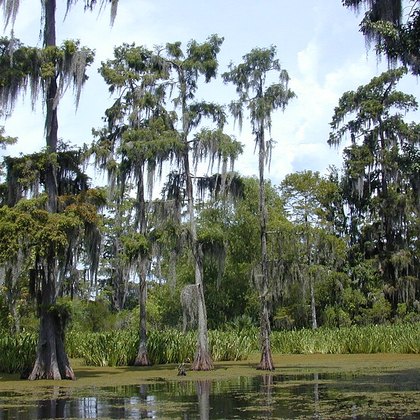
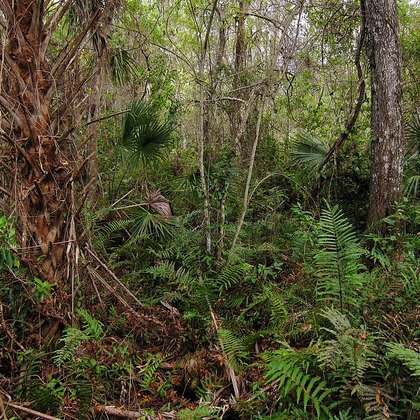
Moist deciduous and mixed forest with a dense shrub layer, preferably near streams, swampy patches or wet hollows: alder carr, willow thicket, young forest after logging and streamside woodland. A closed low understorey matters more than the tree species. Heavy browsing by white-tailed deer thins the understorey and makes a wood unsuitable. In winter it uses the understorey of tropical rainforest and secondary growth.
Where the bird is most often found, arranged by the USNVC — the vegetation classification of the United States and Canada — and CMECS for sea and coast.



Range and movements
The breeding range runs from southeastern British Columbia and Alberta east across southern Canada to Newfoundland and Nova Scotia, and south to Iowa, Ohio and New Jersey, with arms down the Appalachians to northern Georgia and in the Rockies to Colorado and Utah. Migration crosses the Gulf Coast, the Caribbean and Central America; geolocator work has shown that the winter range lies almost entirely in the central and southern Amazon basin of Brazil, with part of it in Venezuela and Colombia. Within the area of this guide it therefore occurs outside the breeding season only as a migrant.
- Breeding (summer)
- Passage
- dark = core range, pale = thinly spread
Where and when to look
The best chance is the last half hour before dark in June, at the edge of a moist woodlot with dense scrub: the descending, resonant song is then almost the only sound, while the bird stays low and out of sight. By day walk a stream bank and watch for the plain rufous back of a thrush flitting off the path; at short range the absence of an eye-ring is the quickest way to separate it from Swainson's Thrush.
Conservation
The IUCN lists the species as Least Concern (LC). Partners in Flight puts the breeding population at about eleven million birds. The Breeding Bird Survey shows a decline of about 0.6 per cent a year between 1966 and 2019, some 28 per cent in total; the Continental Concern Score stands at 12 out of 20. Loss and fragmentation of moist northern deciduous forest, egg-laying by Brown-headed Cowbird and the thinning of the understorey by high white-tailed deer numbers press on the breeding population, while in Amazonia winter habitat is being converted to farmland.
Scientific name
Catharus fuscescens | (Stephens, 1817)
Stephens described the species in 1817 as Turdus fuscescens, from a specimen taken in Pennsylvania; because it was later moved to another genus, author and year stand in parentheses. The species name fuscescens is New Latin for 'growing dark', from fuscus 'dark brown'. The genus Catharus comes from Greek katharos 'pure, clean'. The English name Veery, taken over unchanged in Dutch, imitates the descending vee-ur call.