All species › Passerines › Wrens › Winter Wren
Winter Wren | Troglodytes hiemalis
Oost-Amerikaanse Winterkoning | Chochín hiemal
The Winter Wren is the eastern counterpart of the Pacific Wren, from which it was split only in 2010. It breeds in damp conifer forest from British Columbia to Newfoundland and in the Appalachians, and winters in the wooded southeast of the United States.
Voice
The song is a long, strung-out cascade of clear trills and high ticking notes, five to ten seconds long and notably loud for a bird of nine grams. The individual notes sound fuller and more musical than in Pacific Wren, with the trilled sections more clearly separated. The call is the best mark: a doubled, sharp chimp-chimp, close in pitch and rhythm to the call of a Song Sparrow.
Recording: Jonathon Jongsma — CC BY-SA 4.0 · Miesville Ravine Park Reserve, Goodhue County, Minnesota, United States · xeno-canto
Identification
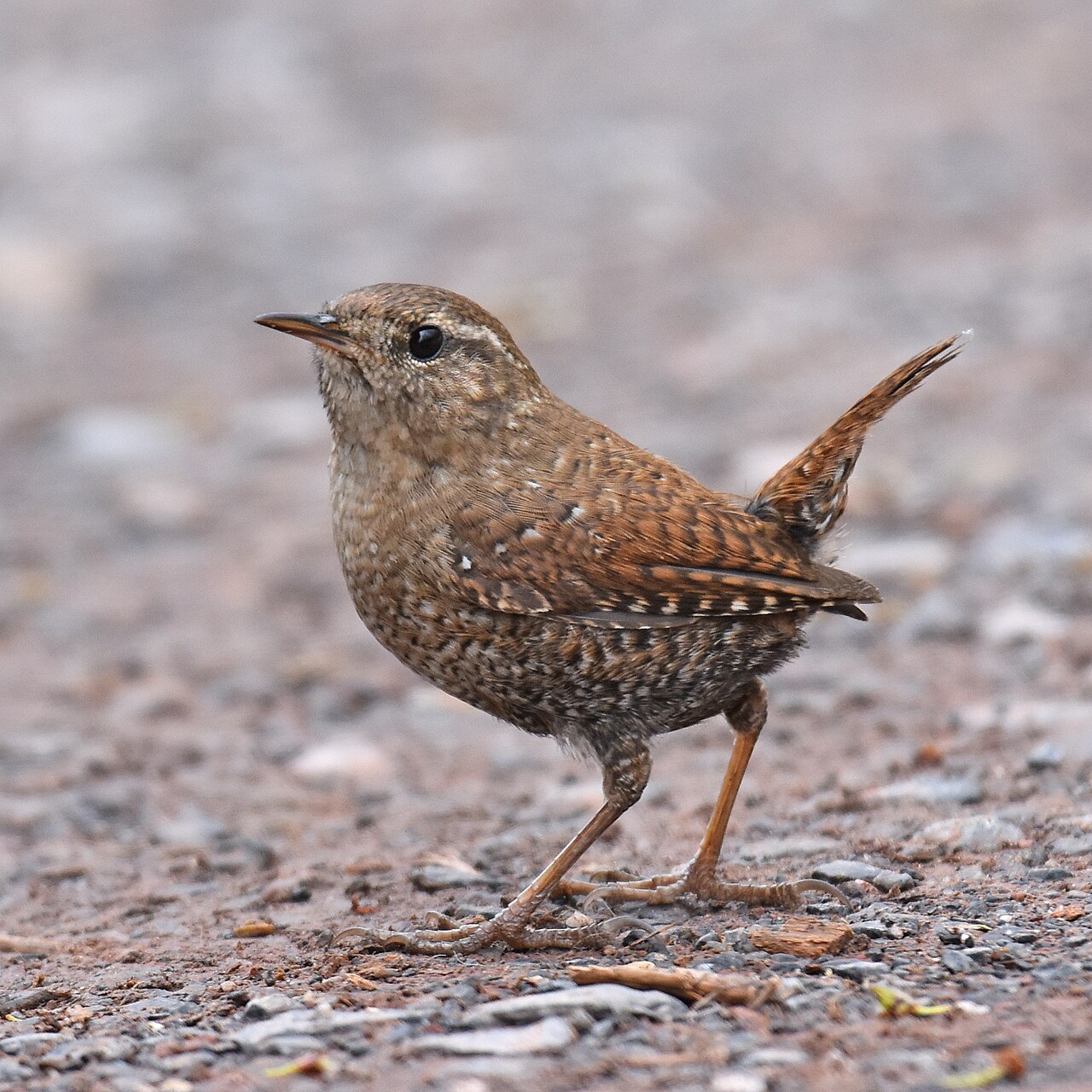
A very small, rounded wren with a short tail held upright almost all the time. The upperparts are warm greyish brown with fine dark barring on wings and tail, the underparts buff-brown with barring on belly and flanks. Throat and upper breast are clearly paler than the rest of the underparts. A pale, narrow eyebrow runs above the eye. The bill is thin and straight, the legs long.
Confusion species
Pacific Wren is darker and more evenly rufous, with a less clearly contrasting throat; in the field the two can be separated reliably only by voice, and they overlap in a narrow zone in Alberta, British Columbia and Montana. The call decides: single and hard in Pacific, a doubled chimp-chimp in Winter. House Wren is larger and longer-tailed, paler and greyer, with a fainter eyebrow and no barring on the belly. Carolina Wren is bulky, rusty brown and has a broad white eyebrow.
Habitat
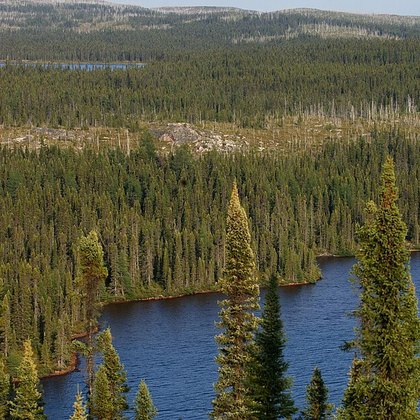
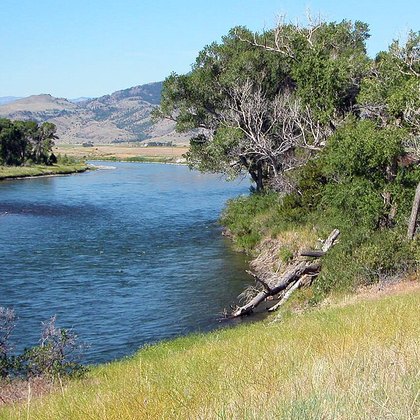
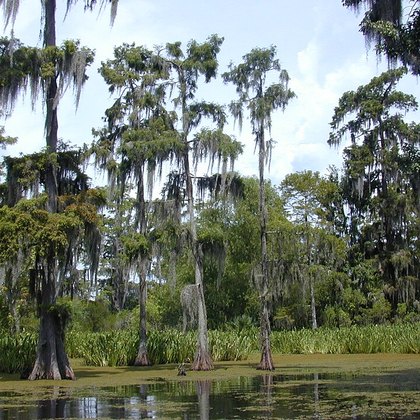
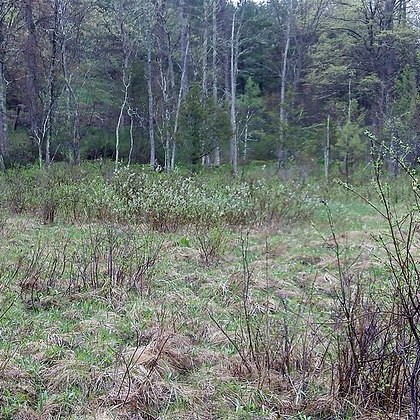
Damp conifer and mixed forest of spruce and hemlock with abundant fallen trunks, root plates and dense undergrowth, usually along streams and in ravines. In the Appalachians it follows the highest spruce and hemlock forest. In winter it uses forest undergrowth, rank growth along creeks and brush piles and log stacks, in deciduous woodland as well.
Where the bird is most often found, arranged by the USNVC — the vegetation classification of the United States and Canada — and CMECS for sea and coast.

Range and movements
The breeding range runs from eastern British Columbia and Alberta through the boreal belt of Canada to Newfoundland and the Maritimes, and south into the Great Lakes states and New England. A second breeding range lies in the Appalachians, from West Virginia to northern Georgia. It is a short-distance migrant and winters in the southeastern United States, from Texas and the Gulf coast to Florida and north to the Ohio valley; very small numbers reach northeastern Mexico.
- Resident
- Breeding (summer)
- Winter
- Passage
- dark = core range, pale = thinly spread
Where and when to look
In May and June a hemlock ravine in the Appalachians or the boreal forest of Ontario is the best place: the song carries far and goes on for a long time. In winter it is easiest at a brush pile or an upturned root plate along a creek — a short burst of pishing usually brings it into view within a minute.
Conservation
The species is listed as of least concern and numbers are broadly stable. It is bound to old, damp conifer forest with dead wood; clearcutting lowers densities sharply. In the Appalachians the damage to hemlock by the introduced adelgid Adelges tsugae is a pressure, since the southern breeders sit in exactly those forests.
Scientific name
Troglodytes hiemalis | Vieillot, 1819
Louis Pierre Vieillot described the species in 1819 as Troglodytes hiemalis, with Nova Scotia and New York as the type area; Oberholser restricted this to Nova Scotia in 1902. Because the species still stands in its original genus, author and year carry no parentheses. The genus name Troglodytes is Greek for 'cave-dweller', from trogle 'hole' and dyein 'to creep into'. The species name hiemalis is Latin for 'of winter', from hiems 'winter', after the season in which the bird is met with in the south of its range.