All species › Passerines › Wrens
Wrens | Troglodytidae
Winterkoningen | Chochines
These are small brown birds with fine barring on wings and tail and a thin, slightly curved bill; the tail is often flicked steeply upright. They move through dense scrub, brush piles, reed beds and rock crevices in a mouse-like way, creeping into every opening in search of insects and spiders. For the size of the body the voice is remarkably loud: sustained, rapid trills and rolling phrases kept up for minutes on end, answered in some species by the female with a rattling call, so that it sounds like one continuous outburst. The nest is, in part of the family, a closed ball of grass with a side entrance, in others a cavity or niche stuffed full of twigs; the male builds several rough starts and the female then picks one and finishes it with feathers and hair. Outside the breeding season several birds crowd into the same narrow hole in cold weather to get through the night.
Native species 10 species
Species that occur here by nature: breeding birds, winter visitors and passage migrants. They are arranged by genus, in the sequence of the list.
Salpinctes 1 species
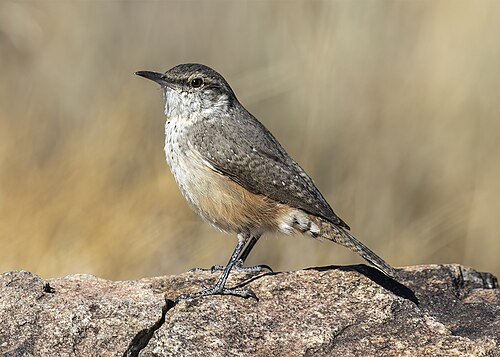


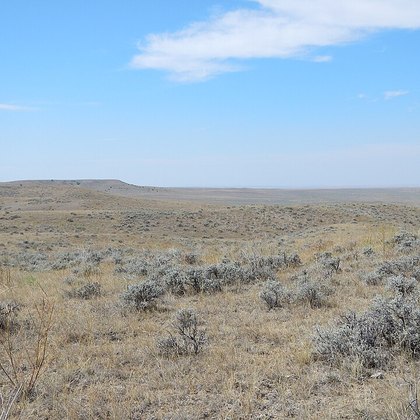
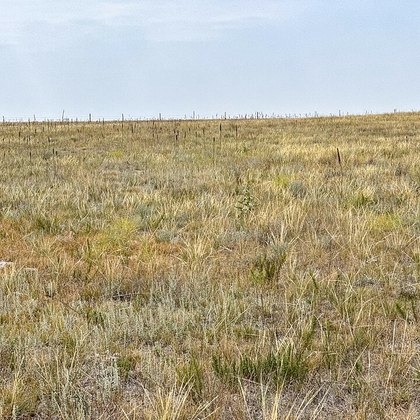


Thryothorus 1 species
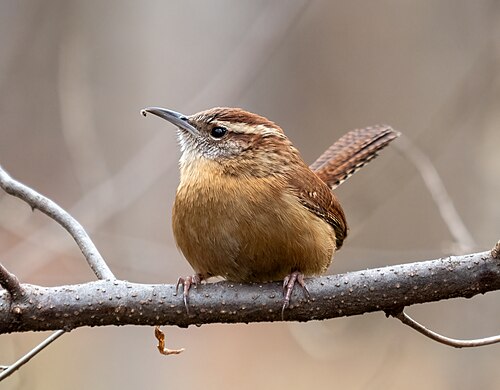

Thryomanes 1 species
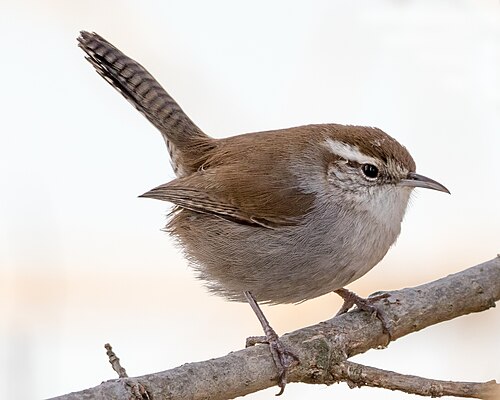
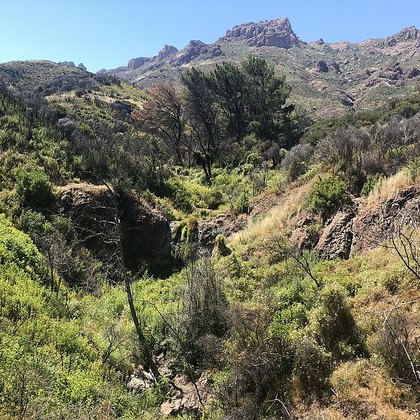
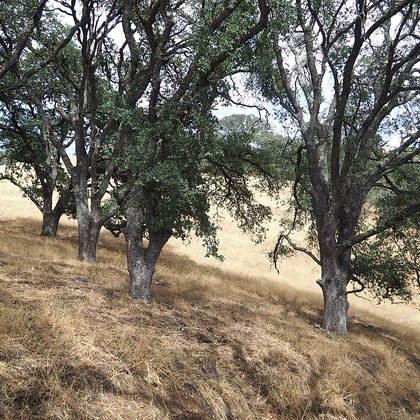
Campylorhynchus 1 species

Cistothorus 2 species
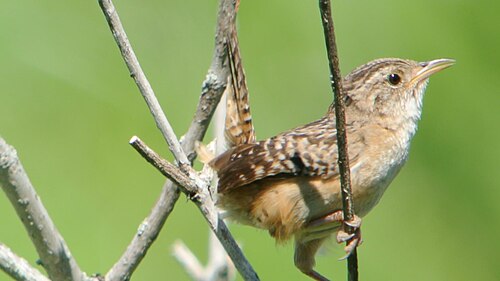




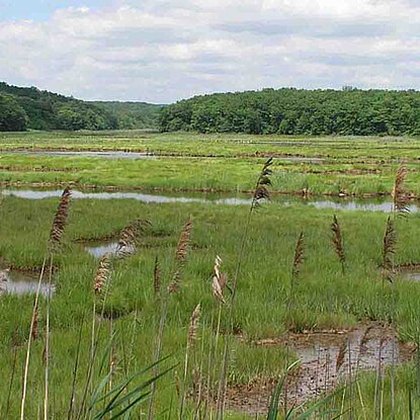
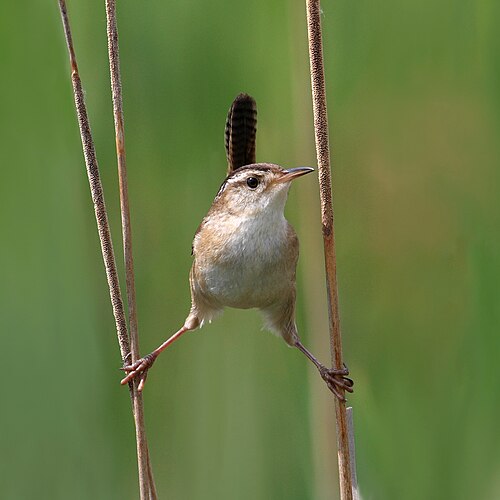

Troglodytes 3 species
-

Northern House Wren
Troglodytes aedon Gardens and parks
 Thickets and woodland edge
 Deciduous forest
 Orchard and vineyard
 Town and city
-
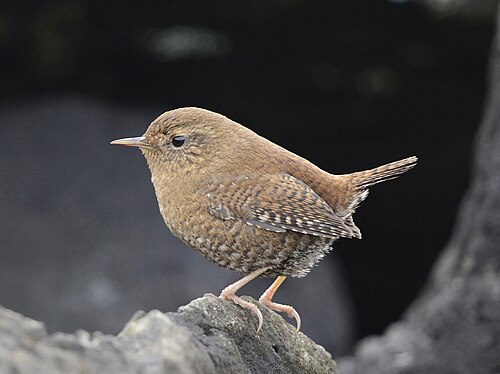
Pacific Wren
Troglodytes pacificus Montane and coastal conifer forest
 Boreal conifer forest
 Rivers and streams
- Thickets and woodland edge
 Sea cliffs
-

Winter Wren
Troglodytes hiemalis- Boreal conifer forest
- Deciduous forest
- Rivers and streams
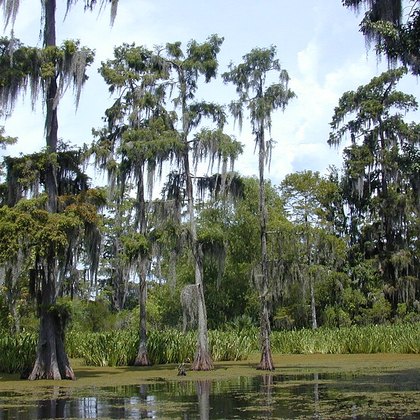 Swamp forest
- Thickets and woodland edge