All species › Passerines › Wrens › Canyon Wren
Canyon Wren | Catherpes mexicanus
Kloofwinterkoning | Cucarachero barranquero
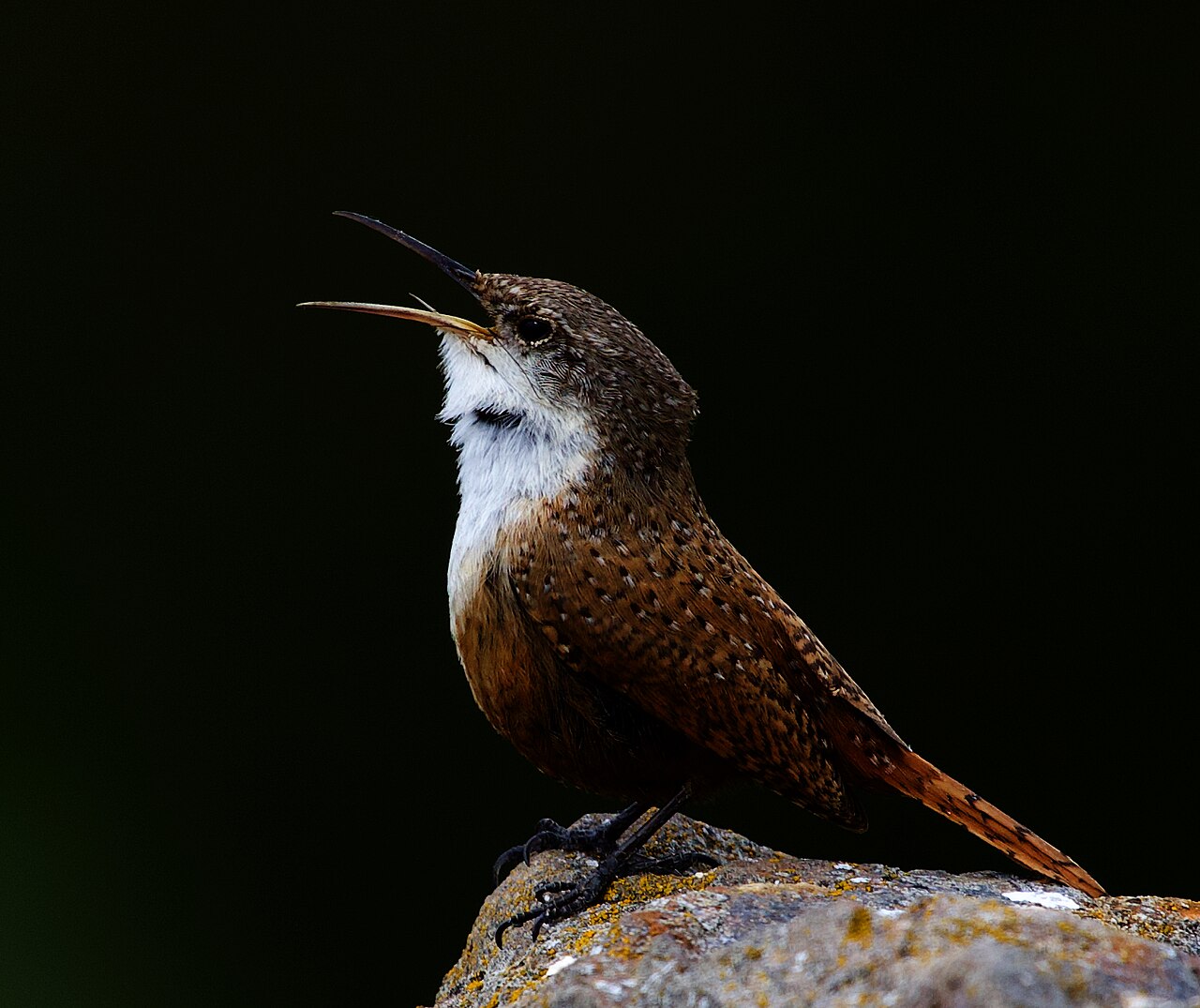
The Canyon Wren is the bird of the bare canyon wall: chestnut-brown, with a sharply set-off white throat and breast, and a long thin bill that reaches deep into rock crevices. Its descending series of whistles is the sound of rocky gorges across the American West.
Voice
The song is a series of ten to twenty clear whistles that fall gradually in pitch and tempo, often ending in two or three rasping jeet notes. It is loud for so small a bird and bounces off the canyon walls, making the singer hard to place. Singing goes on all year, and pairs call to one another outside the breeding season as well. In territorial disputes the song becomes harsher and lower. The contact call is a sharp, drawn-out bzeet.
Recording: Ana Rebeca Martinez Martinez — CC0 · Santa María Coatlán, San Pablo Coatlán, Oaxaca, Mexico · xeno-canto
Identification
Upperparts and belly deep chestnut with fine white speckling; the head is greyer and salt-and-pepper flecked. The throat and upper breast are pure white and stand out sharply against the rufous underparts — the most conspicuous feature, even in shade. The tail is rufous, short and square-cut, with fine black bars. The bill is notably long, thin and slightly decurved. The skull is somewhat flattened and the vertebral column attaches higher on it than in most birds, which allows foraging in narrow crevices. The bird moves over vertical walls and overhangs in short hops.
Confusion species
Rock Wren shares the habitat but is grey-brown rather than chestnut, has a finely speckled instead of plain white throat, a longer tail with a buff terminal band, and performs the deep bob that Canyon Wren does not; its song is a dry trill, not a descending whistle series. Bewick's Wren has a white eyebrow and white tail corners and keeps to scrub. The combination of white throat, rufous belly and long straight bill is otherwise unmistakable.
Habitat
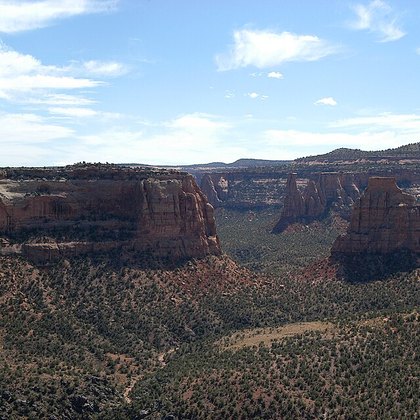
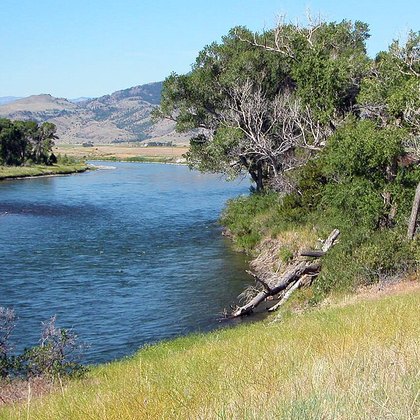
Steep, rocky terrain in arid country: canyons, cliffs, rock faces, boulder fields and rocky river banks, often near water but also far from it. Territories are large, widely spaced and held year-round. Dams, bridges, stone buildings and abandoned mine works are used as well. The nest is a cup of moss and spider silk on a ledge or in a crevice, usually behind an overhang.
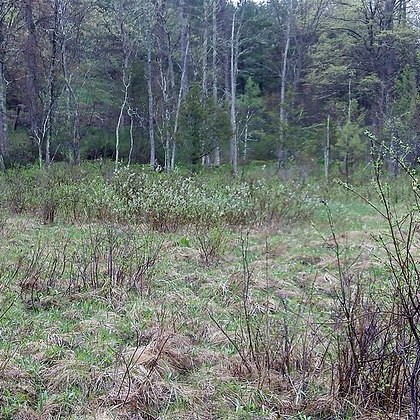
Where the bird is most often found, arranged by the USNVC — the vegetation classification of the United States and Canada — and CMECS for sea and coast.



Range and movements
Resident from southern British Columbia — where it reaches its northern limit in the Okanagan valley — through the American West into central and southern Mexico. Disjunct populations breed in the Black Hills of southwestern South Dakota, northeastern Wyoming and southeastern Montana. The range is largely static; at most, birds leave the highest gorges in severe winters for lower parts of the same area. East of the Great Plains the species is absent.
- Resident
- Breeding (summer)
- Winter
- Passage
- dark = core range, pale = thinly spread
Where and when to look
Stand at the mouth of a canyon in the first hour after sunrise and wait for the descending whistles; echo makes direction hard to judge, so then scan the wall with binoculars for a small rufous shape moving sideways across the rock. Against the light the white throat is often the only part that shows.
Conservation
Partners in Flight puts the global breeding population at about one million birds; the Continental Concern Score is 8 out of 20. The Breeding Bird Survey shows a stable trend between 1968 and 2015. The habitat consists largely of ground unsuited to farming or building, which keeps pressure low; locally, recreational climbing near nest sites and the flooding of canyons by reservoirs play a part.
Scientific name
Catherpes mexicanus | (Swainson, 1829)
William Swainson described the species in 1829 as Thryothorus mexicanus, from a specimen taken at Real del Monte in Hidalgo, Mexico; because it later moved to another genus, author and year stand in parentheses. Spencer Fullerton Baird introduced the genus Catherpes in 1858, from Greek katherpo 'to creep down', after the habit of clambering down vertical rock faces. The species name mexicanus refers to Mexico, source of the type material and holder of much of the range.