All species › Gamebirds › New World quail
New World quail | Odontophoridae
Tandkwartels | Codornices americanas
The lower edge of the bill is finely serrated, which lets hard seeds and seed husks be cut through; in many species a forward-curving plume also bobs on the head in time with the bird's running. Escape is preferably on foot: only when almost trodden on do the birds burst up in every direction with a loud whirr of wings, after which a swelling assembly call whistles the group back together. In spring an unpaired male whistles the same clear two-part phrase from a fence post or low branch day after day. The nest is a grass-lined hollow beneath a tussock or shrub, usually with a roof of bent-over stems and an entrance at the side, so that it is invisible from above. In some species the male takes charge of a first clutch while the female starts a second. The chicks eat mainly insects for the first weeks. In dry country the birds are tied to drinking places, appearing there in the morning and towards evening.
Native species 6 species
Species that occur here by nature: breeding birds, winter visitors and passage migrants. They are arranged by genus, in the sequence of the list.
Callipepla 3 species
-
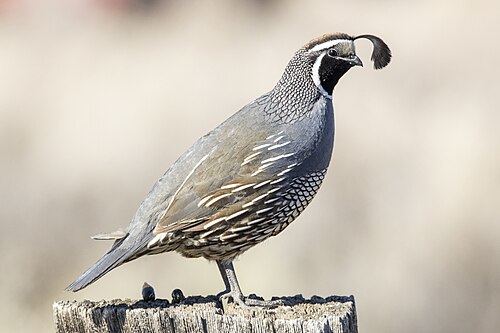
California Quail
Callipepla californica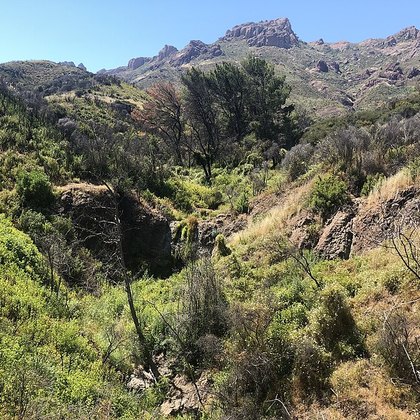 Chaparral
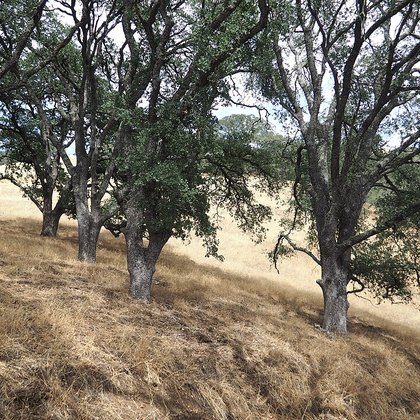 Savanna and oak woodland
 Gardens and parks
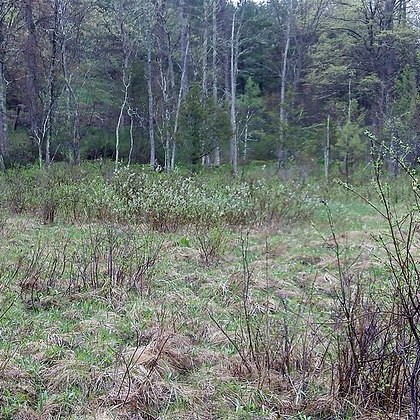 Thickets and woodland edge
 Riparian zone
-
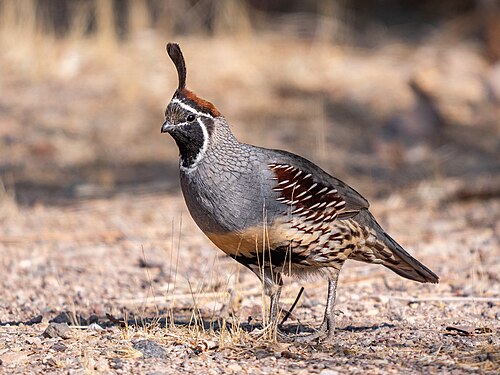
Gambel's Quail
Callipepla gambelii Desert and semi-desert
- Riparian zone
- Thickets and woodland edge
- Gardens and parks
-
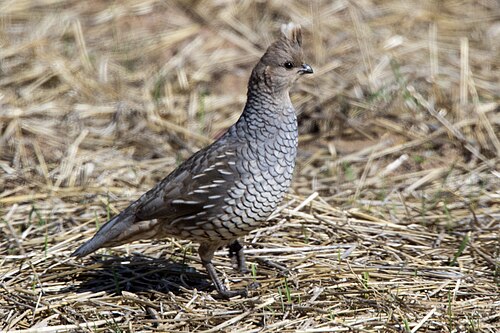
Scaled Quail
Callipepla squamata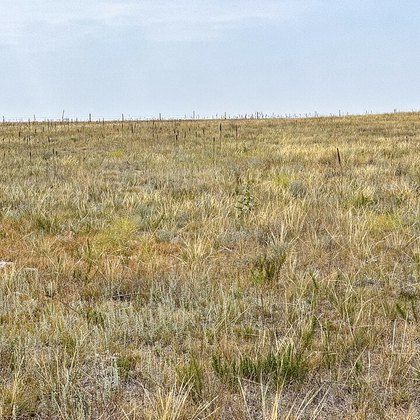 Shortgrass prairie
- Desert and semi-desert
 Pasture and rangeland
Colinus 1 species


Cyrtonyx 1 species