All species › Pelicans, herons and ibises › Ibises and spoonbills
Ibises and spoonbills | Threskiornithidae
Ibissen en lepelaars | Ibis y espátulas
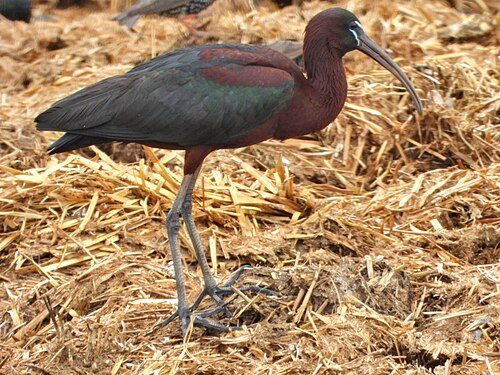
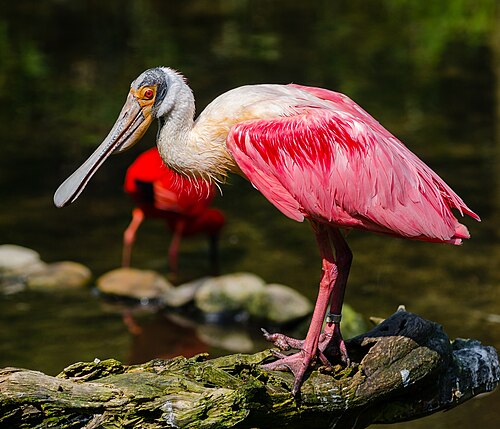
Two bill shapes serve the same end: finding food that cannot be seen. The long, downcurved bill is pushed deep into mud or wet soil and feels for crustaceans, worms and insect larvae with a highly sensitive tip; the flat bill, widened into a spatula at the end, is swept sideways through shallow water held slightly open and snaps shut the instant something touches it. Both allow feeding in turbid water and after dark. In flight the neck is held stretched out rather than drawn back, with quick beats broken by short glides, often in single file. Breeding takes place in mixed colonies, on a platform of sticks in shrubs, trees or reeds, where both parents take turns incubating and the young reach deep into the adult's throat for food. Away from the colony these birds are quiet; within it there is grunting, croaking and the clattering of bills.
Native species 4 species
Species that occur here by nature: breeding birds, winter visitors and passage migrants. They are arranged by genus, in the sequence of the list.
Eudocimus 1 species






Plegadis 2 species