All species › Waders, gulls and terns › Stilts and avocets
Stilts and avocets | Recurvirostridae
Kluten | Avocetas y cigüeñuelas
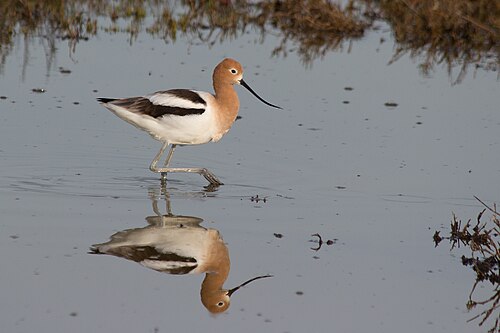
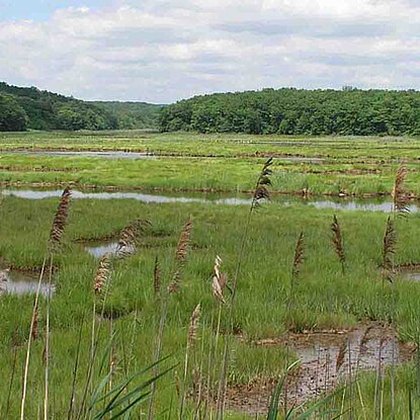
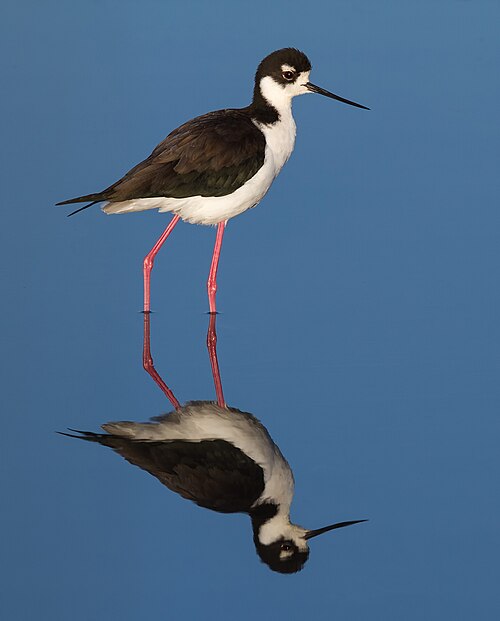
Feeding is done wading in shallow, often saline or alkaline water. In the species with an upturned bill it goes by touch: the bill is swept sideways through the top layer of silt in a steady rhythm, the curved part sliding flat along the bottom; species with a straight bill instead pick deliberately from the water surface and from water plants. The legs are long enough to wade deeper than other shorebirds can manage, and where the bottom falls away the bird swims and tips forward to reach its food. Midge larvae, brine flies, small crustaceans and seeds make up the bulk of the diet. The nest is a scrape close to the waterline, often in loose groups; if the water rises, material is pushed in under the eggs and the rim is built up. At any threat the whole group takes to the air with loud, sharp yelping and keeps diving over the intruder, while a parent limps along the ground to draw attention away from the chicks.
Native species 2 species
Species that occur here by nature: breeding birds, winter visitors and passage migrants. They are arranged by genus, in the sequence of the list.
Recurvirostra 1 species