All species › Waders, gulls and terns › Stilts and avocets › Black-necked Stilt
Black-necked Stilt | Himantopus mexicanus
Amerikaanse steltkluut | Candelero americano
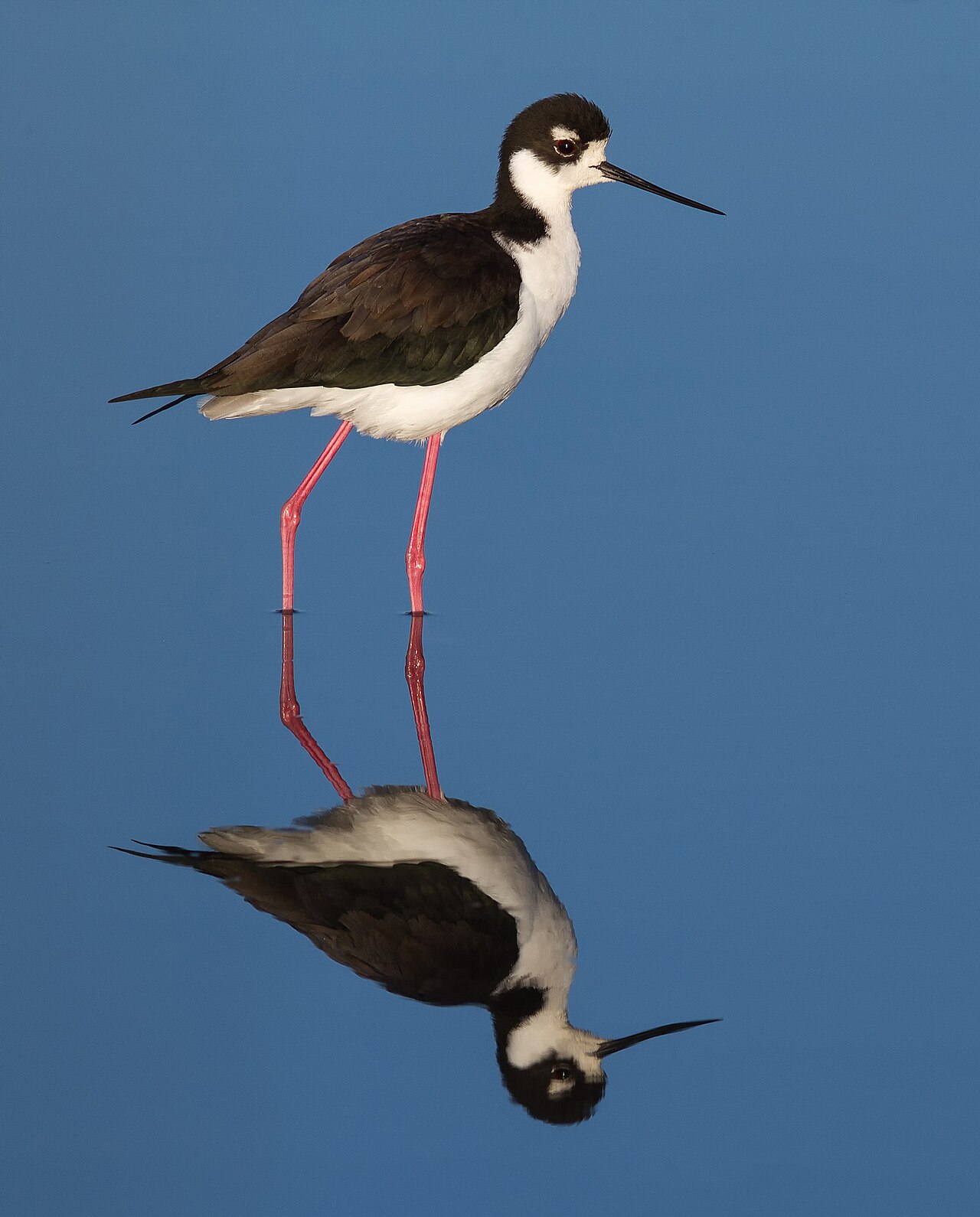
The Black-necked Stilt stands on legs that, in proportion to the body, are exceeded only by those of a flamingo: pink-red stilts under a black-and-white body, with a bill as thin and straight as a needle. It belongs to shallow water, often salt or brackish, and nests in loose parties on bare shores, dykes and sand ridges. Hawaii has a form of its own that never leaves the islands.
Voice
A sharp, yapping call: kyep-kyep-kyep, in series that grow shorter and faster the closer you come to the nest or the chicks. Let a crow or a heron pass over and the whole party lifts, the yapping running together into a sustained chorus that carries across the water. Birds feeding quietly are silent; what you hear comes almost always from a bird giving alarm. In flight there is also a single, higher kip, often the first sign that a stilt is crossing the pool.
Recording: José María Loaiza B. — CC BY-NC-SA 4.0 · Humedal La Segua, Torre de observación, Ecuador · xeno-canto
Identification
Crown, neck, back and wings are glossy black, the rest of the bird white, with a white spot above and behind the eye and a white rump that shows in flight as a wedge between the black wings. The bill is black, thin and dead straight; the legs are pink-red and project about a third of the body length beyond the tail in flight. The female has a browner, less glossy back than the male, which can be seen when a pair stands side by side. Juveniles are grey-brown above with pale feather edges and have dull pink legs. The wing is wholly dark both above and below, without bar or patch: in flight this is a black-and-white bird with no pattern in it.
Confusion species
American Avocet (Recurvirostra americana) often stands in the same pool and is also black and white, but larger, with an upcurved bill, blue-grey legs and, in summer, a rusty head and neck. The difference is clearest in flight: the avocet shows a boldly marked black-and-white wing, the stilt a wing that is plain dark on both surfaces. Young stilts are brown above and less sharply marked, but the length and the colour of the legs still settle it. Beyond that, no wader of the area wades on legs of this length; Killdeer (Charadrius vociferus) and the other birds of the same pool edges are short-legged beside it.
Habitat
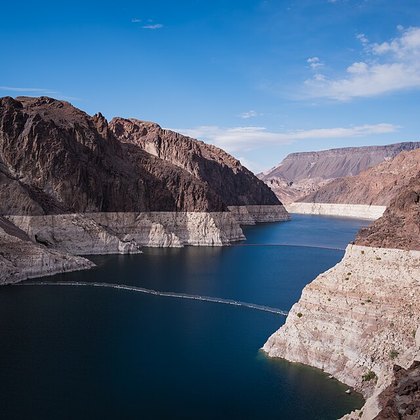
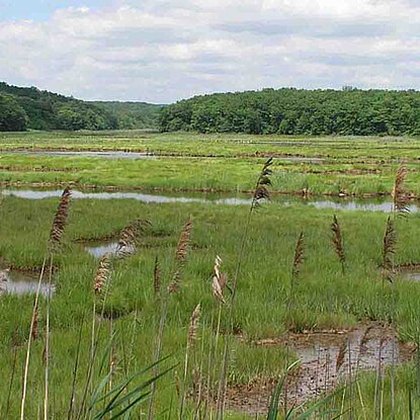
Shallow open water with little or no vegetation: salt-evaporation ponds, sewage lagoons, managed impoundments on reserves, alkali flats around saline lakes, salt marsh and the margins of lagoons. Flooded rice fields and wet farmland are used as well, in California, Texas and Louisiana in large numbers. It needs water it can wade in without swimming — it will not go deeper than its legs are long — and beside that a bare, low shore to nest on. Deep water, closed reedbeds and woodland it does not use.
Where the bird is most often found, arranged by the USNVC — the vegetation classification of the United States and Canada — and CMECS for sea and coast.



Range and movements
A breeding bird of the interior west of the United States, from Oregon and Idaho to New Mexico and Texas, and of the Gulf and Atlantic coasts north to New Jersey. From California, Texas and Florida southward it stays all year: throughout Mexico, across the Caribbean islands and through Central America, and on south into South America, beyond the edge of the map. Hawaii holds the subspecies knudseni, which stays on the islands the year round. During the twentieth century the western range moved with the water people made: irrigation pools, salt pans and treatment lagoons produced shallows where it now breeds and where it was absent around 1950.
- Resident
- Breeding (summer)
- Winter
- Passage
- dark = core range, pale = thinly spread
Where and when to look
Look for it in May and June along an evaporation pond or a sewage lagoon: there it walks the shallow margin and picks from the surface film rather than probing as most waders do. Come too near a nest and you will know at once — the yapping starts long before you see the bird; turn back then, because the eggs lie open on bare grit. In flight the far-projecting legs are the mark that identifies it at long range.
Conservation
The Red List does not treat this stilt separately; there it is counted with the stilt of the Old World, and it therefore stands as not evaluated in this guide's data. Numbers in North America run into the hundreds of thousands and have risen in the west, as salt pans, treatment lagoons and rice fields produced new shallow water. Where farm drainage carrying selenium is discharged into closed basins, deformed embryos and chicks have been found, as at Kesterson Reservoir in California's Central Valley in the 1980s. The Hawaiian form numbers about two thousand birds; there the pressure comes mainly from introduced rats, cats and mongooses.
Scientific name
Himantopus mexicanus | (Müller, 1776)
Müller described the species in 1776 as Charadrius mexicanus, among the plovers; because it was later placed in another genus, author and year stand in parentheses. The genus Himantopus was introduced by Brisson in 1760 and goes back to Greek himas, genitive himantos, 'strap', and pous, 'foot' — the strap-foot, after the long thin legs. mexicanus means 'from Mexico'. The type locality is no more precise than that: Mexico is all that is given.