All species › Passerines › Larks
Larks | Alaudidae
Leeuweriken | Alondras
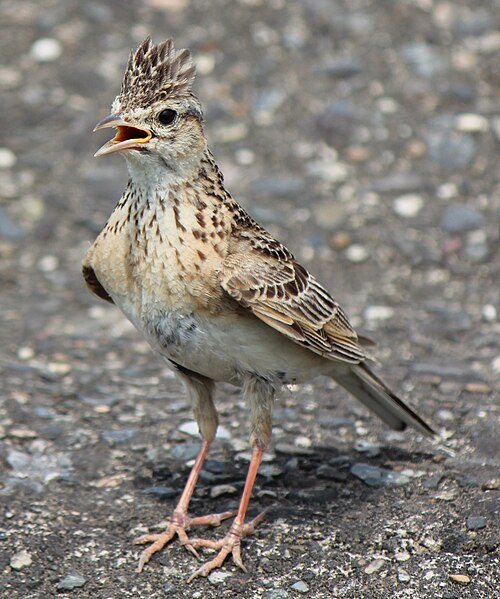
On the back of the tarsus these birds carry separate scales along a rounded ridge, where other songbirds have a single smooth horny plate. The plumage is finely streaked in sand, earth and grey tones and disappears completely against bare ground; a bird lost from view is found again only once it moves. Breeding takes place in a scrape in open, low or unvegetated terrain, and beside the cup a pavement of small stones or clods of earth is often laid, on the side the wind comes from. The young creep away from that scrape days before they can fly and scatter on foot across the ground, which lowers the chance that a single discovery costs the whole brood. Song is delivered high in the air and runs on without a pause, in some species for minutes at a time, with imitations of other birds worked into it. In winter loose flocks move over stubble, road verges and wind-swept snow, and the diet shifts largely from insects to seeds.
Native species 1 species
Species that occur here by nature: breeding birds, winter visitors and passage migrants. They are arranged by genus, in the sequence of the list.



Introduced species 1 species
Species that do not occur here by nature but were brought in or escaped and have held on since. They follow the sequence of the list, not the genera.