All species › Passerines › Larks › Eurasian Skylark
Eurasian Skylark | Alauda arvensis
Veldleeuwerik | Alondra común
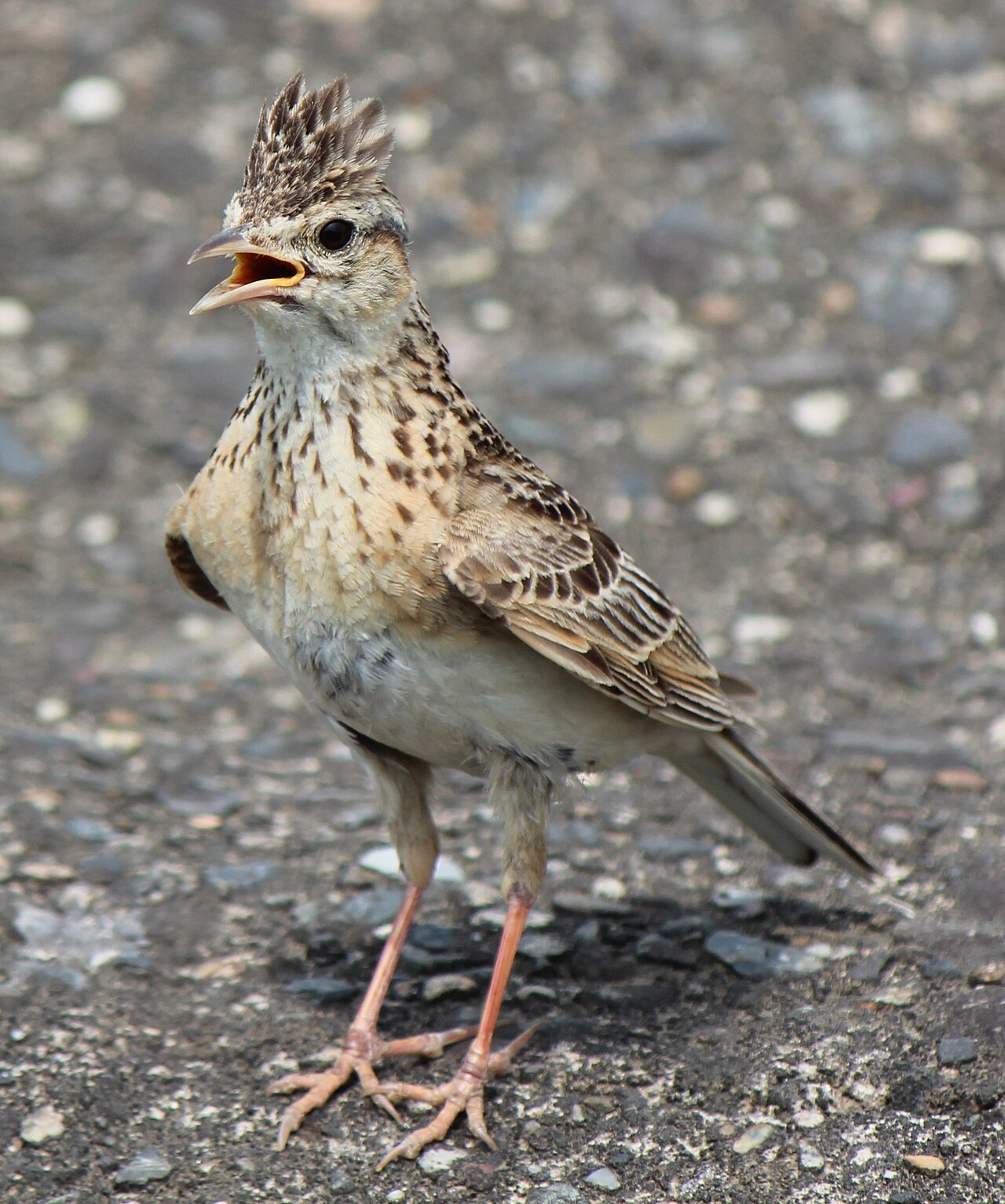
The Eurasian Skylark is a streaked, ground-dwelling songbird of open grassland, with a short blunt crest and white outer tail feathers. In North America it exists in two ways: as an introduced breeding bird in southeastern Vancouver Island, where it was released around 1903, and as an Asian bird that appears yearly in small numbers on the western Aleutians and the Bering Sea islands.
Voice
The song is the identifying feature above all: an unbroken, fast-rolling stream of trilled and whistled notes without clear phrase boundaries, delivered in the song-flight. The male climbs in steep spirals to fifty or a hundred metres, hangs there and sings for two to three minutes on end, considerably longer at the height of the season, then descends in stages. He also sings from the ground or a post, but more briefly. The call is a dry, rolling prreet given by birds as they flush.
Recording: David Tattersley — CC BY-NC-SA 4.0 · Great Britain (near Huddersfield), West Yorkshire, England, United Kingdom · xeno-canto
Identification
A fairly large, heavily built lark with a long wing and a fairly long tail. Upperparts greyish brown with dark streaking, the breast buff with fine streaks that stop sharply at the dingy white belly. On the crown is a short blunt crest that is raised and lowered. The trailing edge of the wing and the outer tail feathers are white; both white edges show on a bird flying away and not on one approaching. The hind claw is long and almost straight. It walks over the ground rather than hopping.
Confusion species
Horned Lark, the native lark of North America, has an unstreaked yellow or white head with a black mask and a black breast band, and two thin black feather horns instead of a crest; its tail is black edged white rather than brown with white outer edges. Vesper Sparrow is smaller, has a short conical bill, a yellowish lore and no white trailing edge to the wing. American Pipit also walks on the ground but is slimmer, thinner-billed and has no crest. The continuous song in the air, not divided into phrases, is known from no other bird in North America.
Habitat
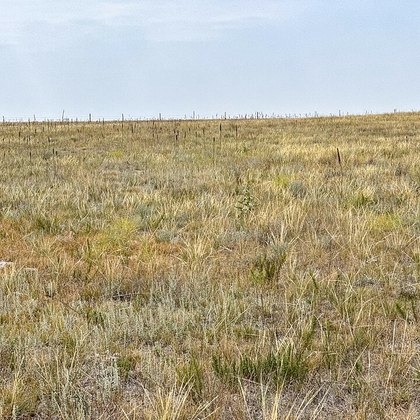
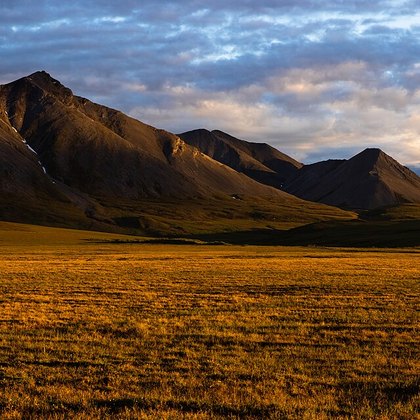
Short to medium-tall open grassland without trees or shrubs: on Vancouver Island mainly the grass of Victoria airport and a few fields and pastures on the Saanich Peninsula, in Asia grassland, arable land and the edge of the tundra. The nest is a scrape on open ground lined with grass, always well away from tall vegetation. In winter the birds feed in flocks on stubble and short grass. Planted trees, building and tall, dense crops make a site unusable for the species.
Where the bird is most often found, arranged by the USNVC — the vegetation classification of the United States and Canada — and CMECS for sea and coast.


Range and movements
Originally a species of Europe and Asia. The North American breeding population goes back to birds released near Victoria in 1903; it reached over a thousand birds around 1962, fell to about two hundred in the 1990s and is now confined to a few dozen at a handful of sites in southeastern Vancouver Island. The offshoot on San Juan Island and Lopez Island in Washington has all but gone, with only scattered records left. In addition, birds of the East Asian subspecies pekinensis appear regularly in May and in autumn on Attu, Shemya and other western Aleutians and on the Pribilof Islands, where breeding has been recorded in some years.
- Resident
- Breeding (summer)
- Winter
- Passage
- dark = core range, pale = thinly spread
Where and when to look
On Vancouver Island the open grass around Victoria airport in April and May is the place: do not look for the bird on the ground but for the sound in the air, and follow it upward until you find the hovering singer. On the Aleutians the species usually attracts notice as a heavy, streaked bird flushing from short grass with a rolling prreet and showing white outer tail feathers.
Conservation
Worldwide the species is listed as Least Concern (LC), but in western Europe it has decreased sharply through agricultural intensification: in the United Kingdom the last two decades show a decline of the order of a few to several tens of per cent, largely through the switch from spring-sown to autumn-sown cereals, which leaves the crop too tall and dense in spring. The Vancouver Island population is falling through building over farmed grassland and through predation by introduced foxes and feral cats; it is on the British Columbia list of species requiring management attention.
Scientific name
Alauda arvensis | Linnaeus, 1758
Linnaeus described the species in 1758 as Alauda arvensis; author and year stand without parentheses, since the species remains in its original genus. Alauda is the Latin word for lark, probably taken over from Celtic. The species name arvensis means 'of the field', from arvum 'ploughland'. The material described came from Sweden; the type locality was later fixed at Uppsala.