All species › Passerines › Rhabdornis, starlings and mynas
Rhabdornis, starlings and mynas | Sturnidae
Spreeuwen | Estorninos
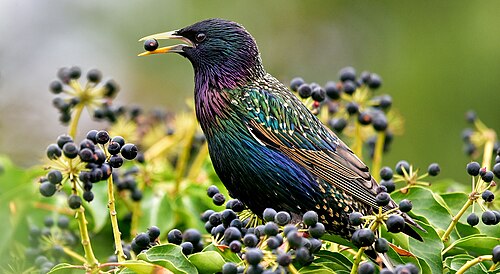
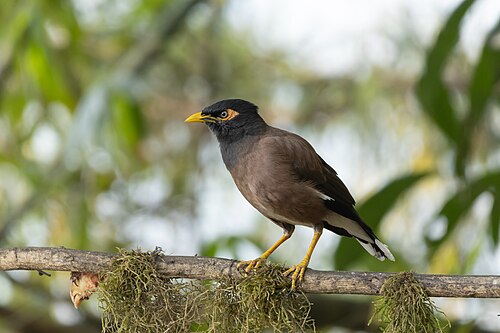
The family does not belong here by nature: in 1890 a few dozen birds were released in a city park on the east coast, and within half a century they had spread across the whole continent, while on the Pacific islands another member of the family was set free and now lives in villages and along roads. They are sturdy, short-tailed birds with a pointed bill that walk over the ground rather than hop, with a purposeful, slightly waddling stride. In autumn the glossy plumage carries pale feather tips that wear away during the winter, so that by spring the bird has turned dark and metallic without moulting. The song is a long, rambling series of whistles, clicks and rattles into which imitated sounds of other birds and of machinery are inserted. Nesting is in cavities, which are taken from other hole-nesting birds with much commotion. Outside the breeding season the birds roost in their thousands and wheel above the roost in dense, coherent clouds before dark.
Introduced species 2 species
Species that do not occur here by nature but were brought in or escaped and have held on since. They follow the sequence of the list, not the genera.