All species › Gannets and cormorants › Cormorants and shags
Cormorants and shags | Phalacrocoracidae
Aalscholvers | Cormoranes
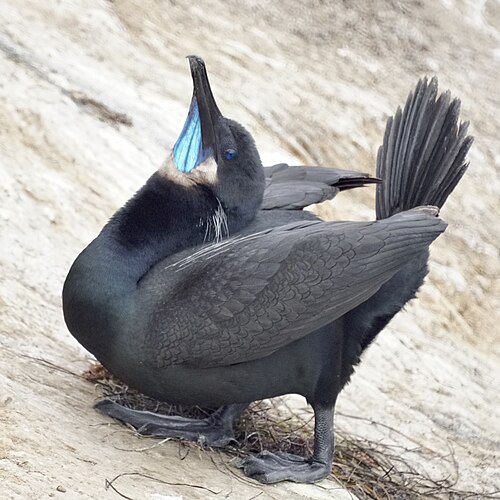
To swallow a caught fish whole, the cormorant first tosses it into the air with a flick of the head and catches it again so it slides down head-first rather than sideways. Through the bare skin of the throat, which acts as a cooling system, the birds shed excess heat on hot days by fluttering that skin rapidly, a mechanism also used by herons and pelicans but especially visible in cormorants because the throat patch is left bare. Shortly before and during the breeding season some species grow temporary ornamental plumes on the head or body that disappear again once mating is over, and within the colony nest material is often stolen from an unguarded neighbouring nest rather than gathered fresh. The eggs have a thin, rough, chalky outer layer over a pale blue-green shell that is often soiled and discoloured within a few days of incubation.
Native species 6 species
Species that occur here by nature: breeding birds, winter visitors and passage migrants. They are arranged by genus, in the sequence of the list.
Nannopterum 2 species






Urile 3 species