All species › Passerines › Shrikes
Shrikes | Laniidae
Klauwieren | Alcaudones
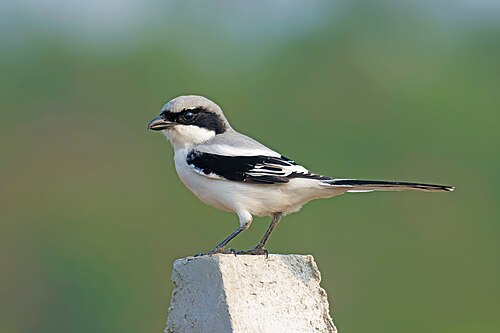
The hooked bill carries a sharp tooth on either side that fits a notch in the lower mandible, used to sever the neck vertebrae of prey. The feet are those of a songbird and too weak to hold anything down while eating, and the answer is to impale the prey on a thorn, a barb of wire or a tight fork of a twig: it is then held fast for tearing apart, and stored at the same time. A territory therefore carries larders of grasshoppers, beetles, mice, lizards and small birds, sometimes for days on end; toxic or foul-tasting prey is left hanging until the substances break down, and the size of the larder counts in the choice of a mate. Hunting is done from a wire, post or bush top with a clear view: the bird drops away at an angle and then sweeps low and undulating up to the next perch. The nest is a bulky, deeply lined cup in a thorn bush. Outside the breeding season male and female each hold a separate winter territory, defended with a rasping call.
Native species 2 species
Species that occur here by nature: breeding birds, winter visitors and passage migrants. They are arranged by genus, in the sequence of the list.