All species › Gannets and cormorants › Anhinga and darters
Anhinga and darters | Anhingidae
Slangenhalsvogels | Aningas
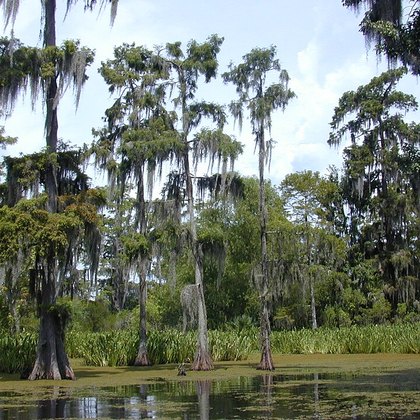
The bill is straight and tapers to a sharp point, without a hook: the fish is not gripped but speared. Several neck vertebrae are set at a fixed kink with a sling of muscle that works like a loaded spring, so the head shoots forward in a sudden thrust. The plumage soaks through and the bones are heavy, so the bird swims low and slowly, often with only the thin, winding neck above water while the body stays out of sight. The tail is long, broad and fan-shaped, with cross-ribbing on the outer feathers; it serves as a rudder underwater and as a lifting surface in the air, for in the warm hours these birds circle high on thermals with the tail spread instead of travelling low over the water on steady wingbeats. They live on fresh, still or slow-flowing water with plenty of vegetation, not at sea. Male and female differ in colour. The nest is a stick platform in a tree over water, often among nesting herons and ibises; there a fast rattling clatter is heard, but away from the colony the bird is silent.
Native species 1 species
Species that occur here by nature: breeding birds, winter visitors and passage migrants. They are arranged by genus, in the sequence of the list.