All species › Tubenoses › Petrels, shearwaters and diving petrels
Petrels, shearwaters and diving petrels | Procellariidae
Pijlstormvogels | Petreles y pardelas
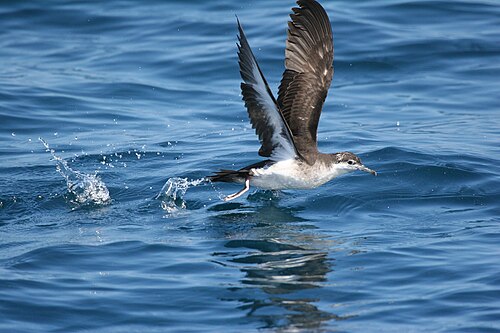
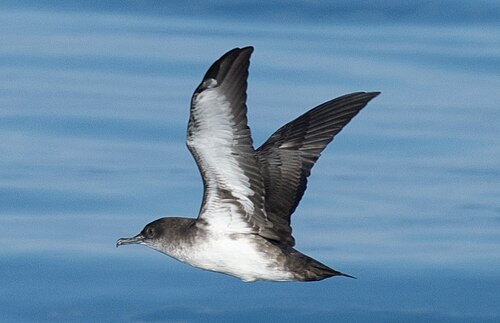
Both nostrils open into a single tube on top of the bill. The flight is distinctive: just above the sea the bird rises at an angle on the wind and then glides back down into the trough on stiff wings, so that the dark upperside and the pale underside flash by turns; the rhythm of those arcs differs between species and at a distance is often the only thing to go on. Food is snatched from the surface in flight or picked up while swimming, and some species row down with half-folded wings tens of metres deep after fish and squid. Carcasses and waste from fishing boats draw large groups that squabble noisily over them. Off the colony the birds gather towards evening in floating rafts on the water; they breed in a self-dug burrow or a rock crevice, and young birds leave for the sea alone at night, on inhabited islands easily disoriented by artificial light. Outside the breeding season many species range across whole ocean basins and cross the equator, so that birds from southern breeding grounds lie off these coasts in midsummer.
Native species 16 species
Species that occur here by nature: breeding birds, winter visitors and passage migrants. They are arranged by genus, in the sequence of the list.
Fulmarus 1 species


Calonectris 2 species
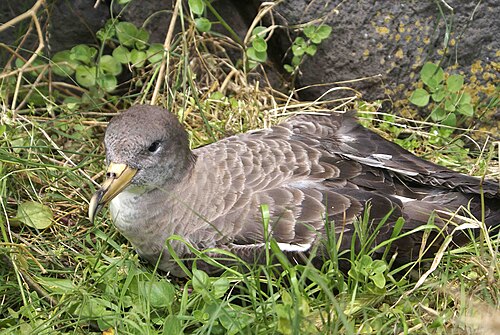

Ardenna 6 species

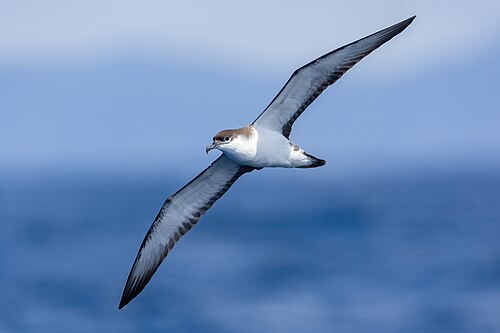


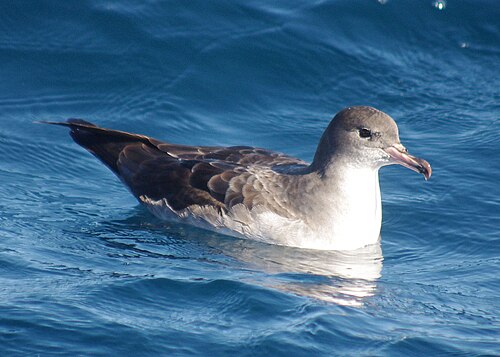
Puffinus 4 species
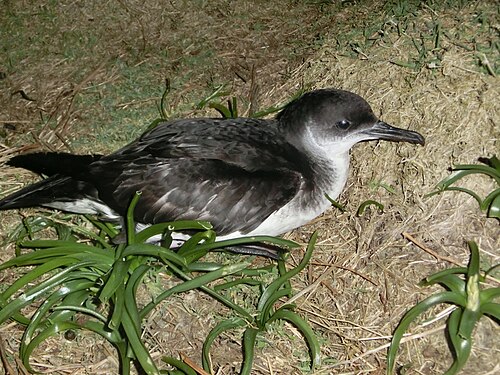


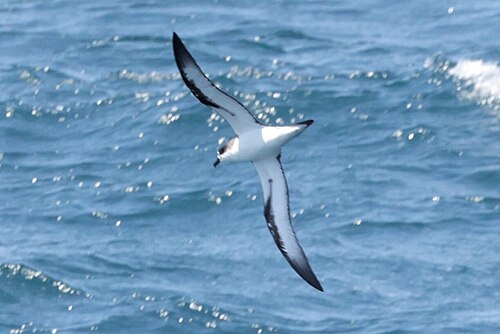


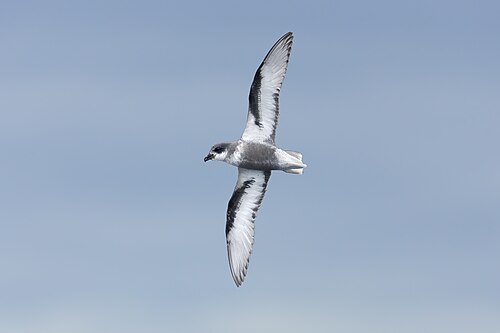
Vagrants 13 species
Birds blown in from other continents, or from far outside their usual range.
-

Bulwer's Petrel
Bulweria bulwerii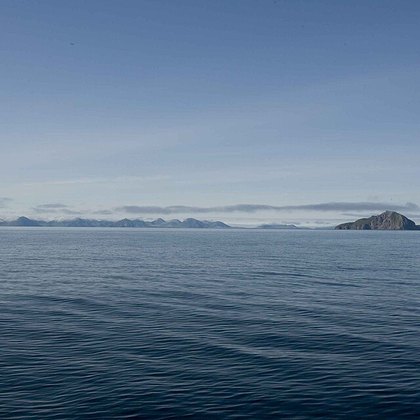 Open ocean
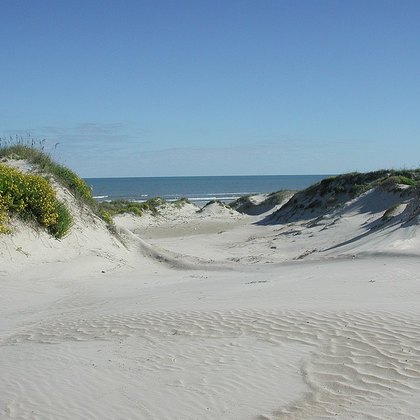 Dunes and sandy beaches
-

Flesh-footed Shearwater
Ardenna carneipes- Open ocean
-
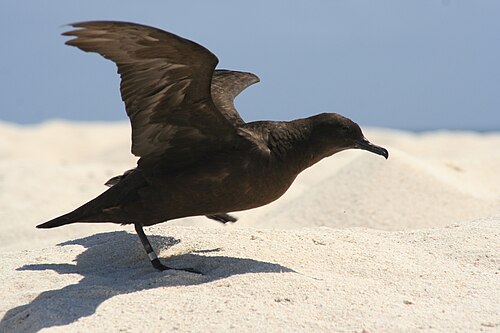
Christmas Shearwater
Puffinus nativitatis- Open ocean
- Dunes and sandy beaches
-

Bermuda Petrel
Pterodroma cahow- Open ocean
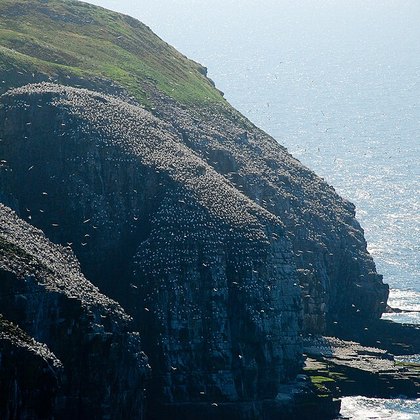 Sea cliffs
-
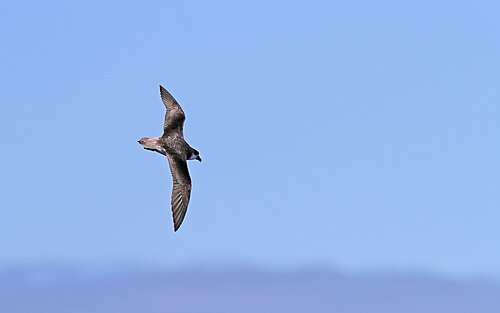
Desertas Petrel
Pterodroma deserta- Open ocean
-
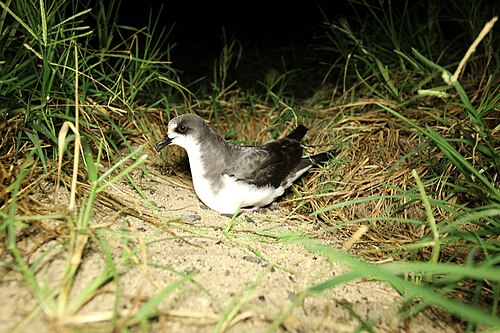
Bonin Petrel
Pterodroma hypoleuca- Open ocean
- Dunes and sandy beaches
-
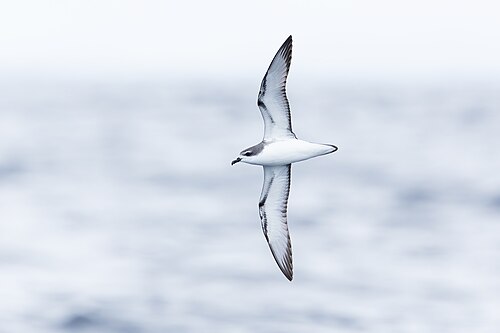
Cook's Petrel
Pterodroma cookii- Open ocean
-
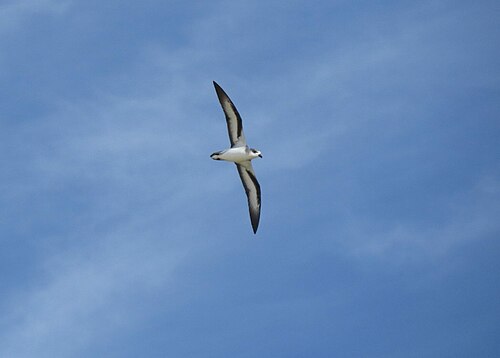
Black-winged Petrel
Pterodroma nigripennis- Open ocean
-
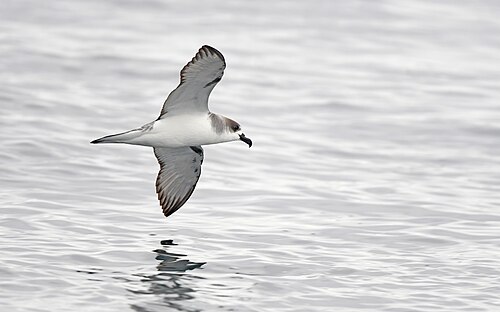
Juan Fernandez Petrel
Pterodroma externa- Open ocean
-

White-necked Petrel
Pterodroma cervicalis- Open ocean
-

Murphy's Petrel
Pterodroma ultima- Open ocean
-

Kermadec Petrel
Pterodroma neglecta- Open ocean
-

Trindade Petrel
Pterodroma arminjoniana- Open ocean