All species › Tubenoses › Petrels, shearwaters and diving petrels › Hawaiian Petrel
Hawaiian Petrel | Pterodroma sandwichensis
Hawaiistormvogel | Petrel hawaiano
The Hawaiian Petrel spends its life over the open Pacific and comes ashore only to breed, in burrows high on the bare volcanic slopes of Maui, Kauai, Lanai and Hawaii. It flies in only after dark, and gives itself away with a wailing call that earned it its Hawaiian name, ʻuaʻu. From a colony at three thousand metres it forages up to fifteen hundred kilometres out to sea.

Voice
Over the colony, in the dark, a long drawn oo-ah-oo, the sound the Hawaiian name imitates. There are two versions, one low and resonant, the other hoarse and nasal, and pairs call back and forth to one another in flight. The calling starts in the hours after sunset and goes on for half the night. At sea the bird is silent.
No freely licensed recording has been found for this species yet; what to listen for is described below.
Identification
A large, long-winged petrel, dark slate to black above and clean white below, with a black cap running down below the eye and a white forehead. The underwing is white with a broad black bar running diagonally inward from the bend of the wing, and with a black trailing edge. The wings are long, narrow and pointed; the tail is wedge-shaped. It flies in high, fast arcs, with stiff wingbeats between long glides, and in wind towers far above the waves. The sexes are alike, and young birds cannot be told from adults.
Confusion species
At sea every petrel looks like every other, and the identification hangs on the underwing. Galapagos Petrel (Pterodroma phaeopygia), long treated as the same species, is all but indistinguishable but stays far to the southeast. The much smaller Bonin Petrel (Pterodroma hypoleuca), which occurs in the same waters, has a grey cap without a sharp border and a finer, broken black bar on the underwing. Wedge-tailed Shearwaters are far commoner around the islands, but fly slowly and waveringly and lack the hard black-and-white contrast.
Habitat
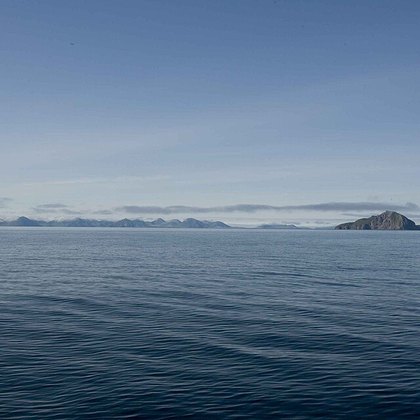
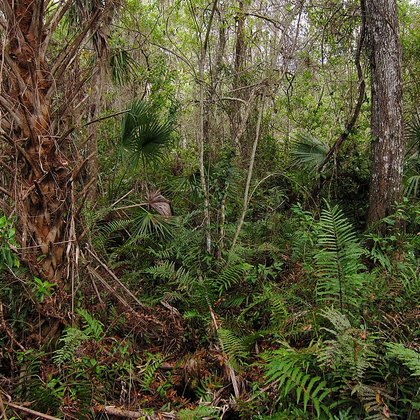
Outside the breeding season the open ocean, where it hunts over deep water and joins schools of feeding tuna to pick up prey driven to the surface. To breed it digs burrows well over a metre long, usually under a boulder or in loose ash: on Maui in the almost plantless upland desert of the Haleakala crater, between 2,500 and 3,000 metres; on Kauai lower down, in dense montane rainforest. It avoids the coast and shallow seas, and enters the breeding grounds only in darkness.
Where the bird is most often found, arranged by the USNVC — the vegetation classification of the United States and Canada — and CMECS for sea and coast.


Range and movements
Breeds only in the Hawaiian Islands: by far the most birds on Haleakala on Maui, further on Kauai, Lanai and in small numbers on Hawaii; from Molokai it has gone. Outside the breeding season it ranges across the whole northern Pacific, to the Gulf of Alaska, off Oregon and California and west as far as Japan — an area that falls outside this map window and is therefore not coloured on it. Birds are at the colonies from March to October; from November to February the breeding grounds stand empty. Bones in the ground show that it once nested low down on all the main islands as well.
- Breeding (summer)
Where and when to look
The best chance is a boat trip in the deep channels between the islands, above all in late summer when breeding birds are shuttling to and fro; watch for the black diagonal on the white underwing as the bird turns over. From land it can be heard on a summer evening at Haleakala: go past the visitor centres after sunset and listen. In autumn young birds knocked off course by street lighting come down in built-up areas; anyone who finds one takes it to a collecting point and does not release it themselves.
Conservation
Endangered. There are an estimated 7,500 to 16,600 mature birds and numbers are falling, on Kauai steeply. Introduced cats, rats and mongooses dig out the burrows, and on Kauai introduced Barn Owls are a problem as well. Adults are killed on power lines and masts, and chicks flying out on their first night are drawn away from the sea by street and hotel lighting and end up on the ground, where they starve or are run over. The answer is predator-proof fencing around the colonies, shielding of lights, and a programme that picks up grounded fledglings and releases them at sea.
Scientific name
Pterodroma sandwichensis | (Ridgway, 1884)
Ridgway described the species in 1884 as Oestrelata sandwichensis; because it was later placed in Pterodroma, author and year stand in parentheses. The genus Pterodroma was introduced by Bonaparte in 1856, from Greek pteron, 'wing', and dromos, 'runner', after the fast, driving flight. sandwichensis means 'of the Sandwich Islands', the name Cook gave Hawaii in 1778. The type locality is given no more precisely than 'the Hawaiian Islands'.