All species › Passerines › Chats and flycatchers › Black redstart
Black redstart | Phoenicurus ochruros
Zwarte roodstaart | Colirrojo tizón
Originally a bird of cliffs and scree, it has adopted industrial estates, railway yards and village rooftops. Its scratchy song comes from a chimney or ridge tile in the first grey light, well ahead of every other bird.
Click a thumbnail to switch the photo above.
Voice
The song is a short, thin phrase of high notes, then a strange rustling, crackling sound like gravel being ground, then a quick closing run: tsree-tsree-tsree... srrrtschh... tsi-tsi-tsi. Sung from March to July, mainly at first light and again at dusk. Call: a tsip followed by a clicking tk-tk.
Recording: Marie-Lan Taÿ Pamart — CC BY-SA 4.0 · Wikimedia Commons
Identification
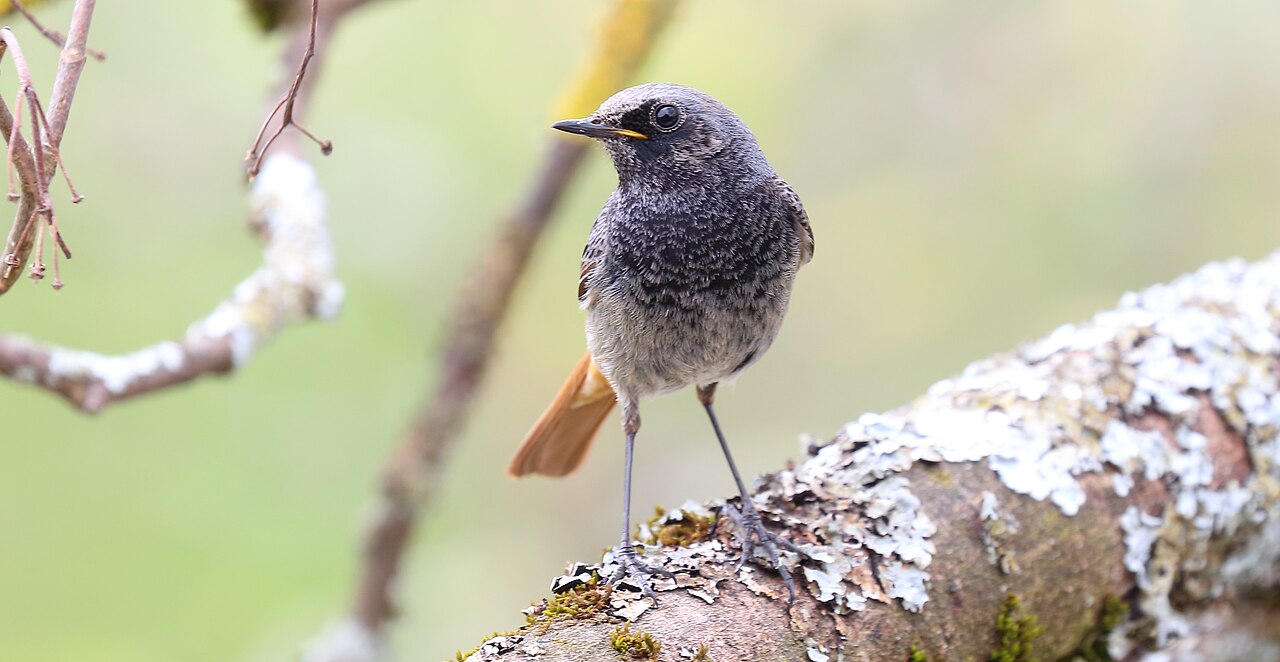
A dark redstart with a rusty-orange tail and rump that shivers at every landing. Adult males are sooty black with a grey crown and a white wing panel showing as a pale stripe on the closed wing. Females and first-year males are uniformly dark sooty grey with no orange below; juveniles are faintly mottled, but always show the same red tail.
Confusion species
Common redstart is the real pitfall: males have a white forehead and orange underparts, and females are warm sandy brown with a pale, orange-tinged breast and belly where black redstart is cold grey-black. Habitat helps too: Common redstart belongs to old trees with holes, black redstart to stone and concrete.
Habitat
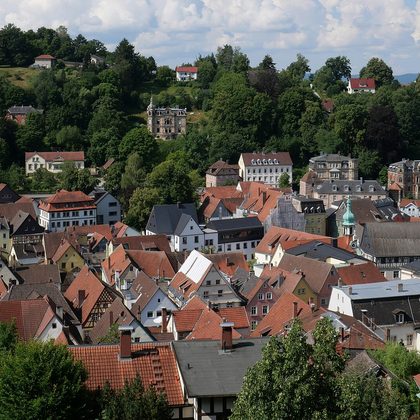
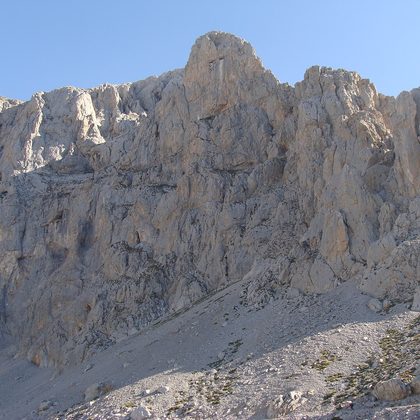
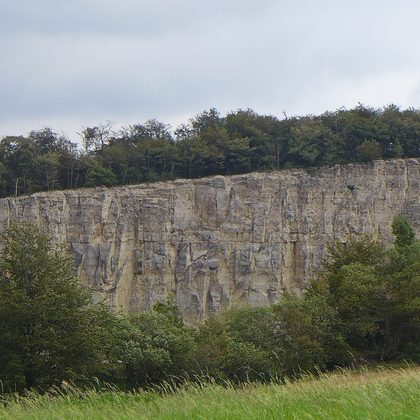
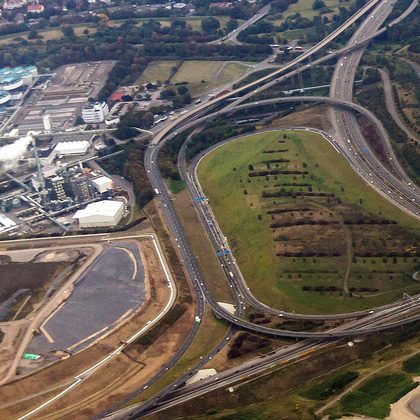
Cliffs, quarries, scree and boulder-strewn alpine pasture; in north-west Europe almost entirely urban, using industrial estates, docks, factory roofs, church towers, buildings under construction and railway land. Always a combination of bare hard ground, high song posts and cavities.
Where the bird is most at home, classified with EUNIS — the European standard for habitats.

Range and movements
From central and southern Europe north to southern Scandinavia. In the Netherlands a summer visitor from March to October, concentrated in urban and industrial areas of the south and east, with a handful of winterers. In Iberia it breeds in the Pyrenees, the Cantabrian mountains, the Sistema Central and Sistema Ibérico, the Sierra Nevada and countless villages and towns, well above the treeline, and winters commonly in the lowlands, in olive groves, dry ramblas and on sea cliffs.
- Resident
- Breeding (summer)
- Winter
- Passage
- dark = core range, pale = thinly spread
How and when to look
April and May just after sunrise: find a high vantage over rooftops and listen for the crackling middle section, which cuts through traffic noise. In Spain winter is easiest, when birds sit on walls and TV aerials in every village and along seafront promenades.
Conservation status
Stable to increasing across most of Europe, helped by its colonisation of towns and industry. Building renovation, the sealing of niches and holes and the smooth finishing of new construction cost nest sites, and the tidying of derelict ground removes breeding opportunities.
Scientific name
Phoenicurus ochruros | (Gmelin, 1774)
Gmelin described the species in 1774 as Motacilla ochruros; because it was later moved to another genus, the author and year stand in brackets. The genus Phoenicurus was introduced in 1817 by Forster. Phoenicurus is Greek, from phoinix 'red' and -ouros '-tailed'. ochruros is Greek, from okhros 'pale yellow' and -ouros '-tailed'. The specimen the first description was based on came from the mountains of Gilan, Iran.