All species › Waders, gulls and terns › Avocets and stilts › Black-winged stilt
Black-winged stilt | Himantopus himantopus
Steltkluut | Cigüeñuela común
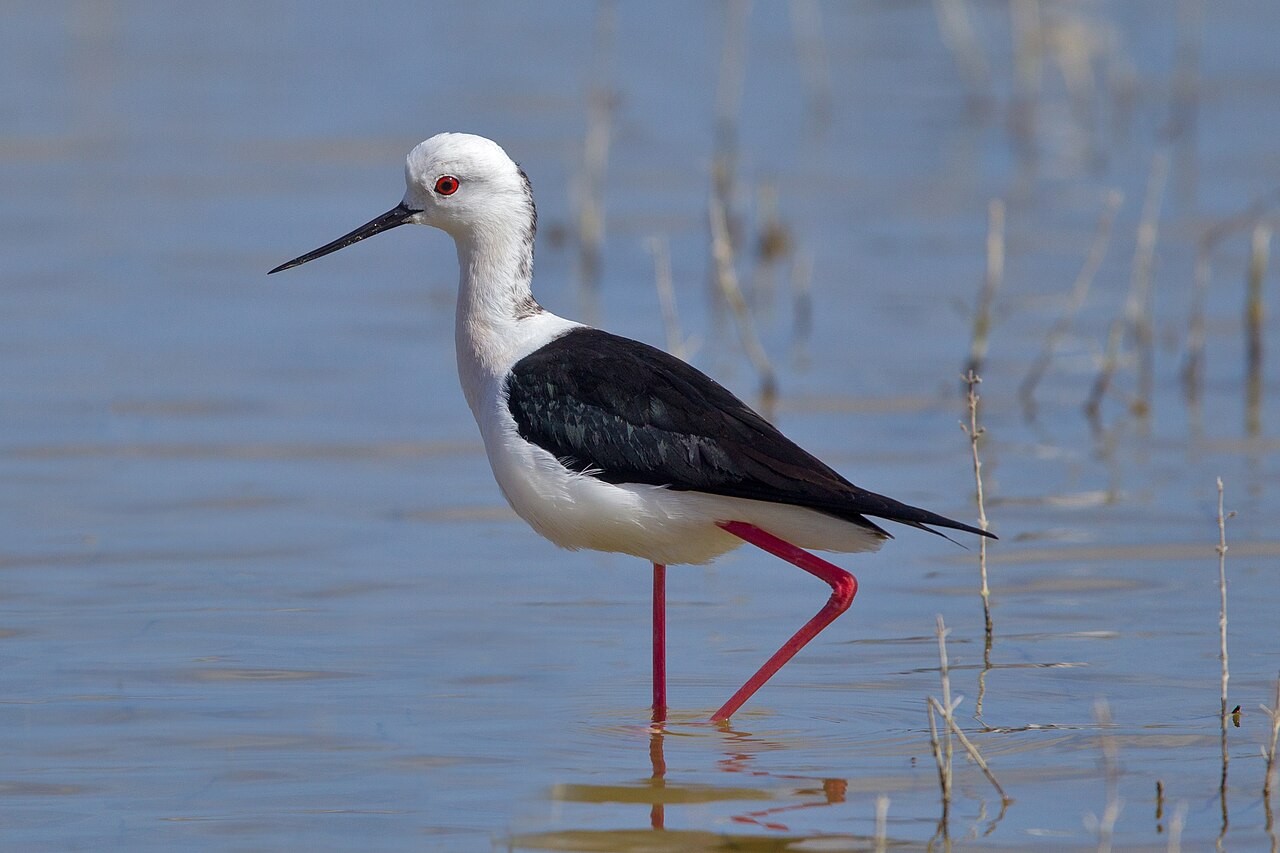
On very long pink legs the black-winged stilt wades through shallow brackish pools, cut sharply in black and white. In the Netherlands it is an erratic breeder that appears in warm springs; in Spain it belongs to every lagoon.
Click a thumbnail to switch the photo above.
Voice
Noisy and persistent at the nest: a sharp nasal yapping kek-kek-kek that runs into a rattling series when the colony is disturbed, recalling a small tern. Heard from April to July, especially when a harrier or a gull drifts over; away from breeding grounds the species is largely silent.
Recording: Joost van Bruggen — CC BY-SA 4.0 · Wikimedia Commons
Identification
Unmistakable: snow-white body, jet-black upperwings and a needle-fine straight black bill. The legs are bright pink and trail a hand's breadth beyond the tail in flight, turning the bird into a floating cross. Males show a glossy black mantle, females a browner one; winter birds and juveniles have a grey-smudged crown and dull brown, pale-fringed upperparts.
Confusion species
Only Avocet comes close, but that has an upcurved bill, blue-grey legs and a boldly pied upperwing. The stilt's wing is uniformly black above and below, with a white wedge running up the back, and those extreme pink legs remove any remaining doubt.
Habitat
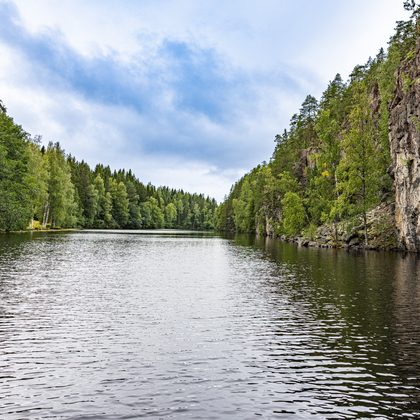
Shallow, warm and often brackish or saline waters with bare muddy margins: saltpans, drying fish ponds, rice fields, saltmarsh and temporary pools in clay pits. Breeds in loose colonies on islets and low banks, often alongside Avocets and terns. Feeds wading up to the belly, picking from the surface.
Where the bird is most at home, classified with EUNIS — the European standard for habitats.




Range and movements
A southern European species centred on Iberia, where the saltpans of the Ebro delta, Doñana and the Andalusian marismas hold thousands of pairs. It is spreading north, and since the 1980s a few to a few dozen pairs have bred in the Netherlands in warm springs, mostly in the Delta and in new wetland reserves.
- Resident
- Breeding (summer)
- Winter
- Passage
- dark = core range, pale = thinly spread
How and when to look
Visit a newly created wetland with bare islets in May or June, early in the morning: stilts stand out over low water at long range. In Spain the saltpans are best around high tide, when the birds concentrate in the shallowest pans.
Conservation status
Globally common and not threatened, and clearly expanding in Europe with a warming climate and the creation of new wetland. It stays vulnerable to water-level swings during the breeding season: one summer downpour or a draining pool can cost a whole colony its nests. Ground predation at mainland sites adds to that.
Scientific name
Himantopus himantopus | (Linnaeus, 1758)
Linnaeus described the species in 1758 as Charadrius himantopus; because it was later moved to another genus, the author and year stand in brackets. The genus Himantopus was introduced in 1760 by Brisson. Himantopus is Greek, from himas 'strap, thong' and pous 'foot': 'strap-foot', after the long thin legs. The specific name repeats the genus name. The specimen the first description was based on came from southern Europe.