All species › Kingfishers, bee-eaters and rollers › Kingfishers › Common kingfisher
Common kingfisher | Alcedo atthis
IJsvogel | Martín pescador común
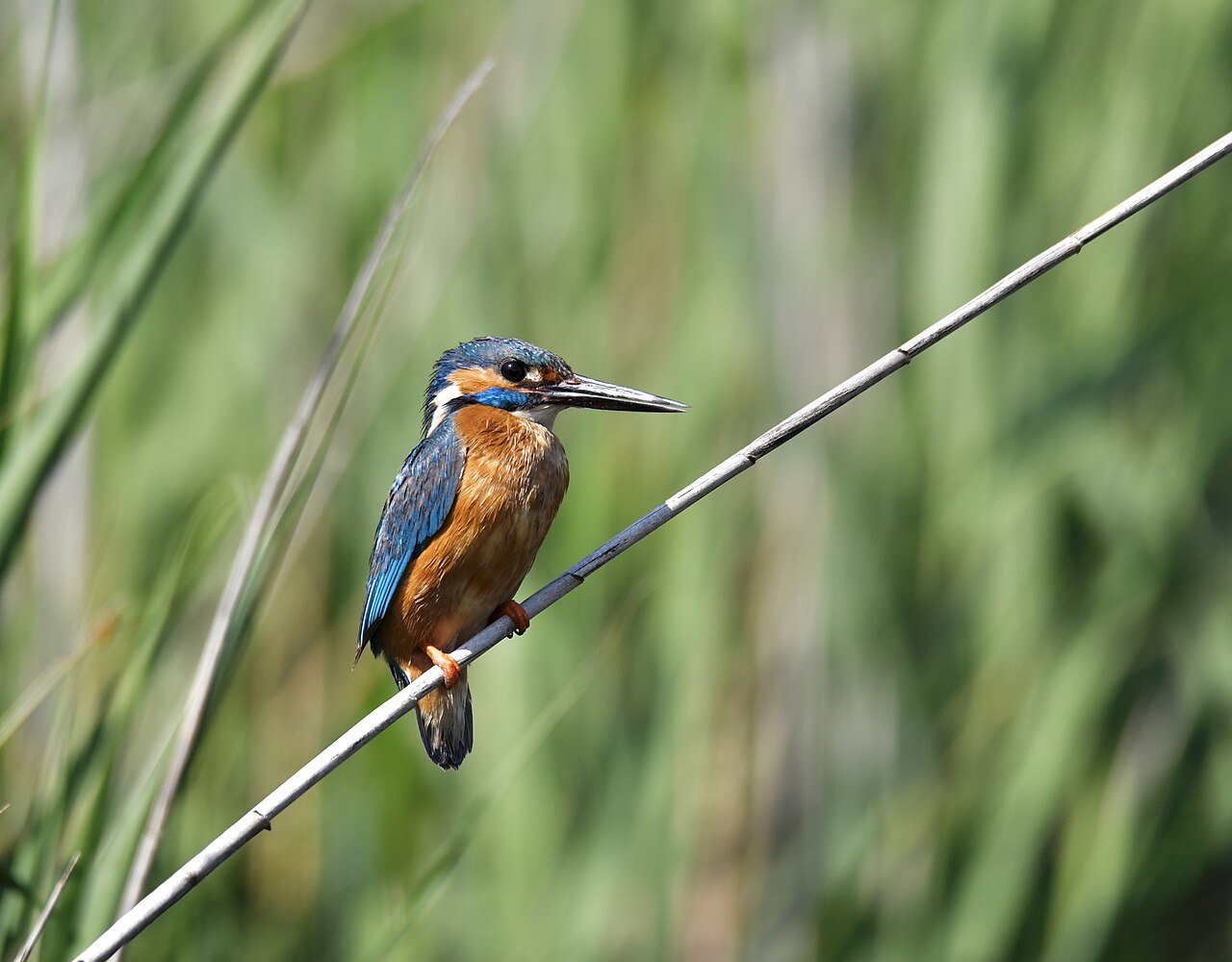
An electric blue arrow along the waterside, usually heard before it is seen as a coloured flash. It hunts from a low branch or hovers over the water before plunging vertically for small fish.
Click a thumbnail to switch the photo above.
Voice
A sharp, high, penetrating tseee or ti-ti-ti, almost always given in low flight along the water and carrying far. Heard all year, most obviously in late summer when young birds are dispersing. In spring, courtship chases are accompanied by a soft trilling little song.
Recording: Marie-Lan Taÿ Pamart — CC BY-SA 4.0 · Wikimedia Commons
Identification
Compact, short-tailed and big-headed, with a long dagger bill and tiny red feet. Upperparts cobalt with a gleaming turquoise stripe down the back, underparts orange-chestnut, with a white throat and white neck patch. The female has an orange-red base to the lower mandible, the male an all-black bill; juveniles are duller, greener and dark-legged.
Confusion species
Nothing in Europe is genuinely confusable. Beginners report Kingfishers on the strength of a blue flash that proves to be a Jay, a Bluethroat or even a large dragonfly, and misplace the call onto Dipper. The combination of a dead-straight low flight line over water and the piercing whistle settles it.
Habitat
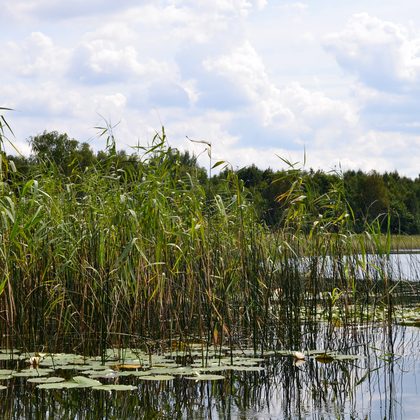
Clear, slow-flowing brooks, small rivers, canals, drains and ponds with overhanging branches to perch on, plus steep bare banks or upturned root plates in which to dig a nest tunnel. In hard winters birds move to ditches, harbours and the coast.
Where the bird is most at home, classified with EUNIS — the European standard for habitats.



Range and movements
Almost all of Europe north to southern Scandinavia, plus North Africa, Turkey and the Levant; migratory in the north and east, resident elsewhere. In north-west and central Europe widespread along brooks, canals and estate ponds, crashing after ice winters. In the Mediterranean region it breeds mainly in northern Iberia and along permanent rivers, and in winter also occurs at lagoons, rice fields, marshes and sheltered coasts; in Turkey, the Levant and on the islands it is mainly a winter visitor.
- Resident
- Breeding (summer)
- Winter
- Passage
- dark = core range, pale = thinly spread
How and when to look
Look in August and September when young birds are wandering, and sit quietly at a bridge, jetty or pond edge with overhanging branches. Listen first: the whistle nearly always precedes the bird. Morning light behind you sets the blue alight; against the light it looks grey.
Conservation status
Strongly fluctuating: severe winters can halve numbers, but multiple broods allow rapid recovery in good years. Threats are canalisation and hard bank revetment that remove nesting faces, silt and pollution that cloud the water, and disturbance from recreation. Restored soft banks with steep faces demonstrably work.
Scientific name
Alcedo atthis | (Linnaeus, 1758)
Linnaeus described the species in 1758 as Gracula atthis; because it was later moved to another genus, the author and year stand in brackets. The genus Alcedo was introduced in 1758 by Linnaeus. Alcedo is the Latin word for 'kingfisher'. atthis refers to Atthis, a young woman of Lesbos and a favourite of the poet Sappho. The specimen the first description was based on came from Egypt.