All species › Waders, gulls and terns › Sandpipers and snipes › Common redshank
Common redshank | Tringa totanus
Tureluur | Archibebe común
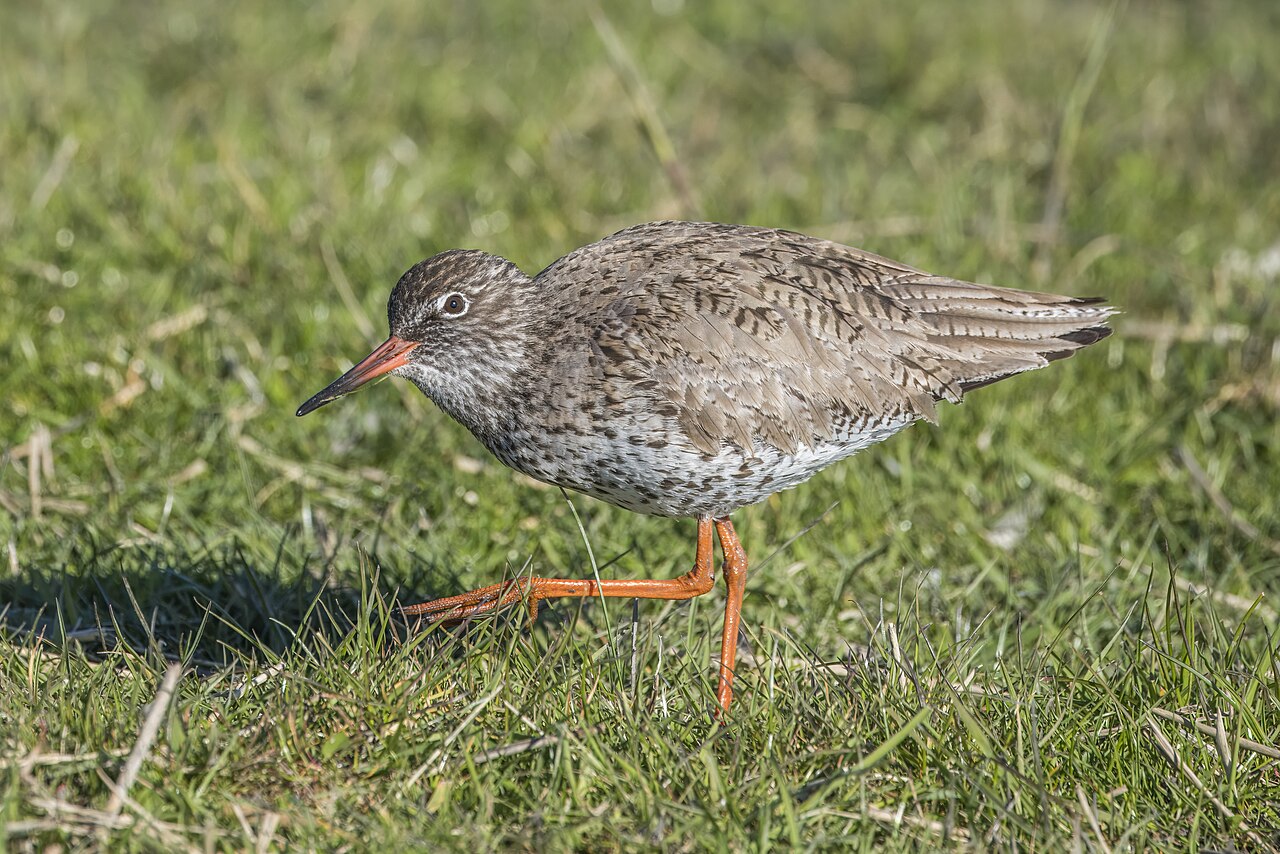
The Redshank is a noisy wader of saltmarsh and wet meadow, lifting off in loud alarm at the least disturbance. Orange-red legs and broad white trailing edges to the wings make it unmistakable in flight.
Click a thumbnail to switch the photo above.
Voice
Highly vocal. The call is a clear, mournful whistled teu-hu-hu falling in pitch; in alarm an insistent, sharp tyip-tyip-tyip-tyip from a fence post. Song-flight over the meadow produces a yodelling, accelerating tululu-tululu. Heard mainly from March to June, but also from disturbed birds on winter mudflats.
Recording: Pascal Christe — CC BY-SA 4.0 · Wikimedia Commons
Identification
A medium wader with fairly long orange-red legs and a straight bill, orange-red at the base and black towards the tip. Upperparts warm brown with dark spotting, breast and flanks finely streaked; in winter far greyer and plainer, the legs a duller orange. In flight the broad white trailing edges to both wings and the white wedge running up the back settle it.
Confusion species
Spotted redshank is slimmer and longer-legged, with a longer bill red only at the base of the lower mandible, no white trailing edge and a white oval on the back. Marsh sandpiper is finer, paler, with a needle-fine bill and greenish-grey legs. Juvenile Redshanks show orange-yellow legs and warmly fringed coverts and are regularly called Ruff.
Habitat
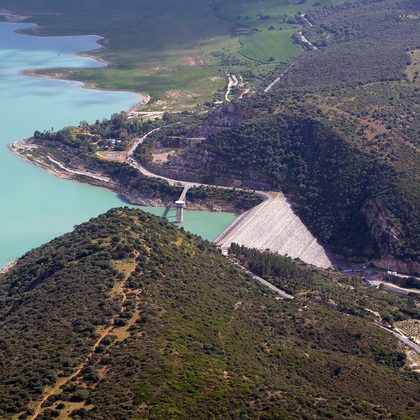
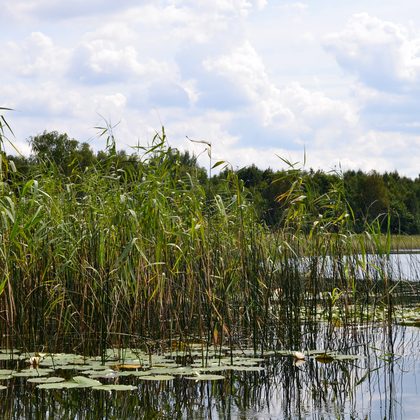
Damp, herb-rich grassland, saltmarsh and marsh edges with short vegetation and shallow pools. Outside the breeding season almost wholly tied to mudflats, mussel beds, brackish creeks and saltpans. Feeds by probing and pecking in the soft surface layer of mud, taking worms, crustaceans and small snails.
Where the bird is most at home, classified with EUNIS — the European standard for habitats.


Range and movements
Breeds from Iceland and Scandinavia to the Black Sea, and the Dutch saltmarshes and peat meadows hold a substantial share of the western European population. Northern birds move to Atlantic coasts. In Spain it breeds locally in the saltpans of the Ebro delta and Andalusia and winters in numbers in Doñana and the Bay of Cádiz.
- Resident
- Breeding (summer)
- Winter
- Passage
- dark = core range, pale = thinly spread
How and when to look
April and May are best: walk a saltmarsh or extensively managed polder at sunrise and watch for birds alarming from fence posts. On tidal flats, station yourself at a high-tide roost on the rising tide, when parties gather among Oystercatchers and Dunlin and can be compared side by side.
Conservation status
As a breeder in farmed grassland it has declined sharply through drainage, early mowing and predation of nests and chicks; saltmarsh populations hold up better. Wintering birds are sensitive to disturbance, shellfish fishery and the loss of quiet high-tide roosts. Extensive grazing and high water tables demonstrably help.
Scientific name
Tringa totanus | (Linnaeus, 1758)
Linnaeus described the species in 1758 as Scolopax totanus; because it was later moved to another genus, the author and year stand in brackets. The genus Tringa was introduced in 1758 by Linnaeus. Tringa is the Neo-Latin name Aldrovandi gave to the green sandpiper, after Ancient Greek trungas, a thrush-sized, white-rumped, tail-bobbing wading bird mentioned by Aristotle. totanus comes from totano, an Italian folk name for this bird. The specimen the first description was based on came from Sweden.