All species › To the sandpipers and snipes › Comparing sandpipers, snipes and allies
Comparing sandpipers, snipes and allies
Waders are tricky: many are small, brown and quickly gone. A few things usually separate them: the length and shape of the bill, leg colour, a white wing bar or rump in flight, and how the bird looks in summer and winter. Tap what you see below; the list then shows only the species that fit everything.
- Within one row you can pick several values (green or yellow legs); across rows everything must match.
- Everything refers to adult birds of the 30 native species in this guide; vagrants and juveniles are on the species pages.
- Bill length is an estimate relative to the head. If in doubt, pick two values.
What do you see?
No species fits this combination. Remove one choice.
| Species | Length | Legs | Bill | Bill shape | Wing bar | Rump | Breeding | Winter | What to look for |
|---|---|---|---|---|---|---|---|---|---|
| Large species | |||||||||
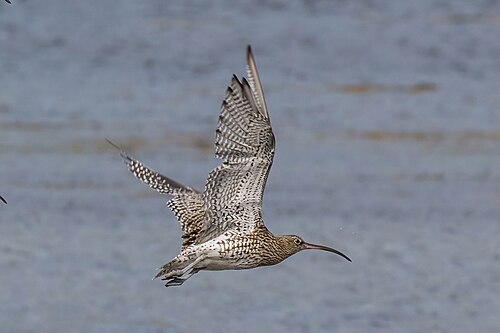 Eurasian CurlewNumenius arquata Eurasian CurlewNumenius arquata | 50–60 cm | Black/grey | Very long | Downcurved | None | White | Brown, streaked | As summer | The largest European wader: a huge decurved bill, streaked pale brown, a white wedge up the back; a typical bubbling call. |
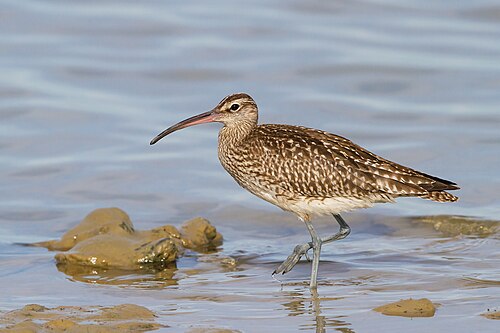 WhimbrelNumenius phaeopus WhimbrelNumenius phaeopus | 40–46 cm | Black/grey | Very long | Downcurved | None | White | Brown, streaked | As summer | A curlew with a striped head (two dark crown stripes and a pale central stripe) and a shorter, more sharply decurved bill; a rapid, rippling call. |
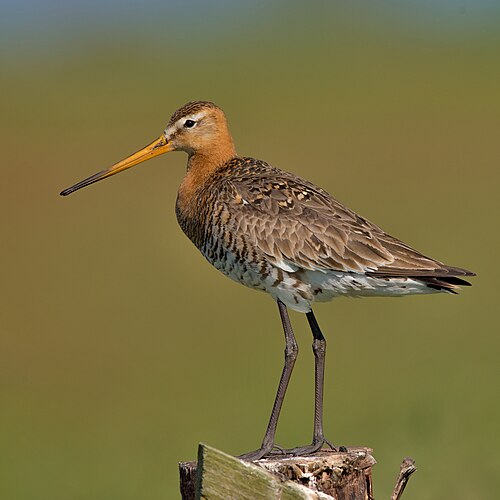 Black-Tailed GodwitLimosa limosa Black-Tailed GodwitLimosa limosa | 37–42 cm | Black/grey | Very long | Straight | White bar | White | Rufous | Pale grey | Very long straight bill with a pink base, long black legs trailing well beyond the tail, a bold white wing bar and a black tail band on a white rump; orange-chestnut neck and breast in summer. |
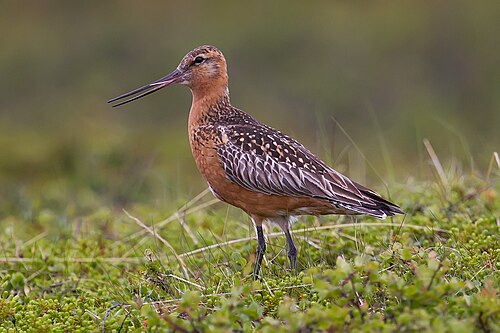 Bar-Tailed GodwitLimosa lapponica Bar-Tailed GodwitLimosa lapponica | 37–41 cm | Black/grey | Very long | Slightly upturned | None | White | Rufous | Pale grey | Slightly shorter legs than Black-tailed Godwit and a slightly upturned bill; no striking wing bar and a white wedge up the back; brick-red in summer. |
| Slender-Billed CurlewNumenius tenuirostris | 36–41 cm | Black/grey | Very long | Downcurved | None | White | Brown, streaked | As summer | Extremely rare, probably extinct: smaller than Whimbrel, with a thin, decurved bill, heart-shaped spots on the flanks and a white rump. |
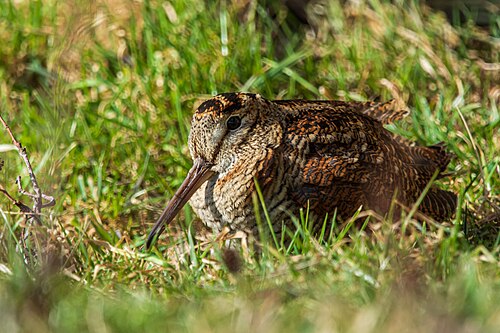 Eurasian WoodcockScolopax rusticola Eurasian WoodcockScolopax rusticola | 33–38 cm | Pink | Long | Straight | None | Dark | Brown, streaked | As summer | A plump brown woodland bird with cross-bars on the head and a long straight bill; large eyes set high on the head; dusk display flights. |
| Medium species | |||||||||
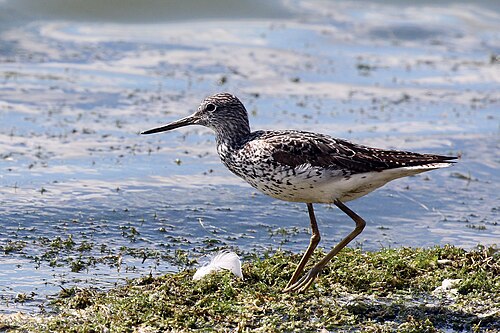 Common GreenshankTringa nebularia Common GreenshankTringa nebularia | 30–35 cm | Green/yellow-green | Long | Slightly upturned | None | White | Brown, streaked | Pale grey | A large, pale shank with green legs, a sturdy, slightly upturned bill and a white wedge up the back; a loud three-note call. |
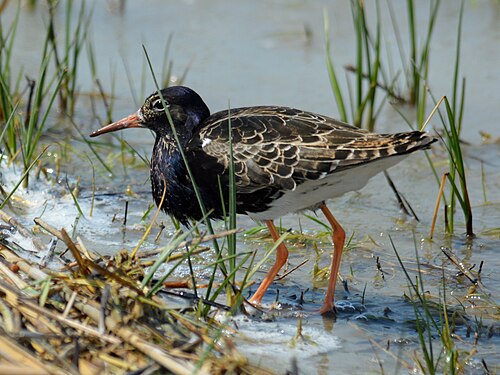 RuffCalidris pugnax RuffCalidris pugnax | 29–32 cm | Orange | Short | Downcurved | Faint bar | White sides | Variable | Grey-brown | Slender with a small head, long neck and a short, slightly drooping bill; legs orange to yellow-green. Summer males with a ruff and ear-tufts in every imaginable colour; white oval patches on either side of the tail base. |
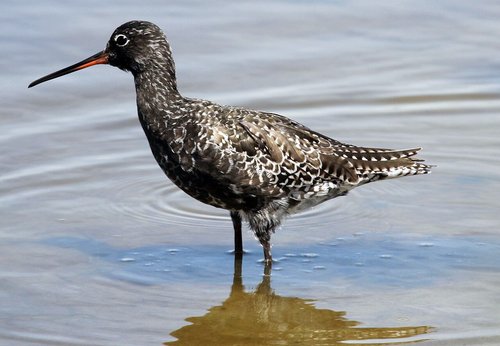 Spotted RedshankTringa erythropus Spotted RedshankTringa erythropus | 29–32 cm | Red | Long | Straight | None | White | Black | Pale grey | Black with white speckles in summer, pale grey with a long supercilium in winter; a long thin bill with a slight hook at the tip and red-orange legs. |
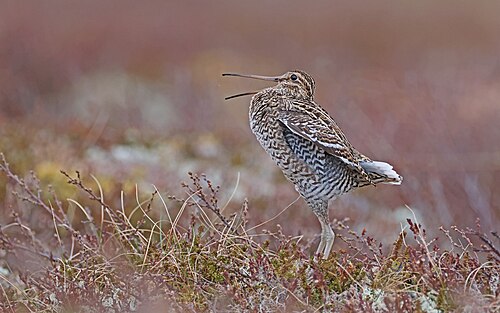 Great SnipeGallinago media Great SnipeGallinago media | 26–30 cm | Green/yellow-green | Long | Straight | Faint bar | Dark | Brown, streaked | As summer | A heavier, stockier snipe with pale wing bars from white-tipped coverts and a heavily barred belly; flushes heavily and flies straight. |
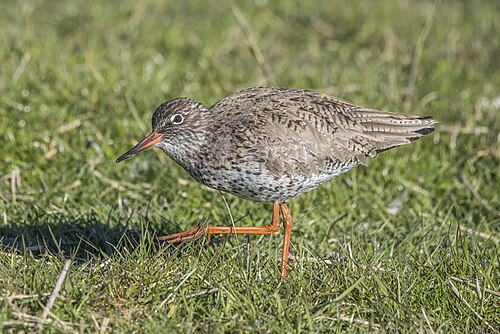 Common RedshankTringa totanus Common RedshankTringa totanus | 27–29 cm | Red | Medium | Straight | White rear edge | White | Brown, streaked | Grey-brown | Red legs, a red bill base, a broad white trailing edge to the wing and a white rump; alert and noisy. |
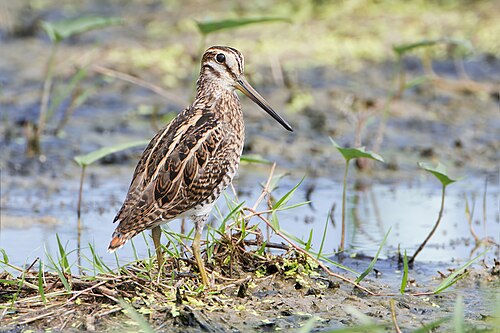 Pin-Tailed SnipeGallinago stenura Pin-Tailed SnipeGallinago stenura | 25–27 cm | Green/yellow-green | Long | Straight | None | Dark | Brown, streaked | As summer | Very like Common Snipe, but darker, without a white trailing edge on the wing and with short, stiff ‘pin’ feathers in the tail; hardly separable in the field. |
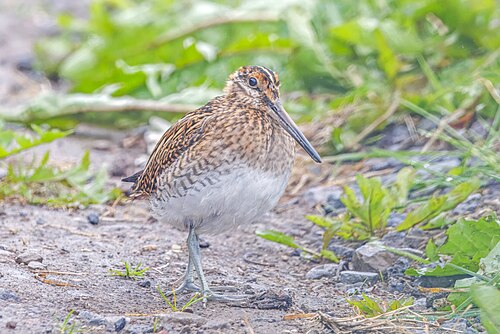 Common SnipeGallinago gallinago Common SnipeGallinago gallinago | 25–27 cm | Green/yellow-green | Long | Straight | White rear edge | Dark | Brown, streaked | As summer | Long straight bill, striped head pattern with a pale crown stripe and a narrow white trailing edge to the wing; flushes in a zigzag with a rasping call. |
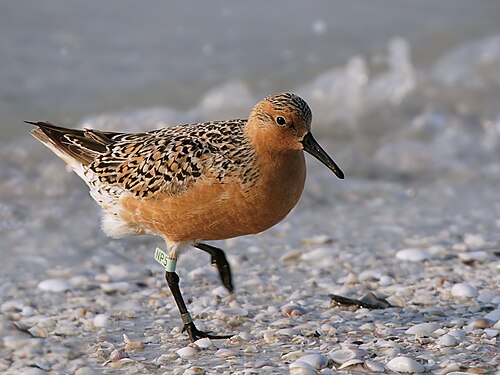 Red KnotCalidris canutus Red KnotCalidris canutus | 23–26 cm | Black/grey | Short | Straight | Faint bar | Dark | Rufous | Pale grey | Stocky and medium-sized, with a short straight bill; rufous underparts in summer, grey in winter; a faint pale wing bar and a pale-grey rump. |
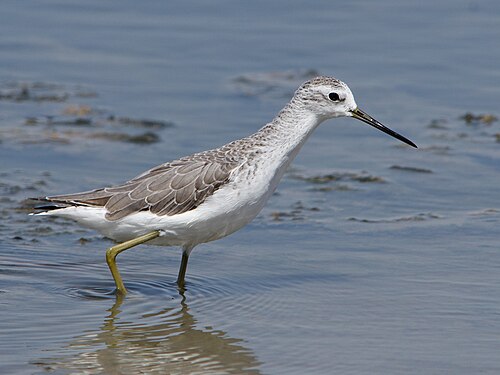 Marsh SandpiperTringa stagnatilis Marsh SandpiperTringa stagnatilis | 22–26 cm | Green/yellow-green | Long | Straight | None | White | Brown, streaked | Pale grey | Elegant, with a long, needle-fine straight bill and very long greenish legs; very pale grey in winter; a white wedge up the back. |
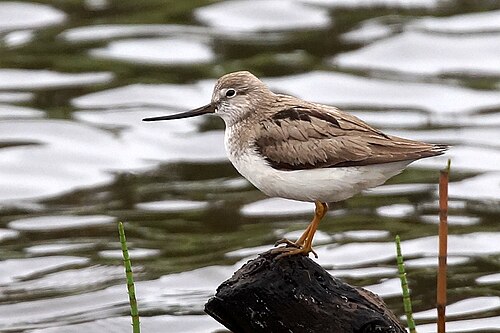 Terek SandpiperXenus cinereus Terek SandpiperXenus cinereus | 22–25 cm | Orange | Medium | Slightly upturned | White rear edge | Dark | Brown, streaked | Grey-brown | Short orange legs and a long, clearly upturned bill with an orange base; a white trailing edge to the wing; runs about busily. |
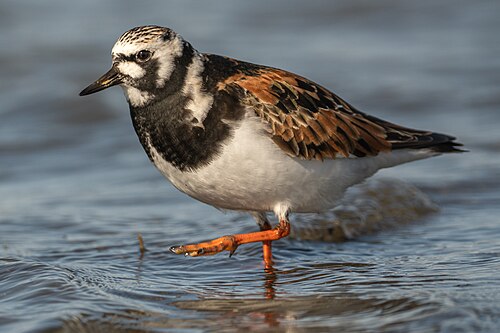 Ruddy TurnstoneArenaria interpres Ruddy TurnstoneArenaria interpres | 21–24 cm | Orange | Short | Straight | White bar | White | Harlequin | Grey-brown | Stocky, with short orange legs and a short, pointed bill used to flip stones and weed; in summer a black, white and chestnut harlequin pattern. |
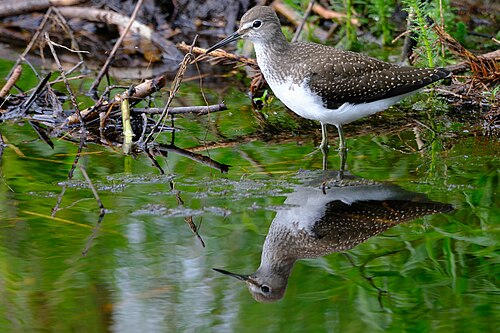 Green SandpiperTringa ochropus Green SandpiperTringa ochropus | 21–24 cm | Green/yellow-green | Medium | Straight | None | White | Brown, streaked | Grey-brown | Dark back with white speckles, white underparts and a white rump set against a blackish underwing; dark-green legs. |
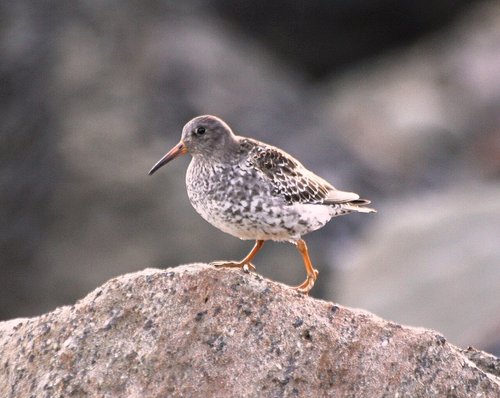 Purple SandpiperCalidris maritima Purple SandpiperCalidris maritima | 20–22 cm | Orange | Medium | Straight | Faint bar | Dark | Brown, streaked | Grey-brown | Dark and stocky, of rocky shores; orange-yellow legs and a bill with an orange base; no striking wing bar or white rump. |
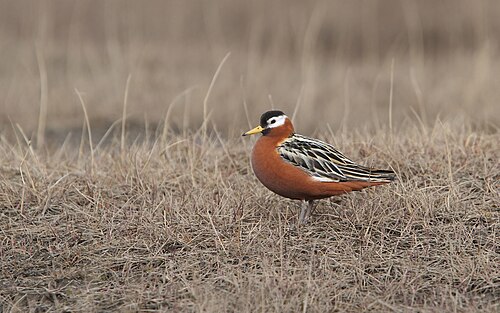 Red PhalaropePhalaropus fulicarius Red PhalaropePhalaropus fulicarius | 20–22 cm | Black/grey | Short | Straight | White bar | White sides | Rufous | Pale grey | A smaller swimmer with a thin black bill; grey with a red neck band in summer, pale grey with a black eye mask in winter; spins in circles on the water. |
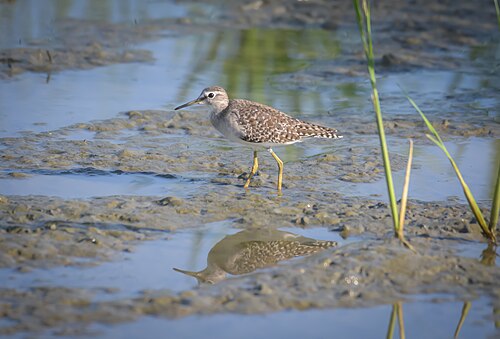 Wood SandpiperTringa glareola Wood SandpiperTringa glareola | 19–23 cm | Green/yellow-green | Medium | Straight | None | White | Brown, streaked | Grey-brown | Slender, dark-speckled brown with a long pale supercilium, yellow-green legs and a white rump; often by fresh pools. |
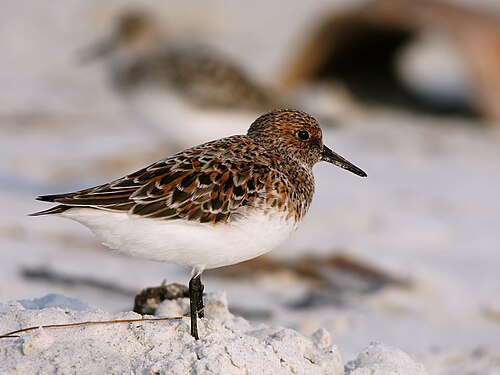 SanderlingCalidris alba SanderlingCalidris alba | 20–21 cm | Black/grey | Short | Straight | White bar | White sides | Rufous | Pale grey | A pale, busy sandpiper of the tideline without a hind toe; a broad white wing bar, and almost white in winter with a dark shoulder patch. |
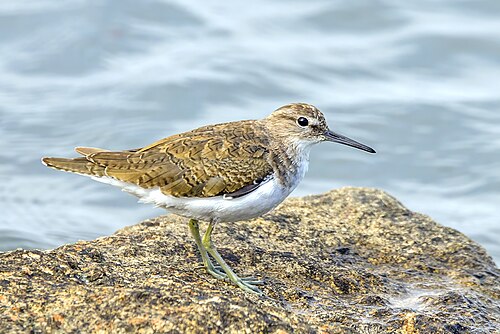 Common SandpiperActitis hypoleucos Common SandpiperActitis hypoleucos | 19–21 cm | Green/yellow-green | Short | Straight | White bar | Dark | Brown, streaked | Grey-brown | Brown above and white below with a white ‘hook’ in front of the wing; bobs its rear end constantly and flies low over water with stiff, flickering wingbeats. |
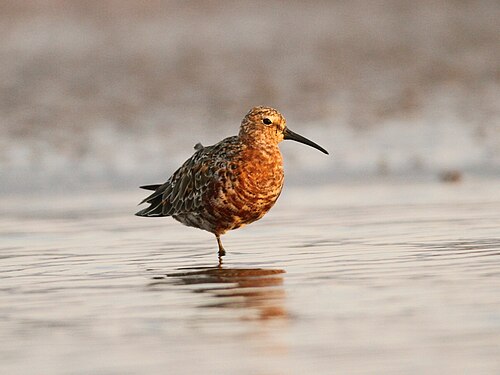 Curlew SandpiperCalidris ferruginea Curlew SandpiperCalidris ferruginea | 19–21 cm | Black/grey | Long | Downcurved | White bar | White | Rufous | Pale grey | A longer, clearly decurved bill than Dunlin and a white rump; brick-red in summer, pale grey with a white supercilium in winter. |
| Small species | |||||||||
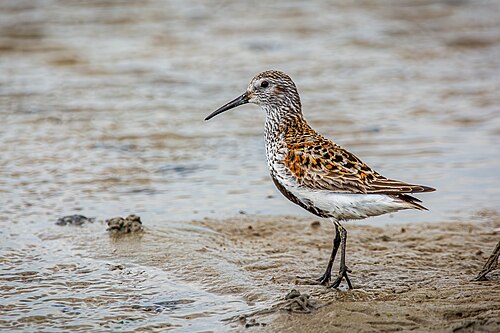 DunlinCalidris alpina DunlinCalidris alpina | 17–21 cm | Black/grey | Medium | Downcurved | White bar | White sides | Black | Pale grey | The standard small sandpiper: a medium-length bill drooping at the tip and black legs; a black belly patch in summer, grey and white in winter. |
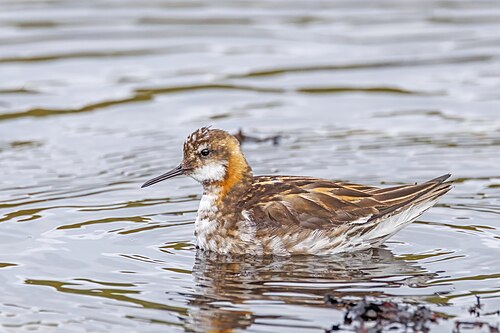 Red-Necked PhalaropePhalaropus lobatus Red-Necked PhalaropePhalaropus lobatus | 18–19 cm | Yellow | Short | Straight | White bar | White sides | Rufous | Pale grey | A small swimming wader with lobed toes; brick-red in summer with a white face and a thick, yellow-based bill; pale grey with a black eye mask in winter. |
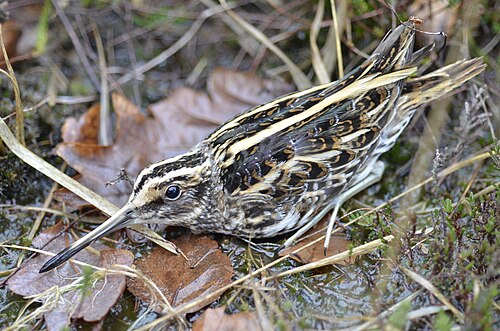 Jack SnipeLymnocryptes minimus Jack SnipeLymnocryptes minimus | 17–19 cm | Green/yellow-green | Medium | Straight | None | Dark | Brown, streaked | As summer | The smallest snipe, with a shorter bill and a split supercilium but no pale crown stripe; sits tight until the last moment. |
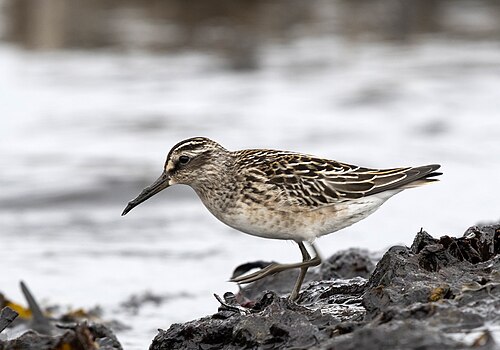 Broad-Billed SandpiperCalidris falcinellus Broad-Billed SandpiperCalidris falcinellus | 16–18 cm | Black/grey | Medium | Downcurved | White bar | White sides | Brown, streaked | Grey-brown | A small sandpiper with a short, broad bill that kinks downwards near the tip; split supercilium (two stripes above the eye) and short dark legs. |
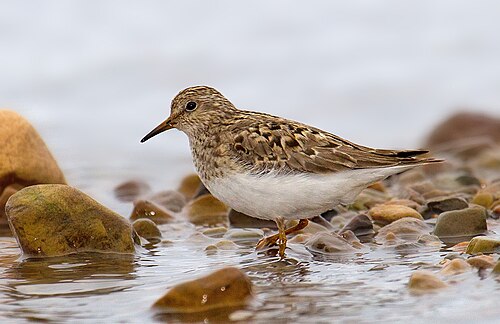 Temminck's StintCalidris temminckii Temminck's StintCalidris temminckii | 13.5–15 cm | Green/yellow-green | Short | Straight | Faint bar | White sides | Brown, streaked | Grey-brown | Small, elongated and plain grey-brown; green to yellow-green legs, white outer tail feathers and a very faint wing bar. |
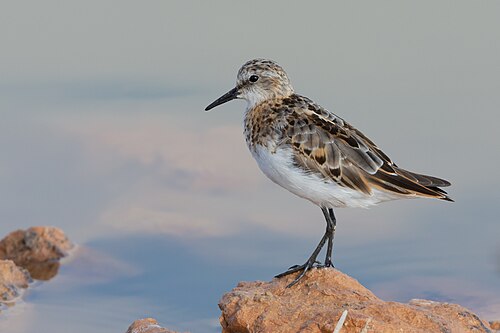 Little StintCalidris minuta Little StintCalidris minuta | 12–14 cm | Black/grey | Short | Straight | Faint bar | White sides | Brown, streaked | Grey-brown | The smallest of the regular small sandpipers, with a short, fine black bill and black legs; rusty cheeks and a white V on the back in summer, grey-brown in winter. |
The features come from the species accounts in this guide, supplemented from standard field guides. Lengths are those on the species pages; the groups are a convenience, not a fixed classification.