All species › Waders, gulls and terns › Sandpipers and snipes › Dunlin
Dunlin | Calidris alpina
Bonte strandloper | Correlimos común
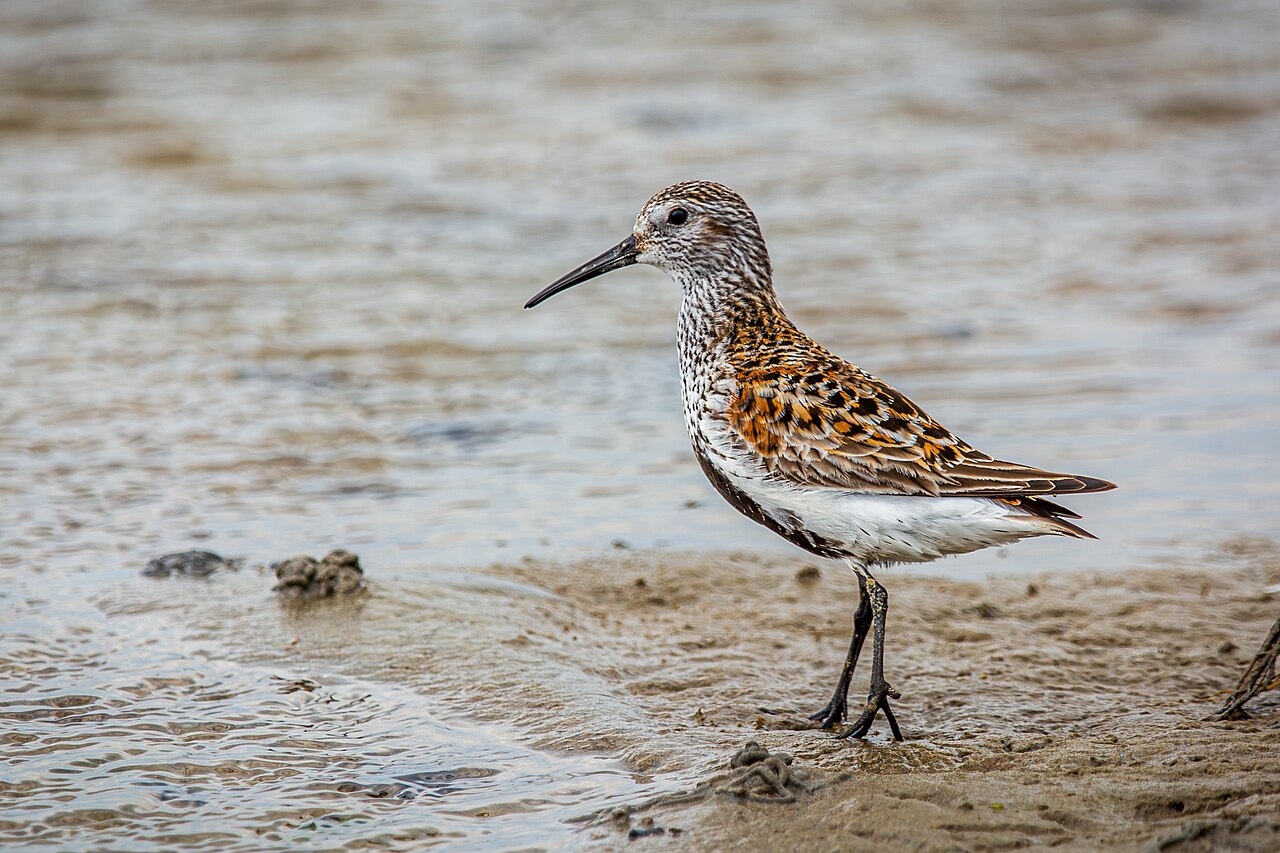
The yardstick against which every other small sandpiper is measured, and by far the commonest wader of the Wadden Sea. In dense flocks it wheels over the flats, flashing dark backs and white underparts by turns.
Click a thumbnail to switch the photo above.
Voice
A rasping, slightly nasal and downslurred kreeep, which from a rising flock becomes a hissing chorus. That grating timbre is the best separation from the clear call of Sanderling and the full chirrup of curlew sandpiper. Heard all year, and at night over inland areas on migration too.
Recording: Luis Alvarez Menendez — CC BY-SA 4.0 · Wikimedia Commons
Identification
Stocky and slightly hunched, with black legs and a black bill that droops gently towards the tip. Breeding birds have rufous-scaled upperparts and a large black belly patch that no other European sandpiper shows. In winter it is plain grey-brown above with a finely streaked grey breast and white belly. In flight, a narrow white wingbar and a dark central stripe down rump and tail, with white sides.
Confusion species
Curlew sandpiper is longer-legged and longer-billed, with an evenly curved bill and, decisively, an all-white rump. Sanderling in winter is far whiter, shorter-billed, with a black shoulder patch and a broad wingbar. Little stint and temminck's stint are obviously smaller, with short straight bills.
Habitat
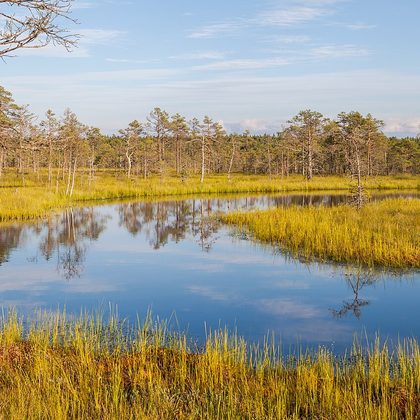
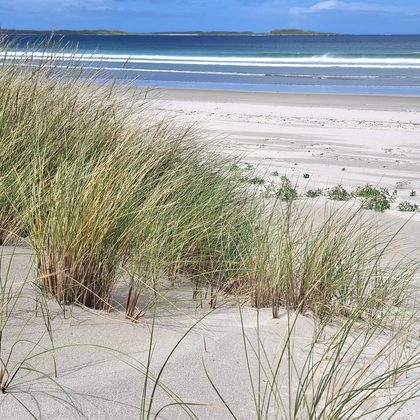
Outside the breeding season the mudflat bird par excellence: it feeds in dense, fast-moving groups on soft silt, in shallow pools and along saltmarsh creeks, the bill working the mud like a sewing machine. Breeds on wet saltmarsh, blanket bog and tundra with short grass and sedge. Roosts in compact flocks on sandbanks.
Where the bird is most at home, classified with EUNIS — the European standard for habitats.


Range and movements
Breeds from Iceland and Scandinavia far into Siberia, plus isolated colonies on Baltic and North Sea saltmarshes, where only a handful of pairs remain on the Wadden islands. As passage migrant and winter visitor it is the most numerous wader of the Wadden Sea and the Delta, and it is present all year along the British and French coasts too. Around the Mediterranean the Ebro delta, Doñana and the Bay of Cádiz hold large winter numbers; it also winters in North Africa, Turkey and the Levant.
- Resident
- Breeding (summer)
- Winter
- Passage
- dark = core range, pale = thinly spread
How and when to look
Go to a high-tide roost on the Wadden Sea or in the Delta in January and be there well before high water. The big flocks wheel over the flats, alternating white underparts and dark backs. Then take your time over the settled flock: among thousands of Dunlin there is almost always a Knot or something rarer.
Conservation status
In western Europe the breeding population is falling fast through drainage, rank saltmarsh vegetation and bog damage, and as a Dutch breeding bird the species is on the point of disappearing. As a winter visitor it stays numerous, but numbers along the East Atlantic flyway are dropping. Subsidence, shellfish fisheries and disturbance on the flats weigh heaviest.
Scientific name
Calidris alpina | (Linnaeus, 1758)
Linnaeus described the species in 1758 as Tringa alpina; because it was later moved to another genus, the author and year stand in brackets. The genus Calidris was introduced in 1804 by Merrem. Calidris goes back to Ancient Greek kalidris or skalidris, a name Aristotle used for an unidentified grey waterside bird. alpina is Latin for 'of high mountains'; here it refers to alpine tundra in general rather than to the Alps. The specimen the first description was based on came from Lapland.