All species › Waders, gulls and terns › Sandpipers and snipes › Curlew sandpiper
Curlew sandpiper | Calidris ferruginea
Krombekstrandloper | Correlimos zarapitín
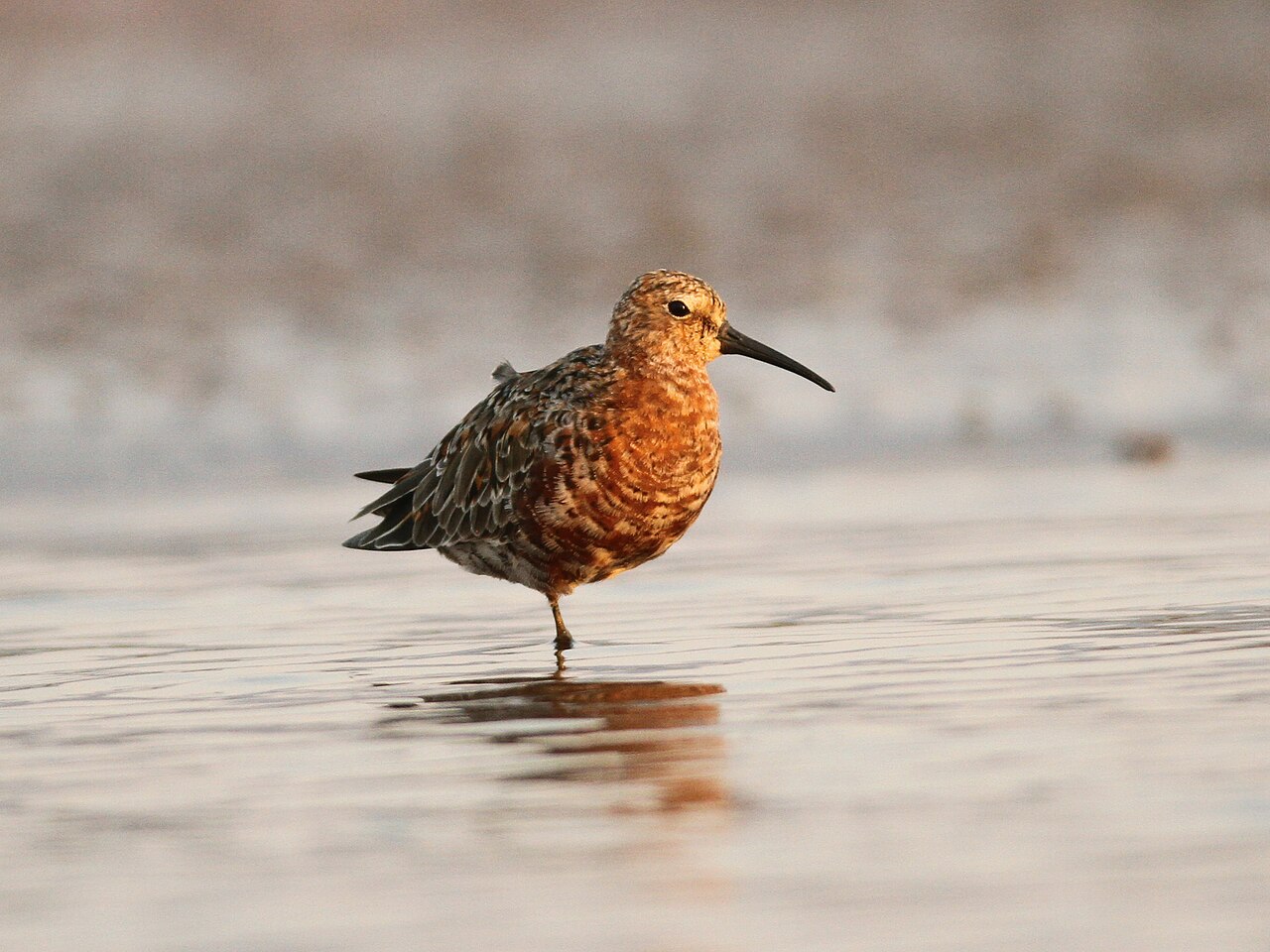
Closely related to the Dunlin: longer in the leg, longer in the bill and altogether more slender in carriage. In August it walks among the Dunlin on the mud edge, standing just that bit taller.
Click a thumbnail to switch the photo above.
Voice
A soft, rippling, two-syllable chirrup, clearly fuller and rounder than the rasping kreeep of Dunlin. Often that call is the only thing that betrays a curlew sandpiper in a mixed flock. Heard on autumn passage from July to September, and briefly in May during the spring movement.
Recording: Sonothèque ADVL — CC0 · xeno-canto
Identification
Slim and long-legged, with a long, evenly decurved bill and a clear white supercilium. Breeding adults are brick-red from the face right down to the lower belly; in winter they are pale grey above and white below. Juveniles, by far the commonest here, have neatly scaled upperparts and a warm peach-buff breast. In flight the square white rump above the narrow wingbar is decisive.
Confusion species
Dunlin is shorter in leg and bill, with a kink near the tip rather than a smooth curve, and always shows a dark central stripe down the rump. Sanderling is shorter-billed, far whiter and has a black shoulder patch. If in doubt, wait for the birds to fly: only curlew sandpiper shows an entirely white, square rump.
Habitat
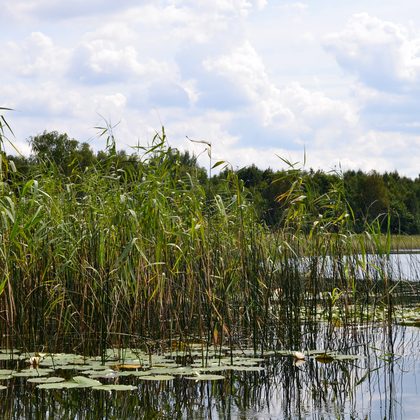
Shallow brackish pools and soft mud edges, where it wades deeper than Dunlin and probes to the base of the bill. On passage it uses coastal borrow pits, flooded fields, restored wetlands and the margins of saltmarsh creeks. It breeds on wet, sedge-covered tundra along the Siberian Arctic coast.
Where the bird is most at home, classified with EUNIS — the European standard for habitats.


Range and movements
Breeds only on the Siberian tundra, from the Yamal peninsula to the Kolyma, and therefore nowhere in Europe. The Netherlands lies on the flyway to West Africa: adults pass in July and August, juveniles in August and September, chiefly in the Delta and along the Wadden coast. In Spain it is a passage migrant in the Ebro delta and Doñana.
- Resident
- Breeding (summer)
- Winter
- Passage
- dark = core range, pale = thinly spread
How and when to look
The best window is the second half of August, at coastal borrow pits and shallow brackish pools in Zeeland or along the Wadden coast. Come around high water, when birds move off the flats to pools behind the dyke. Work through the Dunlin flocks methodically and watch for the longer legs and fine white supercilium; the bird stands just above the rest.
Conservation status
The species is listed as Near Threatened and is declining along most flyways. Breeding success swings sharply with the lemming cycle on the tundra, and warm, snow-poor summers disrupt that rhythm. Along the route to West Africa coastal wetlands are lost to land claim, salt extraction and disturbance, while waders are still hunted in parts of the flyway.
Scientific name
Calidris ferruginea | (Pontoppidan, 1763)
Pontoppidan described the species in 1763 as Tringa ferrugineus; because it was later moved to another genus, the author and year stand in brackets. The genus Calidris was introduced in 1804 by Merrem. Calidris goes back to Ancient Greek kalidris or skalidris, a name Aristotle used for an unidentified grey waterside bird. ferruginea is from Latin ferrugo, ferruginis 'iron rust', after the reddish-brown breeding plumage.