All species › Waders, gulls and terns › Sandpipers and snipes › Ruff
Ruff | Calidris pugnax
Kemphaan | Combatiente
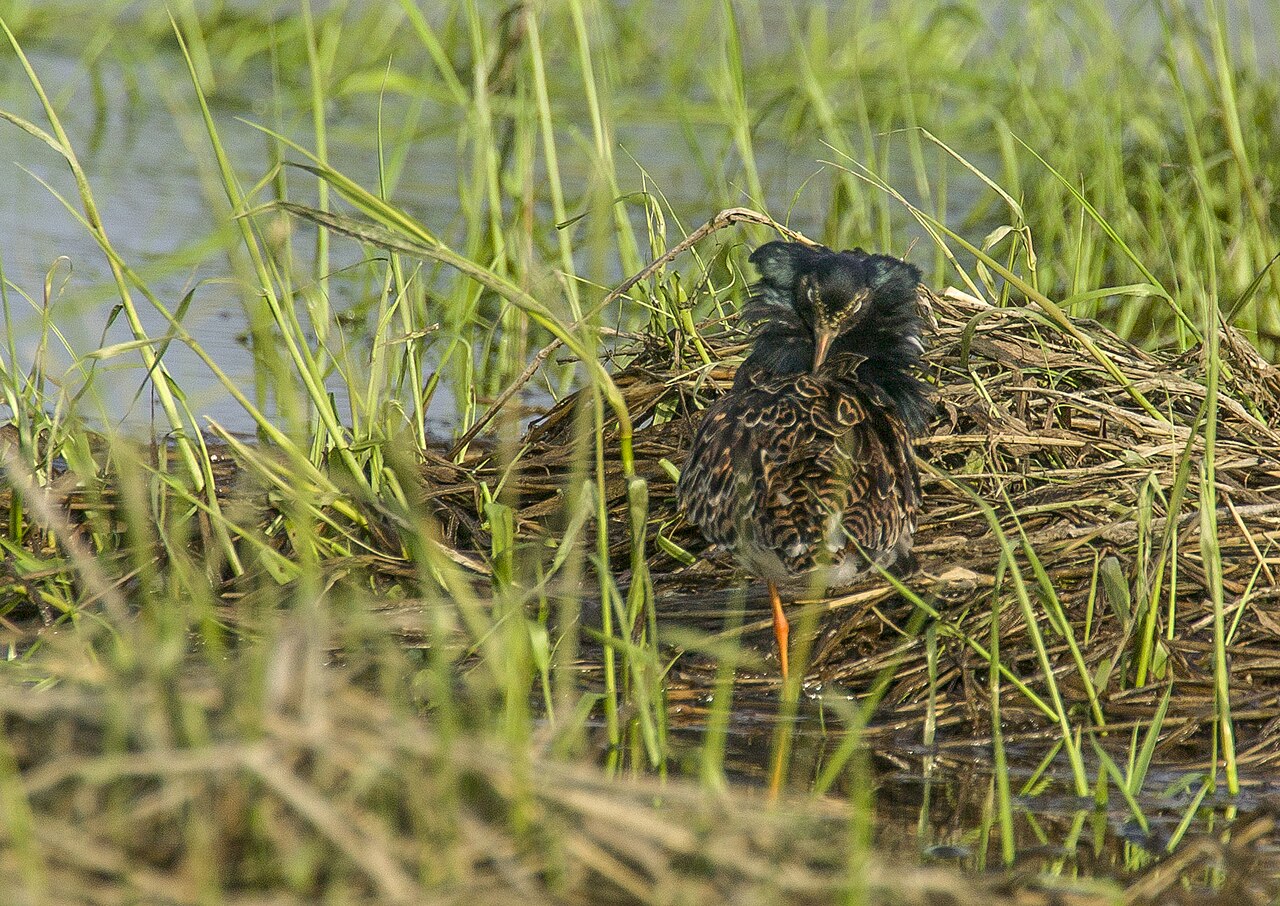
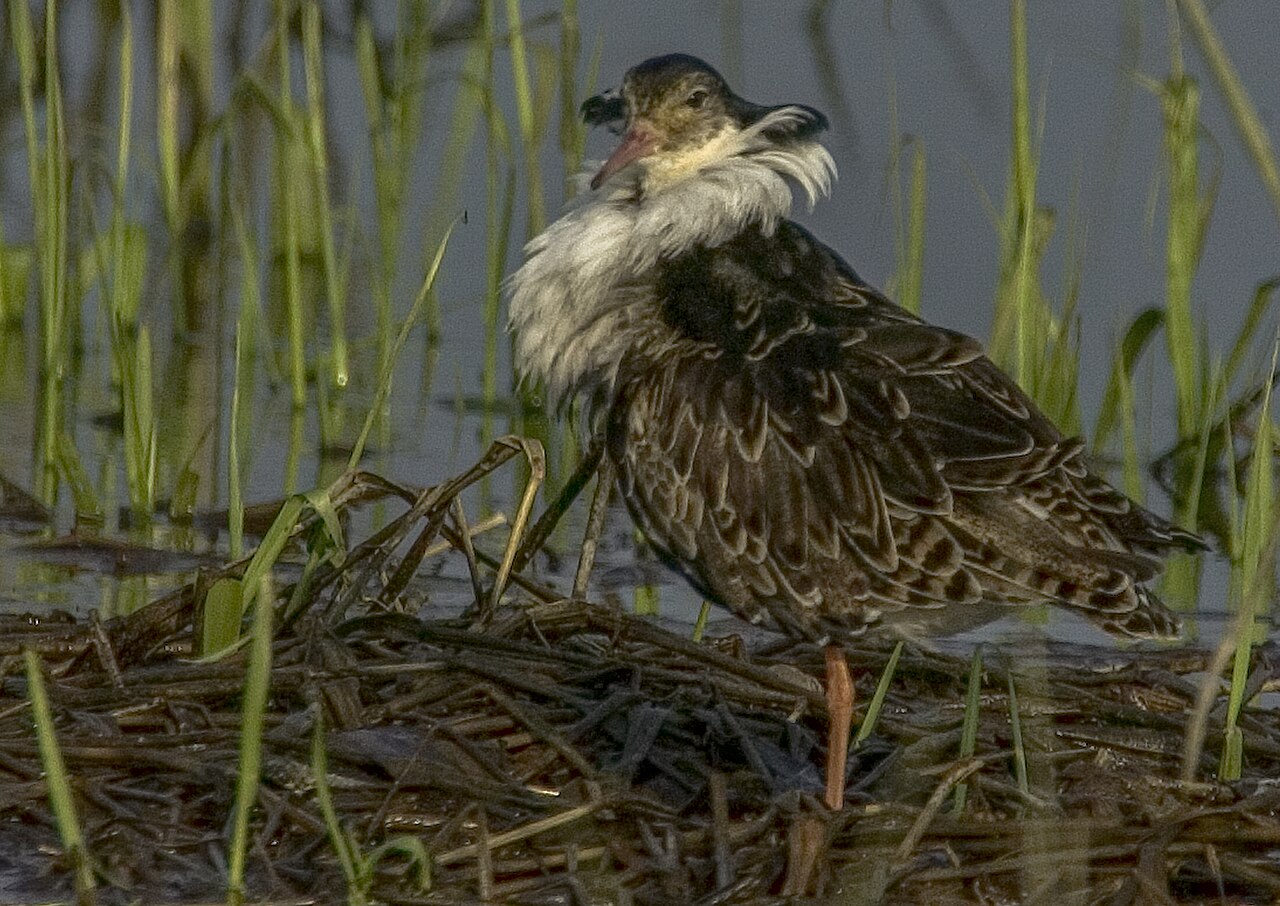
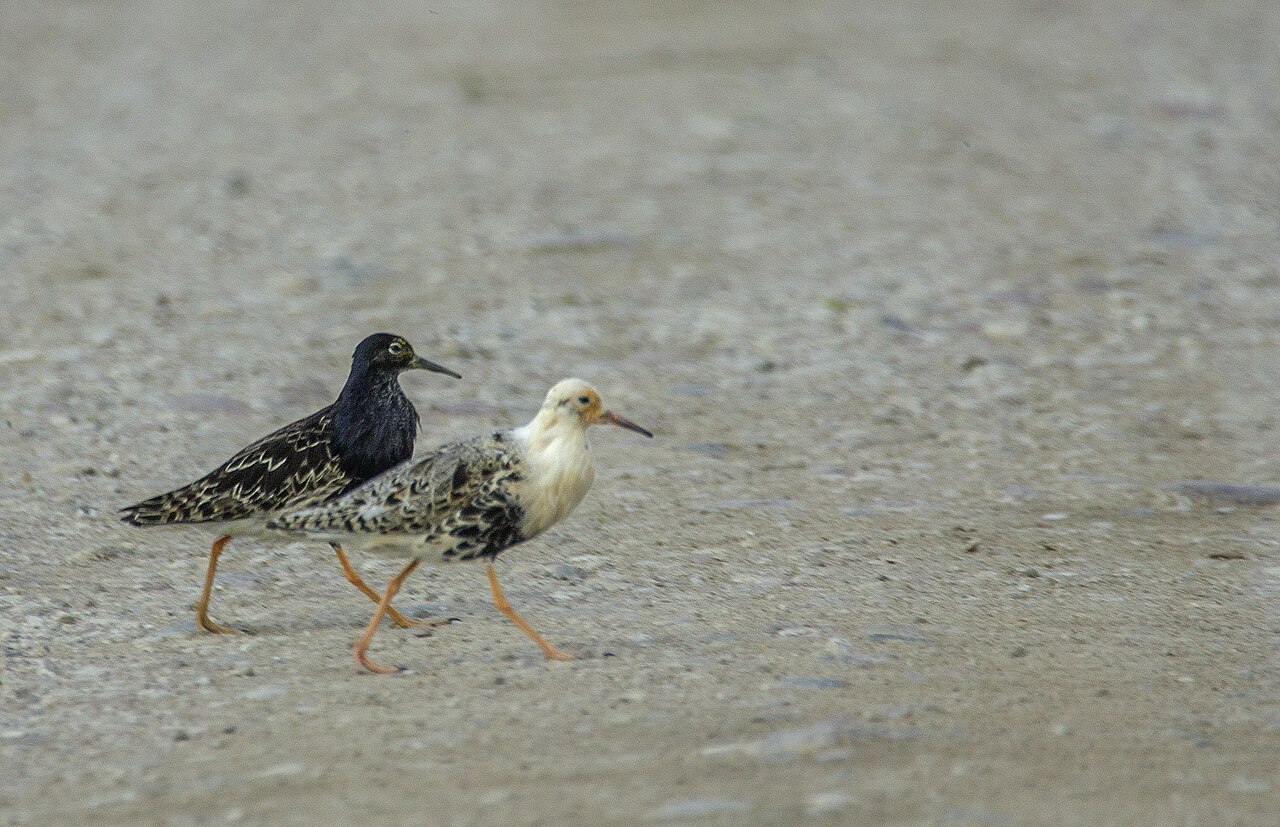
No European wader is as variable as the Ruff: in spring the males wear large ruffs in white, black, rust or purple. Outside display they are plain, long-legged, small-headed birds with a distinctly humped back.
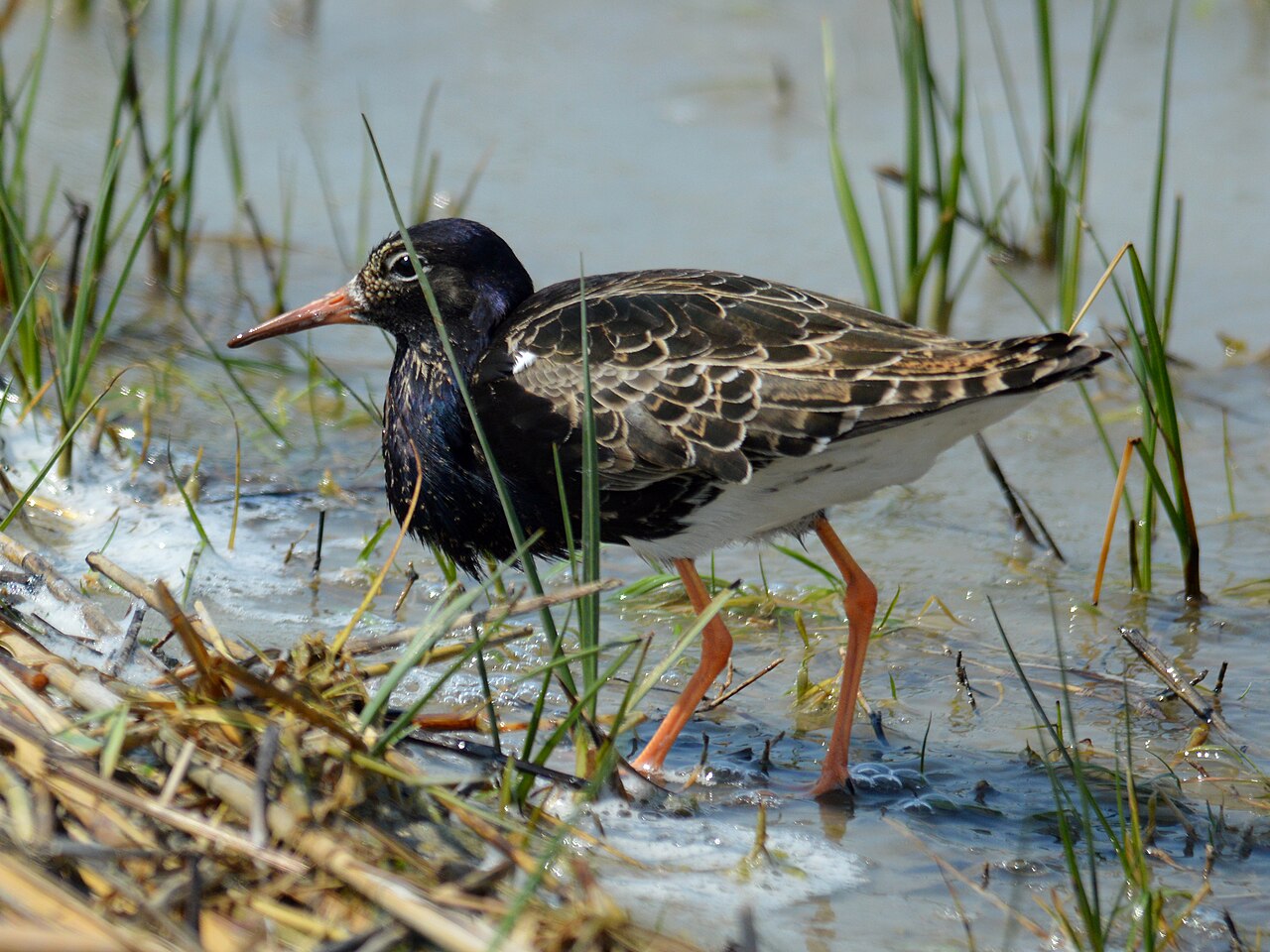
Click a thumbnail to switch the photo above.
Colour forms
Voice
One of the quietest of waders. On the lek the males are almost entirely silent, offering little more than grunting and wing clatter. In flight an occasional low, grunting ook or kru, far more muffled than a Redshank and easily missed in a mixed flock.
Recording: Teet Sirotkin — CC BY-SA 4.0 · xeno-canto
Identification
Small head, short slightly drooping bill and a hunched, rounded back on orange, yellow or grey-green legs. In flight a narrow white wingbar and, diagnostically, two oval white patches either side of the dark tail base. Spring males carry individually unique ruffs and head tufts and a warty yellow or orange face. Females are much smaller, roughly a third lighter, and scaly grey-brown.
Confusion species
Females and juveniles resemble other medium waders, but the small head, short bill and curved back give the bird the look of a miniature Redshank in poor light. Juveniles are warm buff on the breast with a neatly scaled mantle. The white ovals beside the tail and the weak wingbar settle it as the bird lifts.
Habitat
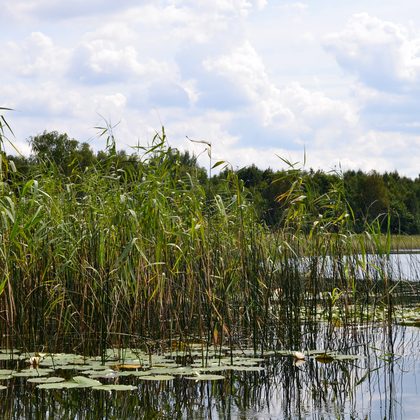
Damp extensive grassland, flooded meadows, muddy pool edges, saltmarsh and rice fields. Breeds on wet tundra and in northern marshy grassland. On passage in the Netherlands it favours clayey, shallowly flooded polders and muddy margins, where flocks walk slowly and pick as they go.
Where the bird is most at home, classified with EUNIS — the European standard for habitats.




Range and movements
Breeds from the Netherlands and Scandinavia east across the Siberian tundra, with the great majority wintering in the Sahel. As a Dutch breeder it has all but gone, yet thousands pass through the wet polders in March and April. In Spain large numbers winter in the rice fields of the Ebro delta, the Albufera and the marismas of Doñana.
- Resident
- Breeding (summer)
- Winter
- Passage
- dark = core range, pale = thinly spread
How and when to look
Visit a shallowly flooded field in the peat meadow district in the first half of April and be there at sunrise, when the males gather at the lek wearing their ruffs. Later in the morning the birds scatter over the grassland and disappear into the sward.
Conservation status
As a breeder in western Europe it has virtually vanished through drainage, early mowing and the loss of herb-rich wet grassland; at most a handful of Dutch pairs remain. The Siberian population is still large, but numbers along the flyway are falling too, helped by hunting and by drought in the Sahel.
Scientific name
Calidris pugnax | (Linnaeus, 1758)
Linnaeus described the species in 1758 as Tringa pugnax; because it was later moved to another genus, the author and year stand in brackets. The genus Calidris was introduced in 1804 by Merrem. Calidris goes back to Ancient Greek kalidris or skalidris, a name Aristotle used for an unidentified grey waterside bird. pugnax is Latin for 'combative', after the males' sparring at their display grounds. The specimen the first description was based on came from Sweden.