All species › Passerines › Crows and jays › Eurasian magpie
Eurasian magpie | Pica pica
Ekster | Urraca común
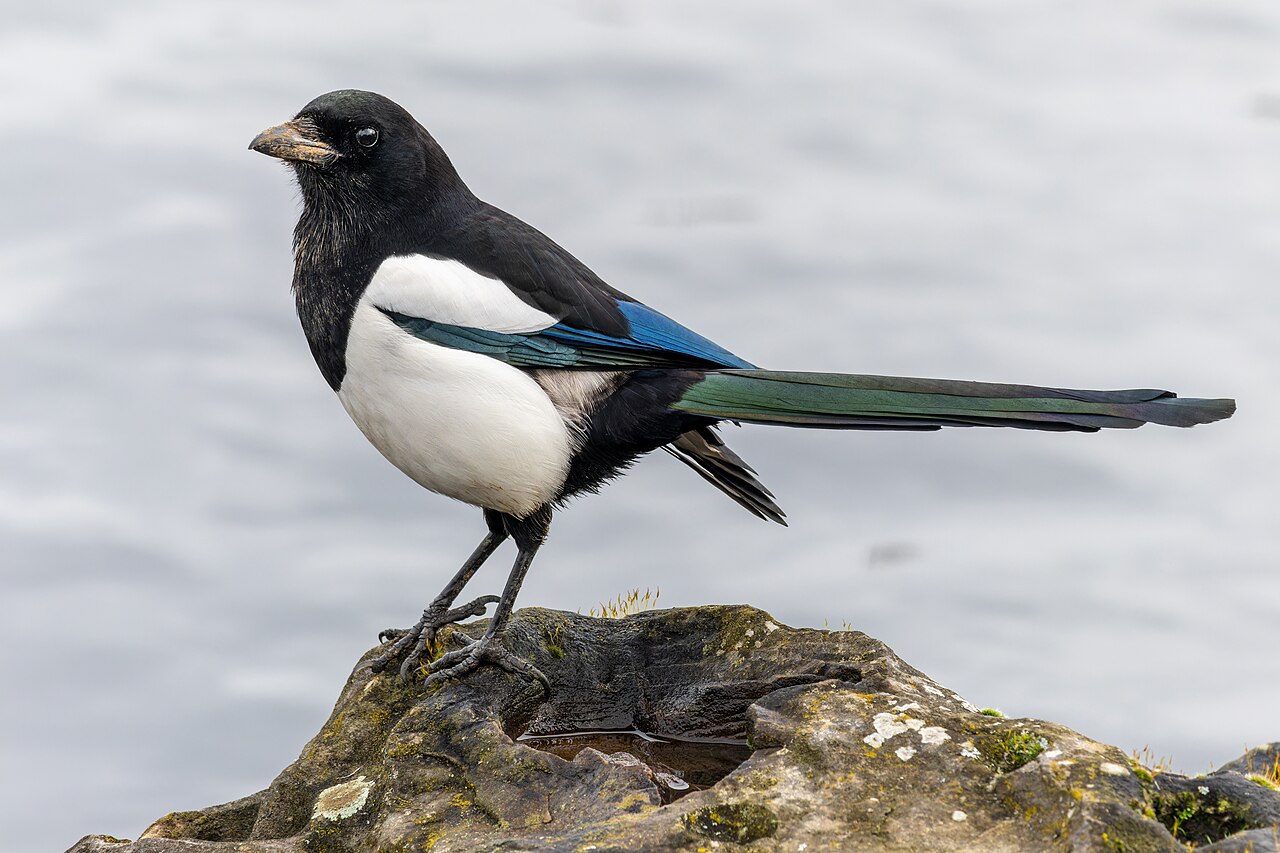
In full sun the black of the Magpie is a mix of bottle green, bronze and deep blue. The long graduated tail makes up nearly half the total length.
Voice
No true song, but a loud chattering rattle: a hard, accelerating chak-chak-chak-chak, heard all year and especially in alarm at cats, owls or raptors. Pairs also exchange quiet mixed gurgling notes, and in late winter noisy gatherings assemble at dusk.
Recording: Benoît Van Hecke — CC BY-SA 4.0 · Wikimedia Commons
Identification
Black and white with a long, graduated tail glossed green and purple; a white scapular triangle and white primaries that flash as a pale wing panel in flight. Belly white, the rest black. Sexes alike, males averaging longer-tailed. Juveniles have a much shorter tail, little gloss and often grubby-looking white.
Confusion species
Almost unmistakable in Europe; at distance a Jay flying away can suggest a Magpie because of its white rump, but it is rufous with a blue wing panel. Short-tailed young Magpies are sometimes taken for Jays or Jackdaws. In southern Spain check for Iberian magpie, a wholly different bird: pinkish grey with blue wings and a black cap.
Habitat
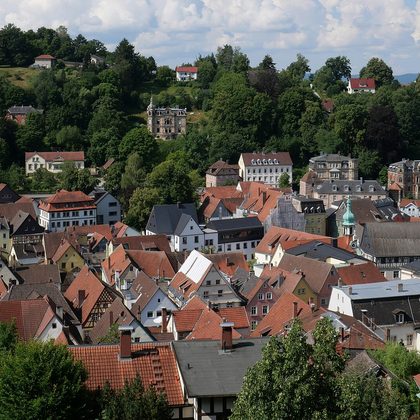
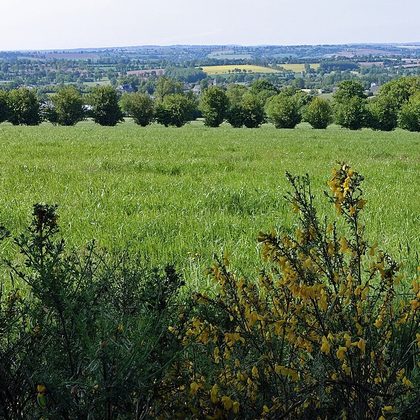
Semi-open country with scattered bushes and trees beside short grass: village edges, city parks, gardens, orchards, scrubby roadsides and hedgerow farmland. It avoids closed forest and completely open arable land; the nest is a conspicuous domed ball of sticks high in a tree or thorn bush.
Where the bird is most at home, classified with EUNIS — the European standard for habitats.

Range and movements
Nearly all of Europe, Turkey and the Levant, resident with little migration. Common everywhere in north-west and central Europe, at highest densities in towns and cities where Goshawk predation is lower. In Iberia common in the north and centre, much scarcer in the far south, and absent from the Balearics and the Canaries.
- Resident
- Winter
- Passage
- dark = core range, pale = thinly spread
How and when to look
Watch for ceremonial gatherings in February and March: several birds together on a lawn, tails fanned and postures stretched. In winter communal roosts in dense scrub are easy to find in the last half hour of light. Alarm-calling Magpies often point to a raptor, owl or cat nearby.
Conservation status
Not globally threatened (IUCN: Least Concern). Dutch farmland numbers declined with the loss of hedgerows and through predation, while the urban population held steady. In parts of the Spanish interior the species has also thinned out, and illegal control still occurs locally.
Scientific name
Pica pica | (Linnaeus, 1758)
Linnaeus described the species in 1758 as Corvus pica; because it was later moved to another genus, the author and year stand in brackets. The genus Pica was introduced in 1760 by Brisson. Pica is the Latin word for the magpie. The specific name repeats the genus name. The specimen the first description was based on came from Uppsala, Sweden.