All species › Waders, gulls and terns › Plovers and lapwings › Kentish plover
Kentish plover | Anarhynchus alexandrinus
Strandplevier | Chorlitejo patinegro
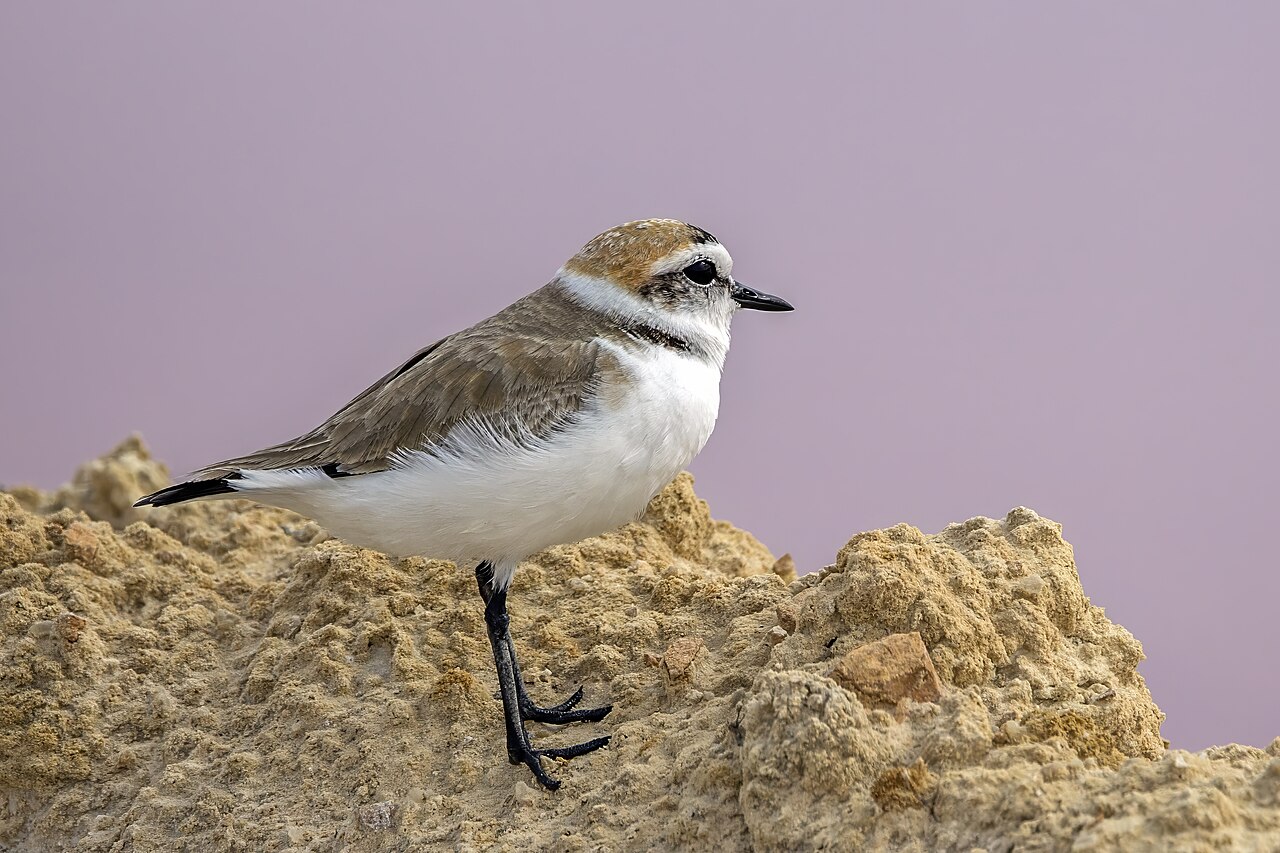
A pale, fast plover of bare sandy flats that would rather run than fly. In the Netherlands the Kentish plover has become a rare coastal breeder, while along the Mediterranean it still holds nearly every saltpan and broad beach.
Click a thumbnail to switch the photo above.
Voice
A soft, short and slightly rolling prrit or a muffled too-eet, far less musical than the clear whistle of Ringed Plover. Displaying males deliver a rattling, purring series over the beach. Heard mostly from March to June; outside the breeding season birds call little, usually only on taking flight.
Recording: Joost van Bruggen — CC BY-SA 4.0 · Wikimedia Commons
Identification
Small, pale and long-legged, with a fine all-black bill and dark grey to blackish legs. The breast band is always broken into two separate patches at the sides of the neck, never a closed ring. Spring males show a rusty crown with a black forehead bar and eye-stripe; females and winter birds are plain sandy brown. In flight a clear white wingbar and white tail sides.
Confusion species
Ringed and little ringed plover both show a complete black breast band, while in Kentish the side patches stay apart. It further differs from Ringed by dark rather than orange legs and an all-black bill, and from Little Ringed by the obvious white wingbar and the lack of a yellow eye-ring.
Habitat
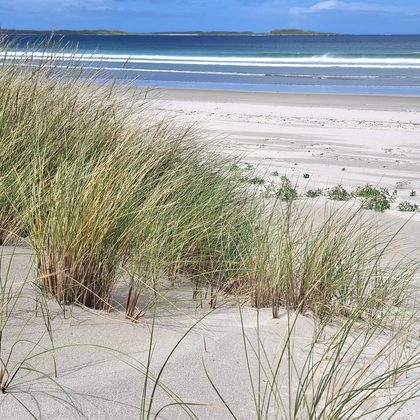
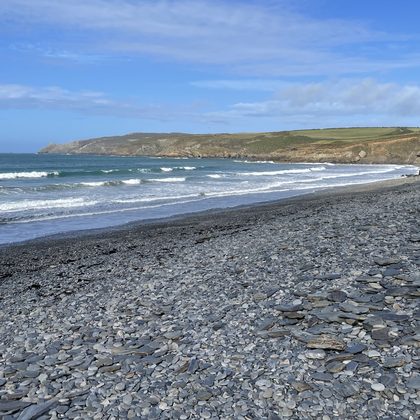
Bare, dry sand without vegetation: wide beaches above the tideline, shell banks, embryo dunes, dredged spoil and the banks and drying floors of saltpans. Outside the breeding season on mudflats, in lagoons and along sandy river mouths, usually in small, widely scattered parties.
Where the bird is most at home, classified with EUNIS — the European standard for habitats.


Range and movements
Breeds along Atlantic and Mediterranean coasts, with Iberia the European stronghold: the saltpans of the Ebro delta, the Levante coast and Andalusia. In the Netherlands a small population remains in the Delta and on the Wadden islands, almost entirely concentrated in fenced and wardened breeding reserves.
- Resident
- Breeding (summer)
- Winter
- Passage
- dark = core range, pale = thinly spread
How and when to look
Walk a roped-off beach reserve at low water in May and scope the dry sand above the tideline; the birds run in short bursts and then freeze, so they only show when they move. Early morning, before beach recreation starts, they are least wary.
Conservation status
Strongly declined in north-west Europe through recreational pressure, beach cleaning, the fixing of dynamic sand flats and predation by fox and gulls. Globally still not threatened, but the European trend is negative and the Dutch population depends entirely on fencing and wardening of breeding beaches.
Scientific name
Anarhynchus alexandrinus | (Linnaeus, 1758) (GBIF: Charadrius alexandrinus)
Linnaeus described the species in 1758 as Charadrius alexandrinus; because it was later moved to another genus, the author and year stand in brackets. The genus Anarhynchus was introduced in 1832 by Quoy & Gaimard. Anarhynchus is Greek, from ana- 'backward' and rhunkhos 'bill', after the sideways-bent bill of the wrybill, the type species of the genus. alexandrinus is Latin for 'of Alexandria', the Egyptian port the first described specimen came from. The specimen the first description was based on came from Egypt.