All species › Owls › Typical owls › Little owl
Little owl | Athene noctua
Steenuil | Mochuelo europeo
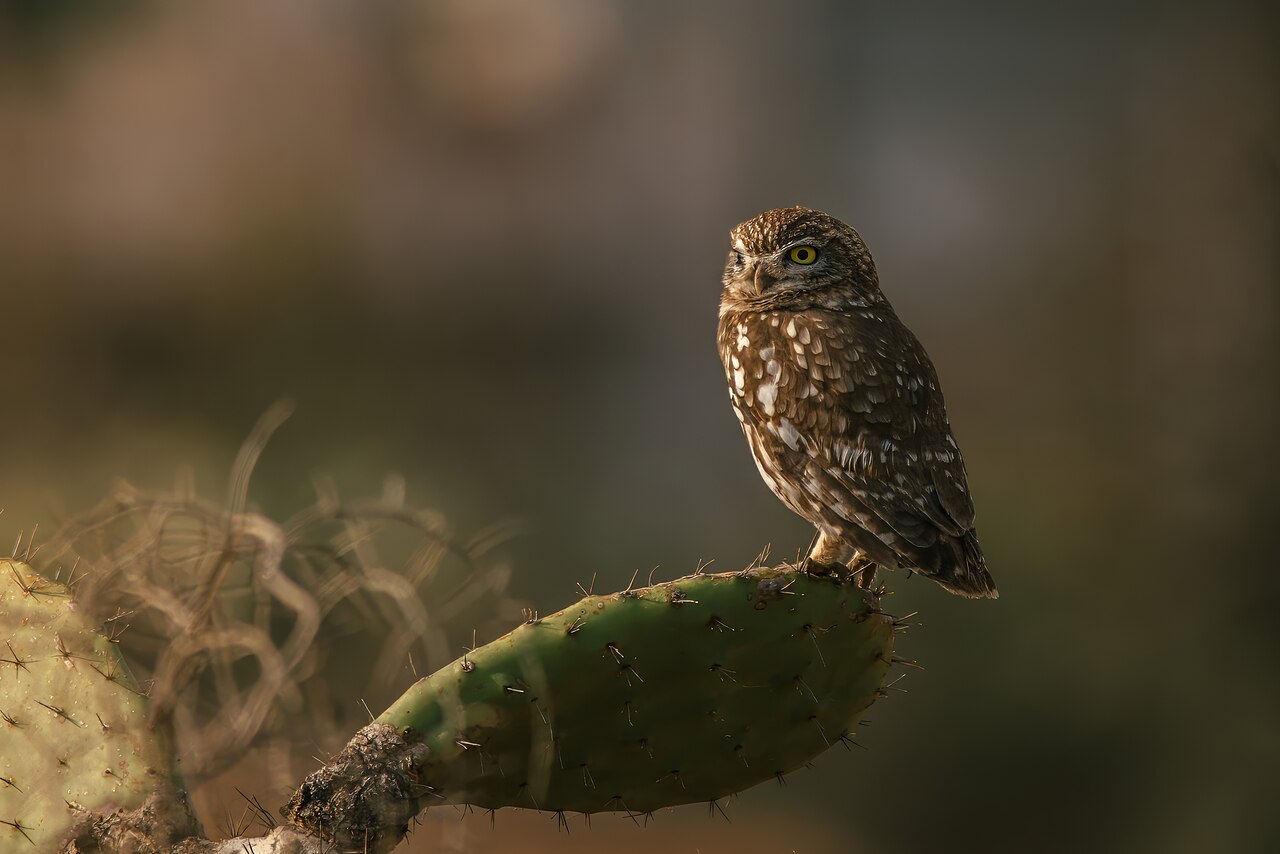
A small, squat owl of old-fashioned farmland that often sits out in daylight on a post or a barn ridge. Its bobbing stance and bounding woodpecker flight give it away at once.
Voice
The classic sound is a loud, rising, plaintive kiew, repeated from a post or roof ridge, mainly at dusk from March to May. There is also a yapping werro-werro when excited and a short barking alarm. Heard by day as well as at night.
Recording: Joost van Bruggen — CC BY-SA 4.0 · Wikimedia Commons
Identification
Barely bigger than a Starling but far bulkier: flat crown, broad white eyebrows and fierce yellow eyes in a frowning face. Upperparts brown with white spotting, underparts broadly streaked, legs feathered white. Flight low and deeply undulating like a woodpecker; juveniles duller, with a plainer, less spotted head.
Confusion species
Scops Owl is slimmer, grey and bark-patterned, with short ear tufts and orange-yellow eyes, sits upright in a tree and is only a summer visitor. Fledged long-eared owls beg at night from higher perches. Most distant claimed little owls turn out to be young Jackdaws or doves on posts.
Habitat
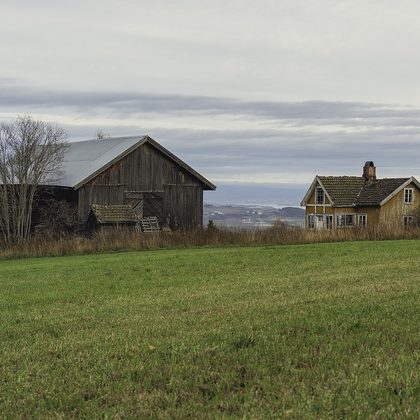
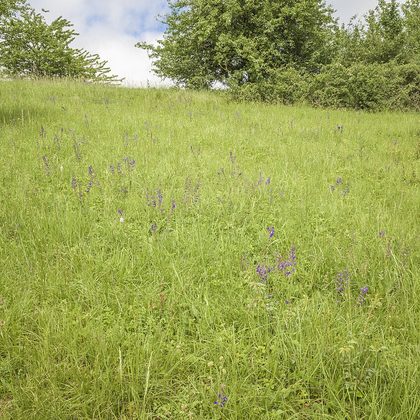
Small-scale farmland with pollard willows, old orchards, barns and farmyards, with plenty of short grass or rough ditch banks alongside. Needs cavities in trees, walls or nest boxes, and hunts leatherjackets, worms, voles and beetles from low lookouts.
Where the bird is most at home, classified with EUNIS — the European standard for habitats.


Range and movements
From the Netherlands and Denmark south through all of central and southern Europe; absent from Scandinavia and Ireland. In the Netherlands mainly in the eastern provinces, Limburg and Zeeland. In Spain widespread and numerous in olive groves, steppes and dehesa. Resident, with young dispersing only a few kilometres.
- Resident
- Breeding (summer)
- Winter
- Passage
- dark = core range, pale = thinly spread
How and when to look
In April or May drive slowly through small-scale farmland in the last hour of daylight and scan posts, gates, ridges and pollard willows for a low, broad silhouette. Calling peaks then, and listening from a stopped car works far better than walking.
Conservation status
Long declining in north-west Europe as farms are enlarged and pollard willows, orchards and untidy corners disappear. Drowning in open water butts and cattle troughs, road casualties and loss of vole-rich grassland all contribute. Still numerous in Spain, but thinner in intensified arable country; nest boxes help locally.
Scientific name
Athene noctua | (Scopoli, 1769)
Scopoli described the species in 1769 as Strix noctua; because it was later moved to another genus, the author and year stand in brackets. The genus Athene was introduced in 1822 by Boie. Athene refers to the Greek goddess Athena, whose emblem was the owl. noctua is the Latin name of the owl sacred to Minerva, Athena's Roman counterpart. The specimen the first description was based on came from Carniola, Slovenia.