All species › Waterfowl › Ducks, geese and swans › Northern pintail
Northern pintail | Anas acuta
Pijlstaart | Ánade rabudo
Slim and long-lined, the Pintail is the slenderest of the dabbling ducks. Through the winter half of the year it swims in loose parties on flooded grassland and tidal flats, reaching deep with that long neck.
Click a thumbnail to switch the photo above.
Voice
The male whistles high and clear, a plaintive prreep recalling Teal but fuller and more drawn out. The female answers with a low, hoarse, throttled series, err-err. Heard mainly from displaying parties between December and March, and occasionally from birds passing overhead at night.
Recording: Luis Alvarez Menendez — CC BY-SA 4.0 · Wikimedia Commons
Identification
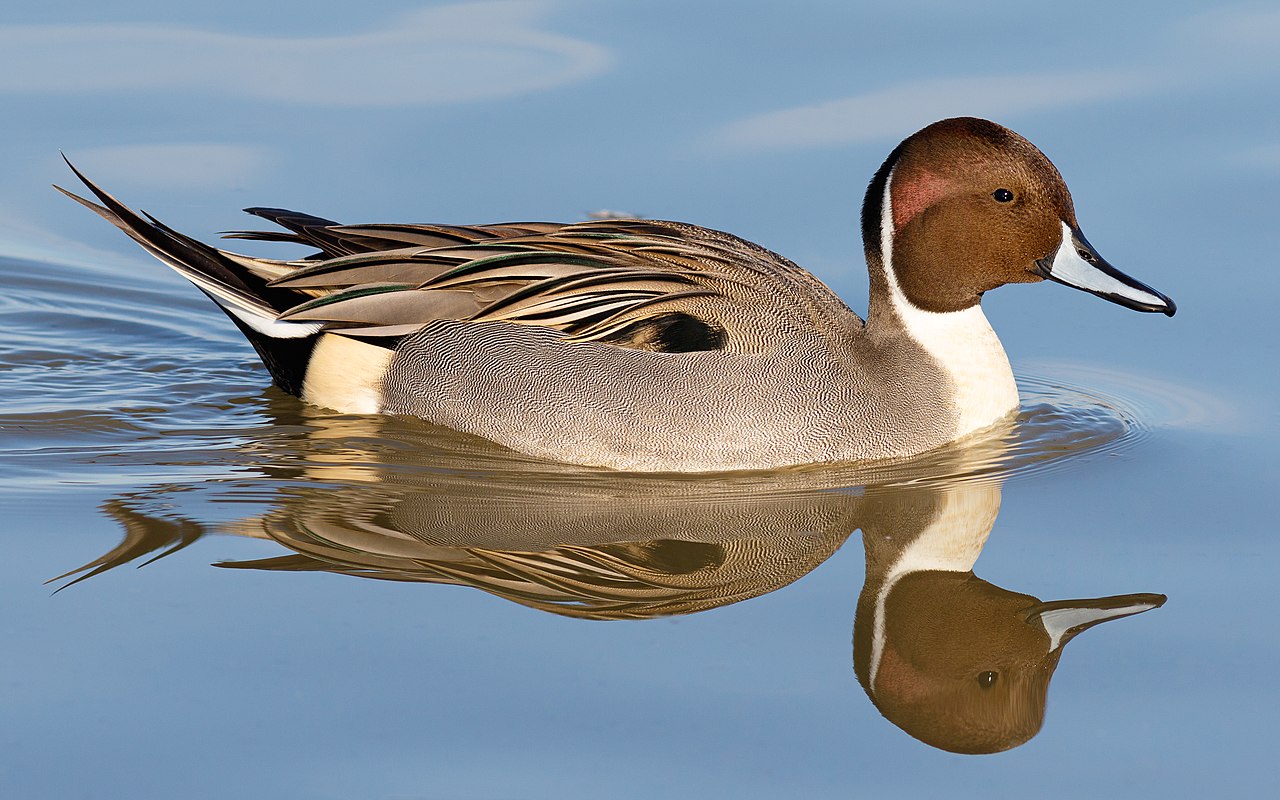
Long thin neck, small head and a sharply tapering rear end. The male has a chocolate-brown head with a white finger running up the side of the neck, a finely vermiculated grey body, a cream patch before the black undertail and two long tail pins. The female is plain coffee-brown with an unmarked face and an all-grey bill; the eclipse male resembles her but stays greyer and longer-tailed.
Confusion species
Female Mallard and Gadwall cause most of the trouble, but both are stockier and shorter-necked. Pintail shows a plain unstreaked head, an entirely grey bill with no orange, and a bronze speculum with a narrow white trailing edge. In flight the pointed wings and far-projecting neck settle it at range.
Habitat
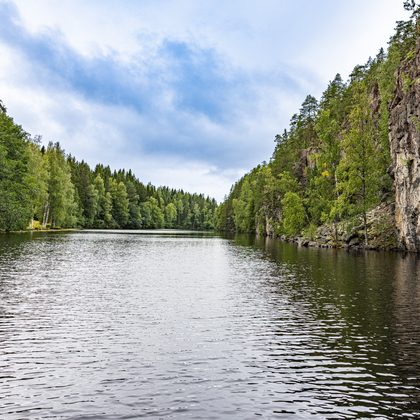
Shallow, nutrient-rich water with open shores: flooded grassland, saltmarsh, brackish creeks, mudflats and rice fields. Breeds sparingly in damp dune slacks and on marshy islands in the north. Feeds by dabbling and by upending with head and neck submerged, favouring water about belly-deep.
Where the bird is most at home, classified with EUNIS — the European standard for habitats.


Range and movements
A breeder of tundra and taiga across northern Europe and Siberia, with only a handful of pairs in the Netherlands. Large numbers winter in the Delta, along the Wadden Sea and on wet polders. Iberia holds important wintering grounds in Doñana, the Ebro delta and the rice fields around the Albufera of Valencia.
- Resident
- Breeding (summer)
- Winter
- Passage
- dark = core range, pale = thinly spread
How and when to look
Work flooded polders in December and January, and come in late afternoon when parties move from roost to feeding areas. Scope sleeping duck flocks: the long neck and pointed stern stand out above resting Mallard and give the species away before any plumage detail shows.
Conservation status
As a breeder in western Europe it is rare and vulnerable to drainage and nest predation in grassland. As a winter visitor it remains numerous, though milder winters are shifting the centre of gravity north-east. Loss of shallow, extensively managed wetlands and hunting in parts of the wintering range remain the main pressures.
Scientific name
Anas acuta | Linnaeus, 1758
Linnaeus described the species in 1758 and placed it straight away in the genus where it still stands. He introduced the genus Anas in that same work. Anas is the Latin word for 'duck'. acuta is Latin for 'pointed', from acuere 'to sharpen', after the long pointed tail feathers of the male. The specimen the first description was based on came from Sweden.