All species › Waterfowl › Ducks, geese and swans › Whooper swan
Whooper swan | Cygnus cygnus
Wilde zwaan | Cisne cantor
A large, upright swan with a wedge of yellow on the bill and a voice like an old ship's horn. In the Netherlands it is a winter visitor to wet grassland and arable fields, usually in small family parties.

Click a thumbnail to switch the photo above.
Voice
Loud, bugling and often trisyllabic: a trumpeting whoop-whoop-whoop or kloo-kloo-kloo with a metallic, horn-like ring that carries for kilometres. Called mostly in flight and on arrival at a field, and heard constantly on clear January days as families call to one another across the polder.
Recording: Olivier Grimm — CC BY-SA 4.0 · Wikimedia Commons
Identification
As big as mute swan but with a straight, stiffly held neck and a flat, angular head profile. The bill is black with an extensive lemon-yellow base that runs forward in a sharp wedge past the nostril. First-winters are grey-brown with a dull pink bill that only turns yellow through the course of the winter.
Confusion species
Mute swan has an orange bill with a black knob, an S-curved neck and a cocked tail. Bewick's is smaller and shorter-necked, and its yellow bill patch is small and rounded and stops behind the nostril, whereas on Whooper the yellow reaches forward in a long sharp point.
Habitat
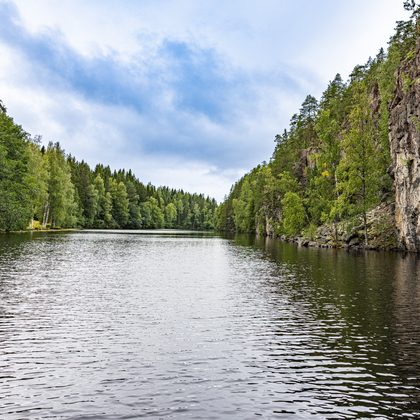
Winters on damp grassland, river floodplains, winter cereals and beet or potato residues, roosting on shallow open water. Breeds beside forest lakes, bog pools and slow rivers in the taiga of Iceland, Fennoscandia and Russia. Feeds by grazing and by upending for aquatic plants in shallow water.
Where the bird is most at home, classified with EUNIS — the European standard for habitats.


Range and movements
Breeds in Iceland, northern Scandinavia and northern Russia, and in recent years in small numbers in the Netherlands and Germany. Winters in Ireland, Britain, Denmark, Germany and the Netherlands, concentrating in the northern and eastern polders. In Spain it is exceptional, with a few records in the north.
- Resident
- Breeding (summer)
- Winter
- Passage
- dark = core range, pale = thinly spread
How and when to look
From December to February try the Lauwersmeer area, the IJssel floodplain, the Ooijpolder and north-east Groningen. Drive the minor roads at first light when families are grazing on stubble and beet fields, and listen as much as you look: the bugling usually reaches you before the birds are in view.
Conservation status
In Europe the recent trend is positive: the Scandinavian and Icelandic breeding populations have grown and the range is spreading south. Persistent threats are collisions with power lines and wind turbines, lead poisoning, disturbance at roosts and the continuing loss of wet grassland to intensive agriculture.
Scientific name
Cygnus cygnus | (Linnaeus, 1758)
Linnaeus described the species in 1758 as Anas cygnus; because it was later moved to another genus, the author and year stand in brackets. The genus Cygnus was introduced in 1764 by De Garsault. Cygnus is Latin for 'swan', a variant of cycnus and borrowed from Greek kyknos with the same meaning. The specific name repeats the genus name; the whooper swan is the type species of Cygnus. The specimen the first description was based on came from Sweden.