All species › Waterfowl › Ducks, geese and swans › Bewick's swan
Bewick's swan | Cygnus columbianus
Kleine zwaan | Cisne chico
Europe's smallest and most goose-like swan, short-necked with a rounded head. The species covers two forms: the Eurasian one, known here as bewick's swan (formerly Cygnus bewickii), which arrives from Siberia each winter in the Dutch polders and on the British washes, and the North American one, the Whistling Swan (formerly Cygnus columbianus), which reaches Europe only as a vagrant. AviList 2025 treats both forms as a single species, Cygnus columbianus, often called Tundra Swan; other lists keep them apart as two species.

Click a thumbnail to switch the photo above.
Voice
Higher, more talkative and more chattering than Whooper: a muffled, nasal, undulating koo-koo-kooloo, heard from a feeding flock as continuous babble. The flight call is a softer, cheerful kow-kow. Birds of the North American form call higher and more barking, a short goose-like hoo-ho-hoo recalling a canada goose, but that only helps on a bird heard calling alone; in a noisy herd the difference disappears. Best heard as flocks leave and return to the roost in November and December.
Recording: steve — CC BY-SA 4.0 · xeno-canto
Identification
Adults of both forms are white throughout with black legs, and everything turns on the bill. The Eurasian form carries a broad yellow base filling the lores, cut off straight or square at the front and usually reaching about as far as the nostril, without the sharp wedge of Whooper. The North American form shows an almost wholly black bill with at most a small yellow spot in front of the eye, sometimes absent altogether. The yellow pattern differs on every bird, so individuals can be recognised from a clean side-on view of the head and followed from winter to winter. First-winters are dingy grey with a pink bill base and cannot be assigned to either form in the field.
Confusion species
On Whooper the yellow runs forward in a sharp wedge past the nostril and covers more than half the bill; here the yellow patch is smaller and blunt or square-fronted. Mute swan is separated at once by its orange bill with a black knob and its arched neck. To pick a North American bird out of a herd, work along the line and view every head square-on: the target is an adult whose yellow goes no further than a dot before the eye while its neighbours carry a solid yellow field. Intermediates are real — low-yellow Eurasian birds account for most rejected claims — and mixed pairings between the two forms, as well as hybrids with Whooper, have been recorded.
Habitat
Winters on damp grassland, sugar beet and potato residues and winter cereals, roosting on shallow lakes, creeks, washes and border lakes. Breeds on arctic tundra beside pools and meandering rivers: the Eurasian form in northern Russia, the North American form in Alaska and northern Canada. Formerly tied to pondweed beds in shallow water, it now feeds mainly on farmland. Away from the company of wintering herds the chance of a North American bird is negligible.
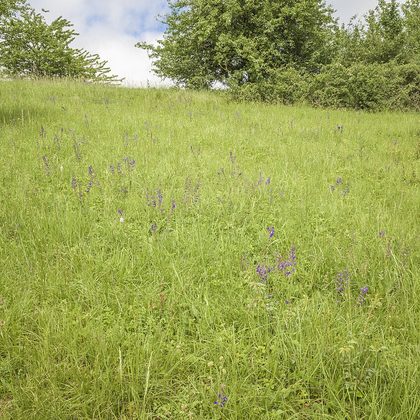
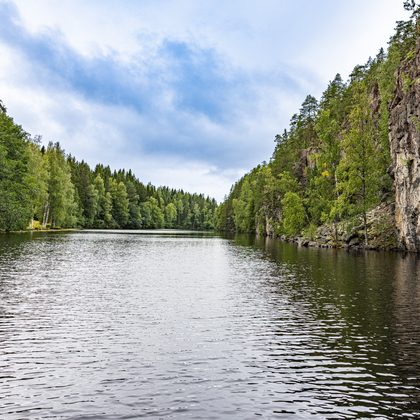
Where the bird is most at home, classified with EUNIS — the European standard for habitats.


Range and movements
The Eurasian form breeds on the Russian tundra from the Kanin Peninsula east to the Lena and winters in north-west Europe — the Low Countries, the British Isles, northern Germany — with the Dutch polders and lakes and the Ouse Washes as strongholds; smaller numbers winter in eastern Europe, around the Black Sea and into Turkey. In the Mediterranean the species is an exceptional vagrant. The North American form breeds in Alaska and northern Canada and winters along both coasts of North America; in Europe it has been recorded a handful of times, almost only in the British Isles and always among wintering Bewick's herds.
- Resident
- Breeding (summer)
- Winter
- Passage
- dark = core range, pale = thinly spread
How and when to look
Come in November and December to the wintering grounds: the Ouse Washes, the Flevoland polders and their fringing lakes, or Lough Foyle. Check roost lakes at first light, then follow flocks out to the beet fields; late afternoon light shows the bill patterns best. Take time over every individual bill and photograph the head square-on from both sides, since only a clean profile lets you judge the yellow — and only that way does a claim of a North American bird get anywhere.
Conservation status
The north-west European population of the Eurasian form has declined markedly since the 1990s. Poor breeding success on the tundra, illegal shooting and lead poisoning along the flyway, collisions with power lines and wind turbines, and a short-stopping of the wintering range eastwards under milder winters all contribute. The North American form is numerous and stable to slightly increasing, so the species as a whole is not threatened and the European decline is hidden inside a healthy global figure.
Scientific name
Cygnus columbianus | (Ord, 1815)
Ord described the species in 1815 as Anas columbianus; because it was later moved to another genus, the author and year stand in brackets. The genus Cygnus was introduced in 1764 by De Garsault. Cygnus is Latin for 'swan', a variant of cycnus and borrowed from Greek kyknos with the same meaning. columbianus refers to the Columbia River in western North America, the type locality. The specimen the first description was based on came from The Dalles, Oregon.