All species › Waterfowl › Ducks, geese and swans › Mute swan
Mute swan | Cygnus olor
Knobbelzwaan | Cisne vulgar
The mute swan is the commonest swan in north-west Europe; the orange bill with black knob and the singing throb of its wings set it apart. Once half-domesticated, it is now a familiar breeder on every town pond there; on the Iberian Peninsula it is mainly a park bird, descended from feral populations.

Click a thumbnail to switch the photo above.
Voice
Not truly mute: a hissing, angry hhorr in nest defence and a hoarse grunting gyorr between pair members. The distinctive sound is mechanical, the rhythmic singing wiew-wiew-wiew of the wings of a bird passing overhead, audible all year and unique among European swans.
Recording: Alexander Kürthy — CC BY-SA 3.0 · Wikimedia Commons
Identification
Very large, pure white swan with an orange-red bill, black base and a black knob that is larger in the male and swells in spring. The neck is usually held in an S-curve, the wings often arched over the back. Juveniles are dingy grey-brown with a pinkish-grey bill, keeping traces of it into their second calendar year.
Confusion species
Whooper and bewick's swans have yellow on the bill base, no knob, a straight-held neck and loud bugling voices. Feral and domestic-type birds cause more trouble than either real species: judge bill pattern and neck carriage rather than size or whiteness.
Habitat
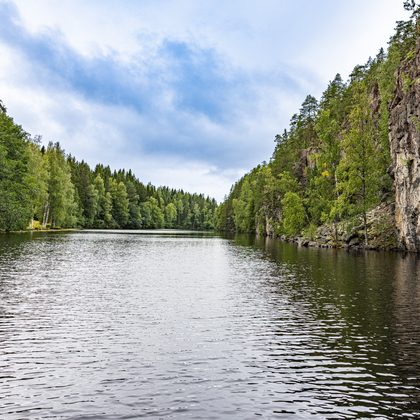
Shallow fresh water with abundant submerged vegetation: town ponds, canals, ditches, gravel pits, peat meadows and quiet river arms. In winter also on brackish water and sheltered estuaries, and grazing in flocks on grassland and harvested arable fields.
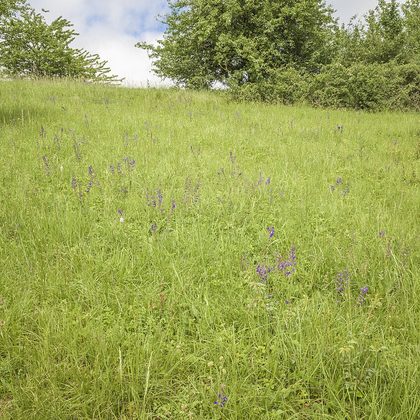
Where the bird is most at home, classified with EUNIS — the European standard for habitats.


Range and movements
Breeds from north-west and central Europe to Central Asia; common and largely sedentary in the Netherlands. In Spain it is essentially a feral park bird, with only the odd genuine vagrant in hard winters; the natural centre of gravity lies around the Baltic and the North Sea.
- Resident
- Breeding (summer)
- Winter
- Passage
- dark = core range, pale = thinly spread
How and when to look
In March and April watch territorial males busking: wings arched, neck drawn back, paddling with both feet together to drive off a rival. For the wing music, stand by open water on a still winter morning and wait for birds to pass low overhead.
Conservation status
Not threatened, and increased in north-west Europe once persecution stopped and winter feeding became normal. The main causes of death are collisions with power lines, lead poisoning from discarded fishing tackle and entanglement in line. Local conflict with farmers arises where flocks graze crops.
Scientific name
Cygnus olor | (Gmelin, 1789)
Gmelin described the species in 1789 as Anas olor; because it was later moved to another genus, the author and year stand in brackets. The genus Cygnus was introduced in 1764 by De Garsault. Cygnus is Latin for 'swan', a variant of cycnus and borrowed from Greek kyknos with the same meaning. olor is also Latin for 'swan', so the name states the meaning twice. The specimen the first description was based on came from Russia and Siberia.