All species › Passerines › Finches, euphonias and allies
Finches, euphonias and allies | Fringillidae
Vinkachtigen | Fringílidos | Fringilídeos, gaturamos e afins
In this guide the family numbers 23 species in four genera: Chlorophonia, Euphonia, Carduelis and Spinus. Most are euphonias (Euphonia) and chlorophonias of rainforest, forest edge and gardens, from Amazonia and the Guianas to the Atlantic Forest, along with siskins of open country, forest edge and the mountains. In the siskins the conical bill is the mark of the family: seed is not swallowed but husked, held in a groove in the palate while the lower mandible slides the coat off. The small, compact euphonias and chlorophonias, glossy blue-black, yellow or green, eat mainly berries instead, especially of mistletoe, whose seeds pass quickly and undamaged through the gut, so that the birds spread the plant; Purple-throated and Violaceous Euphonias are widespread, Blue-naped Chlorophonia lives in montane forest. Among the siskins Hooded Siskin is the commonest; Red Siskin, the male red with a black hood, lives in northern Venezuela and in Guyana and has declined steeply through trapping for the cage-bird trade, and Yellow-faced Siskin belongs to the Caatinga of north-eastern Brazil. The European Goldfinch occurs as an exotic in the south. Outside the breeding season the siskins range in flocks over seed-rich fields, scrub and grassland, with a bounding flight and persistent contact calls that identify them at a distance. Unlike most songbirds, many species feed their young not on insects but on regurgitated food, seed in the siskins and fruit in the euphonias.
Native species 22 species
Species that occur here by nature: breeding birds, winter visitors and passage migrants. They are arranged by genus, in the sequence of the list.
Chlorophonia 3 species
-

Golden-rumped Euphonia
Chlorophonia cyanocephala Montane forest of the Serra do Mar
 Montane forest of the Venezuelan Andes and Perijá
 Montane forest of the Venezuelan coastal range
 Araucaria forest
 Interior semi-deciduous forest
 Highland forest of the Guiana Shield
 Towns, cities and gardens
-

Blue-naped Chlorophonia
Chlorophonia cyanea- Montane forest of the Serra do Mar
- Montane forest of the Venezuelan Andes and Perijá
- Montane forest of the Venezuelan coastal range
- Highland forest of the Guiana Shield
 Coastal lowland forest
- Araucaria forest
-

Chestnut-breasted Chlorophonia
Chlorophonia pyrrhophrys- Montane forest of the Venezuelan Andes and Perijá
Euphonia 13 species
-

Plumbeous Euphonia
Euphonia plumbea White-sand forest and campina
 Savannas of the Guianas
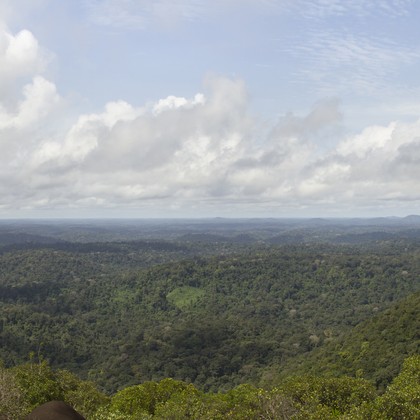 Inselbergs and rock outcrops
 Secondary forest and forest edge
- Highland forest of the Guiana Shield
-
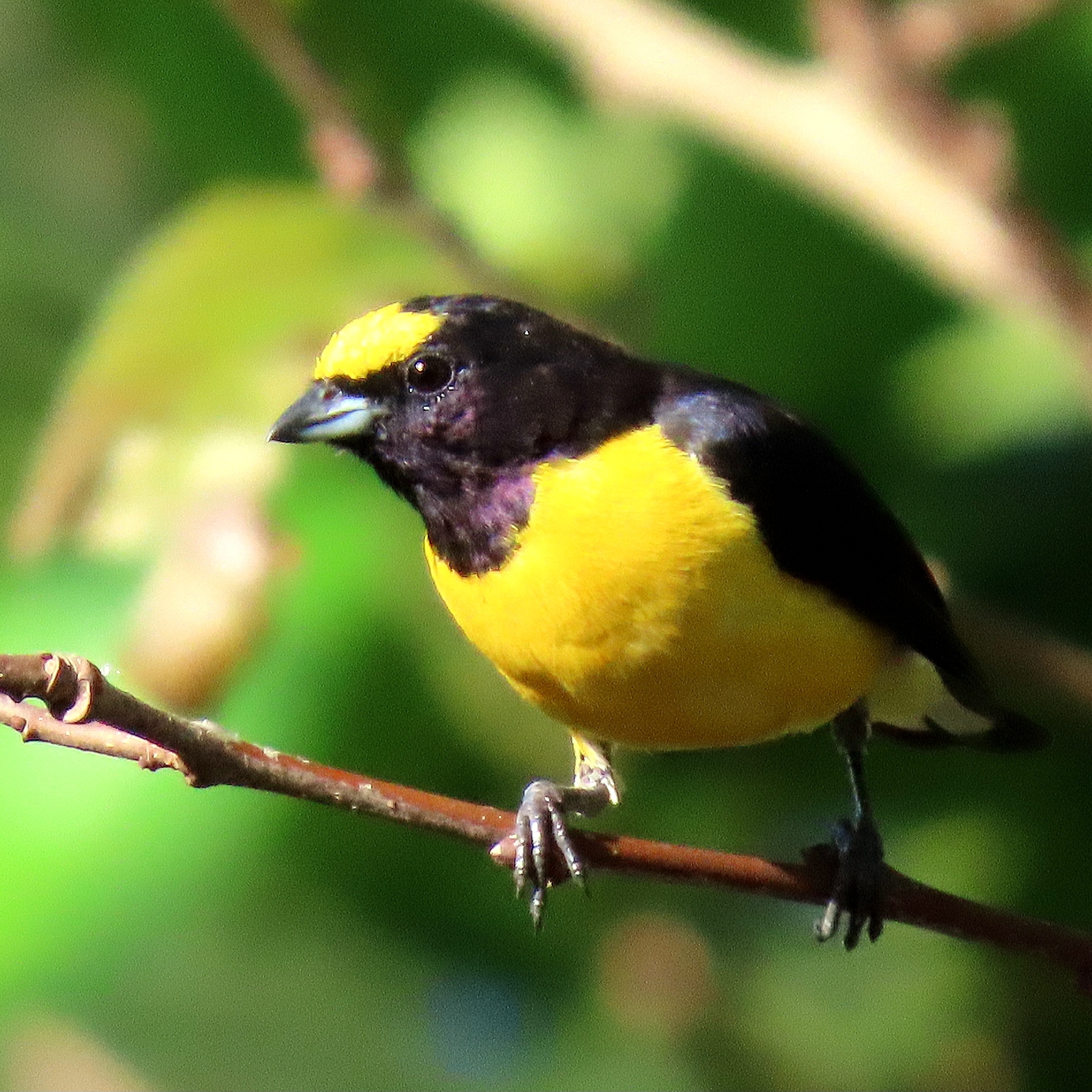
Purple-throated Euphonia
Euphonia chlorotica Cerradão and dry woodland
 Cerrado savanna
 Caatinga scrub
- Interior semi-deciduous forest
 Gallery forest and woodland islands of the Pantanal
 Várzea (whitewater flooded forest)
- Towns, cities and gardens
-

Finsch's Euphonia
Euphonia finschi- Savannas of the Guianas
- White-sand forest and campina
- Secondary forest and forest edge
 Restinga
 Plantations and agroforestry
-

Trinidad Euphonia
Euphonia trinitatis Dry forest and thorn scrub of northern Venezuela
 Llanos savanna
- Plantations and agroforestry
- Towns, cities and gardens
-

White-lored Euphonia
Euphonia chrysopasta Tall terra firme forest
- Várzea (whitewater flooded forest)
- Secondary forest and forest edge
 Floating meadows and river islands
 Igapó (blackwater flooded forest)
- Plantations and agroforestry
-

White-vented Euphonia
Euphonia minuta- Tall terra firme forest
- Secondary forest and forest edge
- Várzea (whitewater flooded forest)
- Plantations and agroforestry
-

Green-chinned Euphonia
Euphonia chalybea- Coastal lowland forest
- Montane forest of the Serra do Mar
- Araucaria forest
- Interior semi-deciduous forest
-

Violaceous Euphonia
Euphonia violacea- Coastal lowland forest
- Interior semi-deciduous forest
- Secondary forest and forest edge
- Plantations and agroforestry
- Towns, cities and gardens
-

Thick-billed Euphonia
Euphonia laniirostris- Dry forest and thorn scrub of northern Venezuela
- Montane forest of the Venezuelan coastal range
- Secondary forest and forest edge
- Várzea (whitewater flooded forest)
- Plantations and agroforestry
- Towns, cities and gardens
-
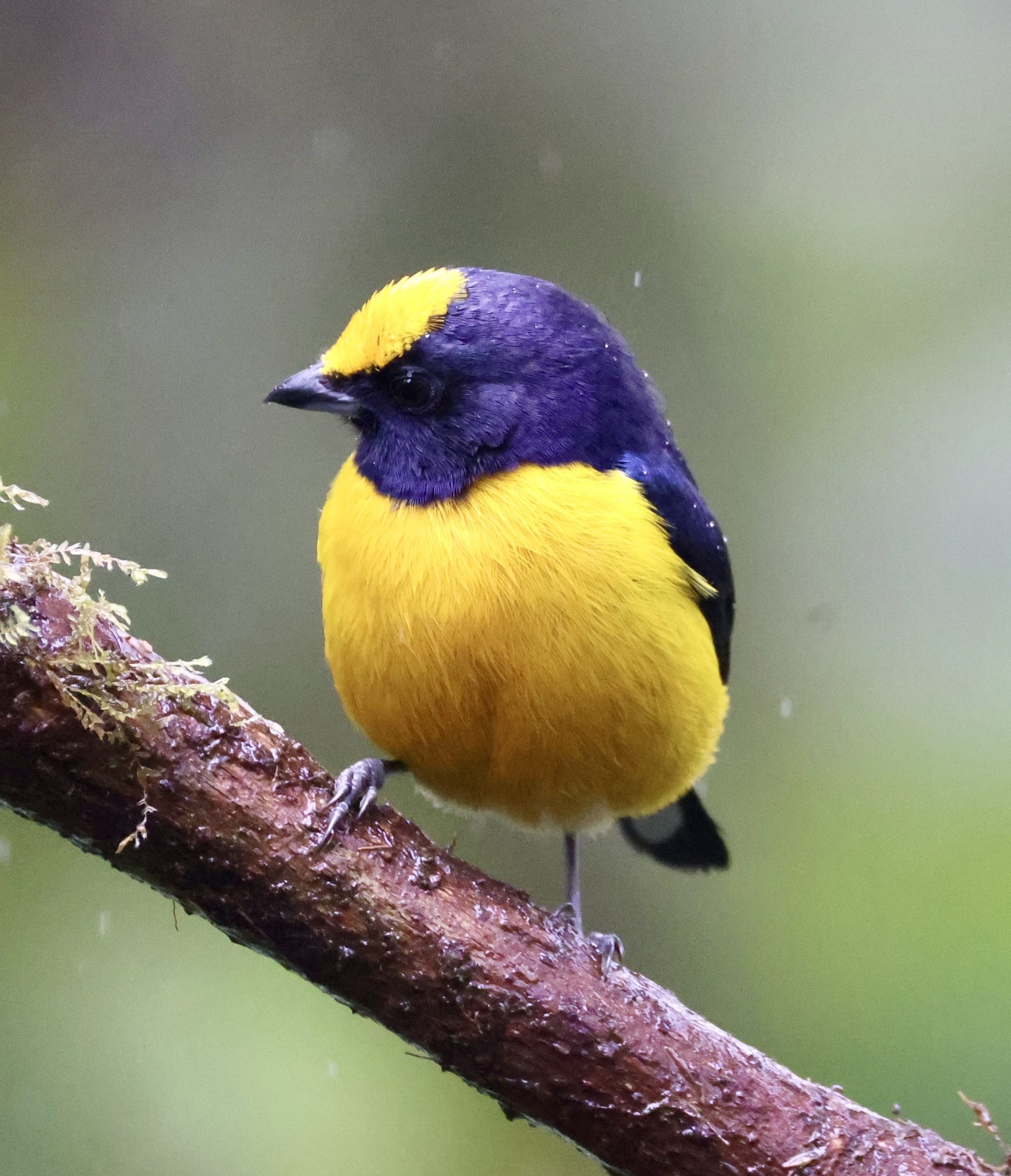
Orange-bellied Euphonia
Euphonia xanthogaster- Montane forest of the Venezuelan Andes and Perijá
- Montane forest of the Venezuelan coastal range
- Coastal lowland forest
- Montane forest of the Serra do Mar
- Tall terra firme forest
- Highland forest of the Guiana Shield
- Secondary forest and forest edge
-

Golden-sided Euphonia
Euphonia cayennensis- Tall terra firme forest
- Secondary forest and forest edge
- Highland forest of the Guiana Shield
- Várzea (whitewater flooded forest)
- White-sand forest and campina
-

Rufous-bellied Euphonia
Euphonia rufiventris- Tall terra firme forest
- Várzea (whitewater flooded forest)
- Secondary forest and forest edge
 Bamboo and liana forest
- Igapó (blackwater flooded forest)
-

Chestnut-bellied Euphonia
Euphonia pectoralis- Coastal lowland forest
- Montane forest of the Serra do Mar
- Interior semi-deciduous forest
- Araucaria forest
- Restinga
- Plantations and agroforestry
Spinus 6 species
-

Lesser Goldfinch
Spinus psaltria- Montane forest of the Venezuelan Andes and Perijá
- Montane forest of the Venezuelan coastal range
- Dry forest and thorn scrub of northern Venezuela
 Pasture and arable land
- Towns, cities and gardens
-

Andean Siskin
Spinus spinescens- Montane forest of the Venezuelan Andes and Perijá
- Montane forest of the Venezuelan coastal range
- Pasture and arable land
-

Yellow-faced Siskin
Spinus yarrellii Northeastern coastal forest
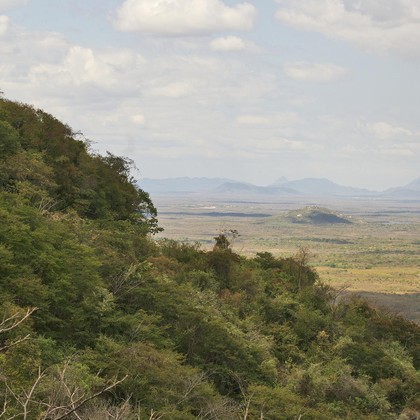 Brejos and highland forest
 Dry forest of the north-east
- Plantations and agroforestry
- Caatinga scrub
-

Yellow-bellied Siskin
Spinus xanthogastrus- Montane forest of the Venezuelan Andes and Perijá
- Pasture and arable land
-

Red Siskin
Spinus cucullatus- Dry forest and thorn scrub of northern Venezuela
- Savannas of the Guianas
- Montane forest of the Venezuelan coastal range
- Llanos savanna
-

Hooded Siskin
Spinus magellanicus- Interior semi-deciduous forest
- Araucaria forest
- Cerrado savanna
 Pampa grassland
- Towns, cities and gardens
- Savannas of the Guianas
Introduced species 1 species
Species that do not occur here by nature but were brought in or escaped and have held on since. They follow the sequence of the list, not the genera.
