All species › Passerines › Gnateaters
Gnateaters | Conopophagidae
Muggeneters | Jejeneros | Gnateaters
The gnateaters are a small South American family represented in this guide by five species in two genera. Four belong to Conopophaga and live in the undergrowth of humid forest in the Amazonian lowlands and on the lower eastern slopes of the Andes. The fifth, the Rufous-crowned Antpitta (Pittasoma rufopileatum), lives in humid forest of the Chocó in western Colombia and north-western Ecuador; the genus Pittasoma was long placed with the antpittas, but DNA studies moved it to the gnateaters. These are birds of the dim forest floor and the lowest vegetation, with long legs, a short tail, a large head and a stout bill; Pittasoma is larger and markedly long-legged. In most Conopophaga species the male has a white tuft behind the eye. They sit still on a low perch or move over the ground in hops, searching the leaf litter for insects, spiders and other small animals. The family generally builds an open cup low in the vegetation. They are shy birds, more often heard than seen.
Native species 5 species
Species that occur here by nature: breeding birds, winter visitors and passage migrants. They are arranged by genus, in the sequence of the list.
Pittasoma 1 species
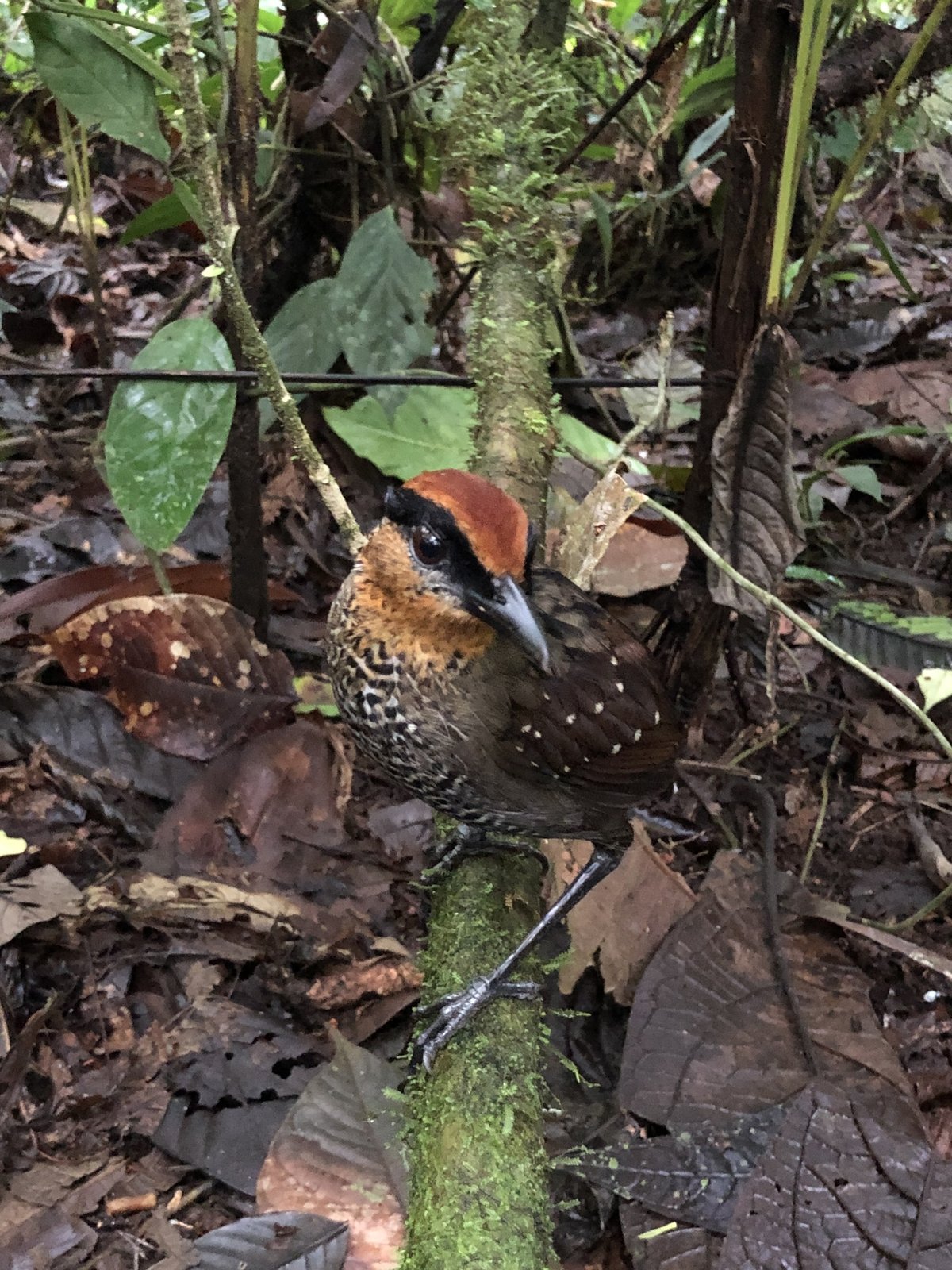


Conopophaga 4 species
-
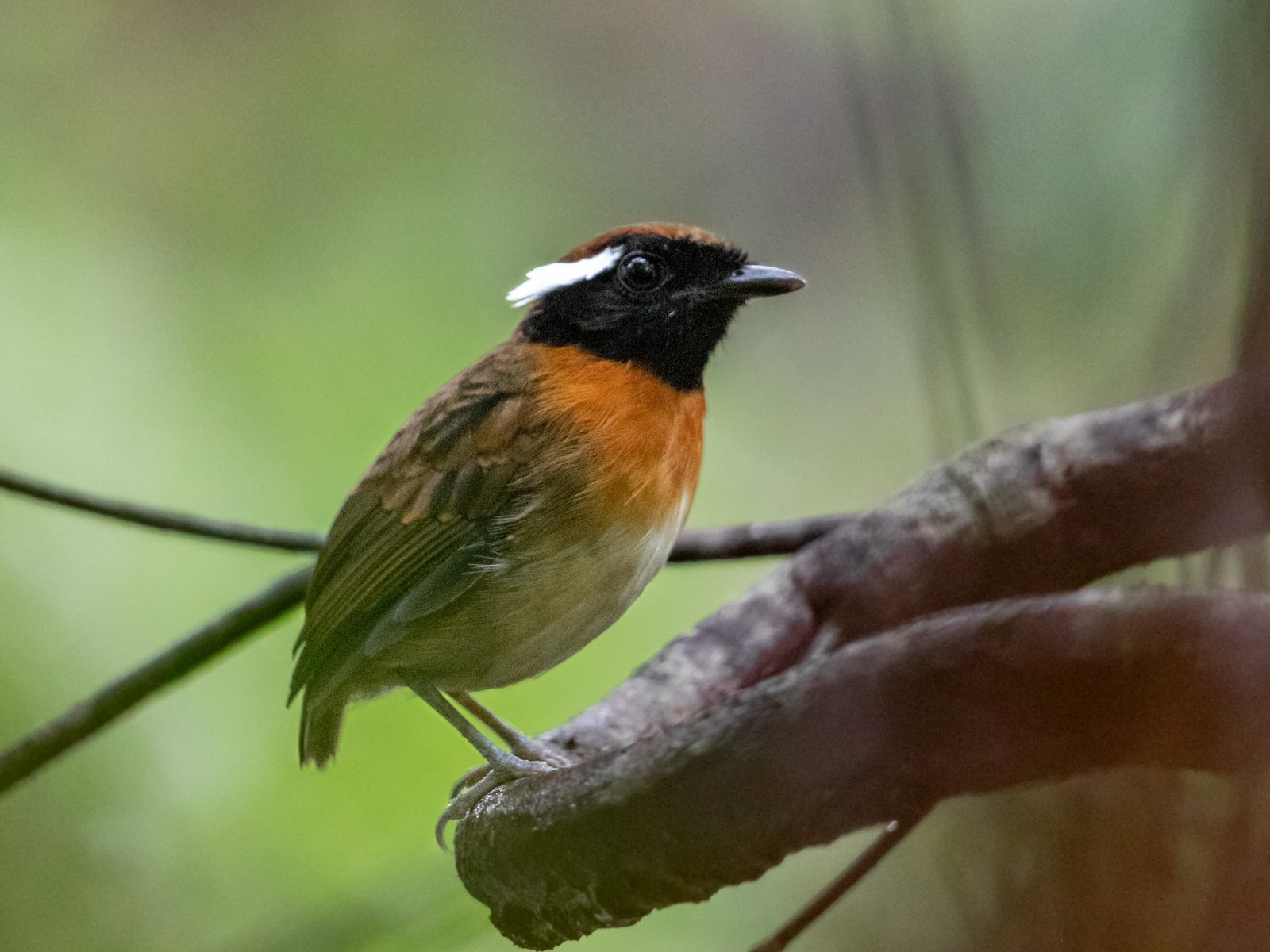
Chestnut-belted Gnateater
Conopophaga aurita Amazonian terra firme rainforest
 Secondary forest and forest edge
-

Ash-throated Gnateater
Conopophaga peruviana- Amazonian terra firme rainforest
- Secondary forest and forest edge
 Várzea, igapó and river islands
-
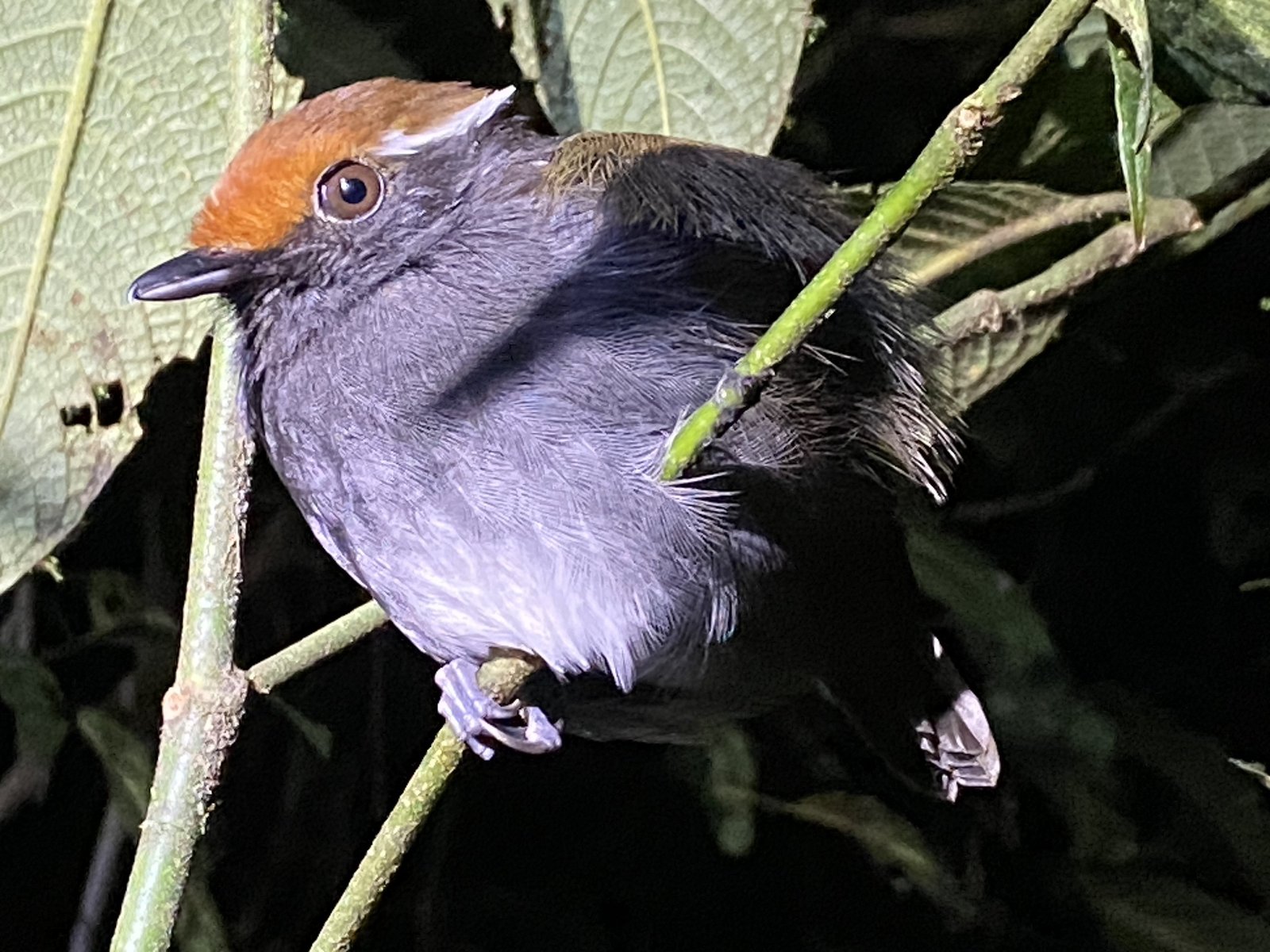
Chestnut-crowned Gnateater
Conopophaga castaneiceps Northern Andean subtropical forest
 Eastern Andean foothill forest
 Lower Yungas forest
- Secondary forest and forest edge
-
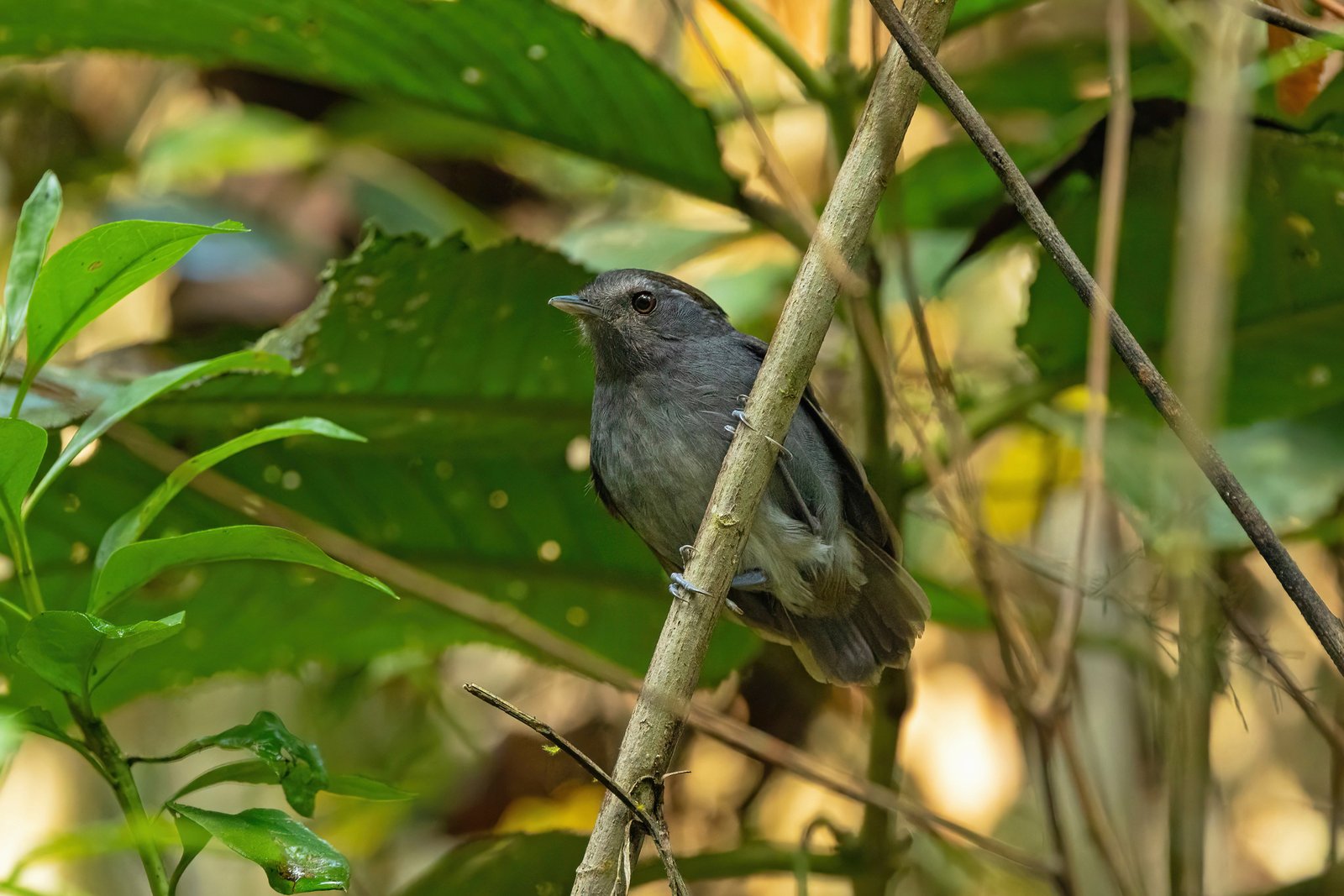
Slaty Gnateater
Conopophaga ardesiaca- Lower Yungas forest
- Eastern Andean foothill forest
- Secondary forest and forest edge
 Upper Yungas cloud forest