All species › Passerines › Royal flycatchers and allies
Royal flycatchers and allies | Onychorhynchidae
Koningstirannen | Mosqueros reales y afines | Royal flycatchers and allies
This small family was long placed with the tyrant flycatchers and was split off only on the basis of DNA studies. In this guide it numbers five species in three genera, of the lower and middle layers of humid forest in the Chocó, the Amazonian lowlands at the eastern foot of the Andes and the lower mountain slopes. The bill is flat and broad, with long bristles at the corners of the mouth, suited to catching flying insects. The royal flycatcher has a crest that usually lies flat over the back of the head but opens in display or excitement into a broad fan, red in the male and yellow-orange in the female, with blue-black tips. The Myiobius species are olive with a bright yellow rump; they move restlessly through the foliage, fanning the tail and drooping the wings to flush insects, and often join mixed flocks. The Ruddy-tailed Flycatcher is a tiny cinnamon bird that sallies for insects from a perch. The nests are striking: the royal flycatcher hangs a long, ragged nest, sometimes more than a metre long, from a branch over a stream, and Myiobius builds a hanging pouch with a side entrance. The clutch is usually two eggs.
Native species 5 species
Species that occur here by nature: breeding birds, winter visitors and passage migrants. They are arranged by genus, in the sequence of the list.
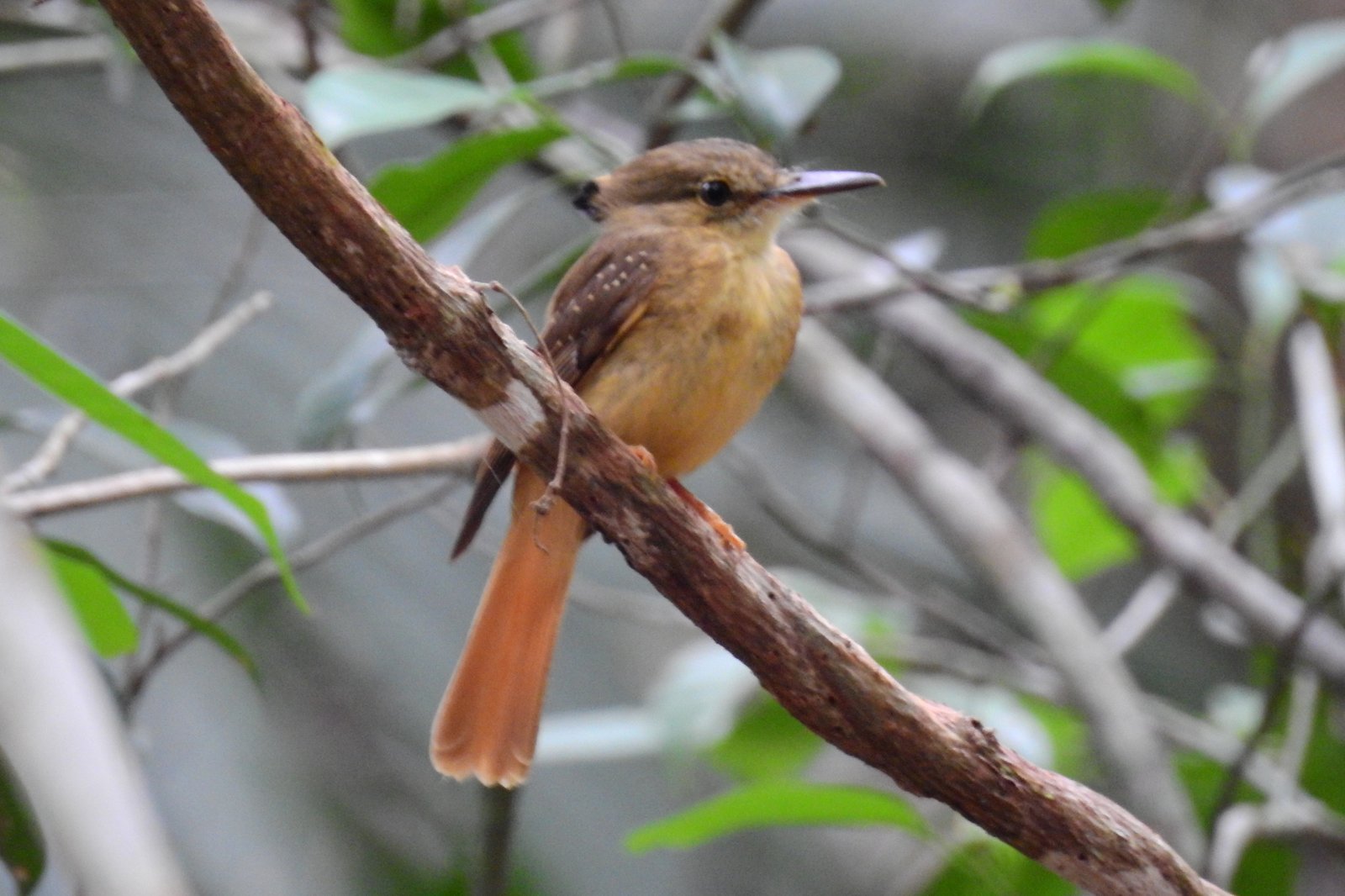

Terenotriccus 1 species
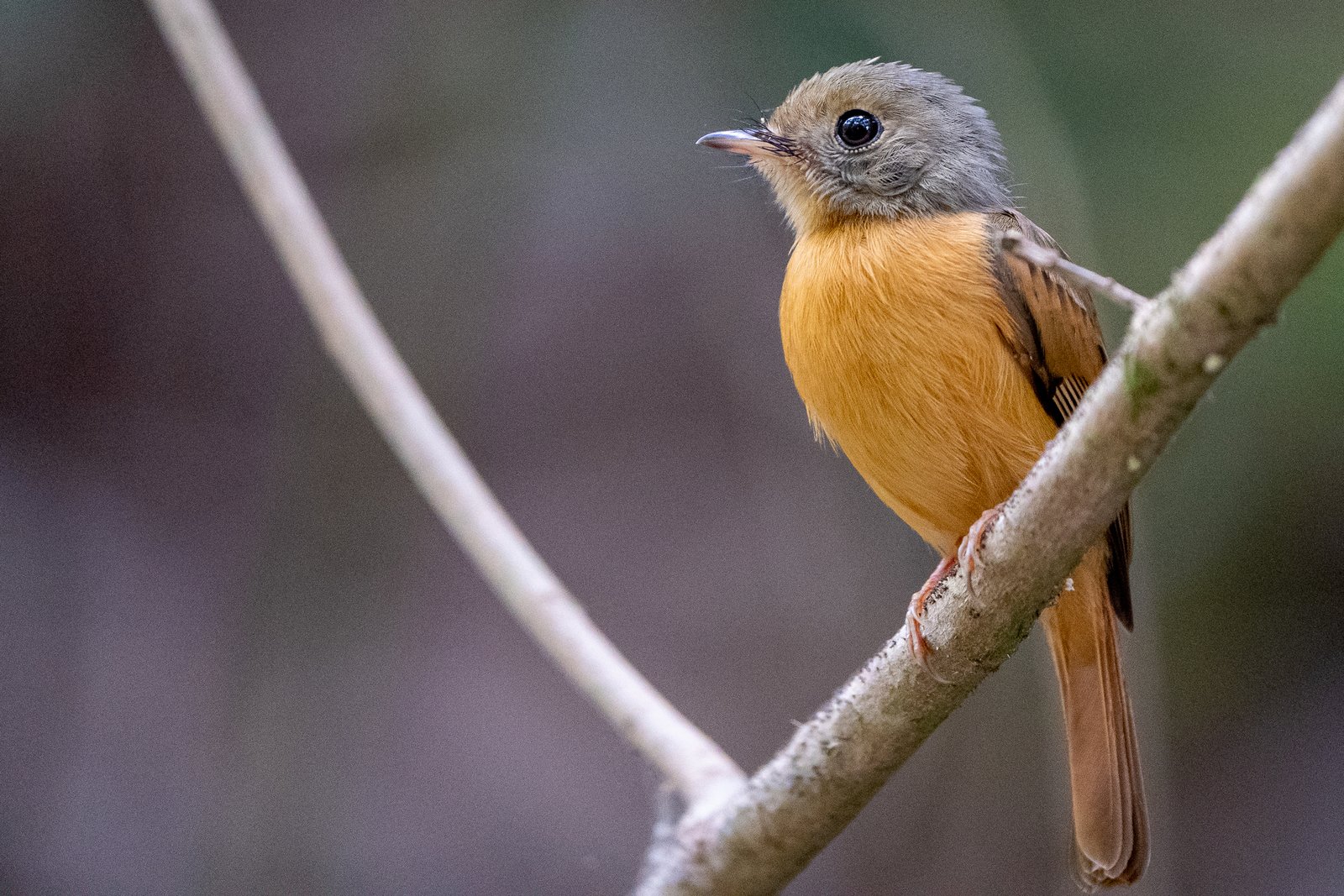
Myiobius 3 species
-
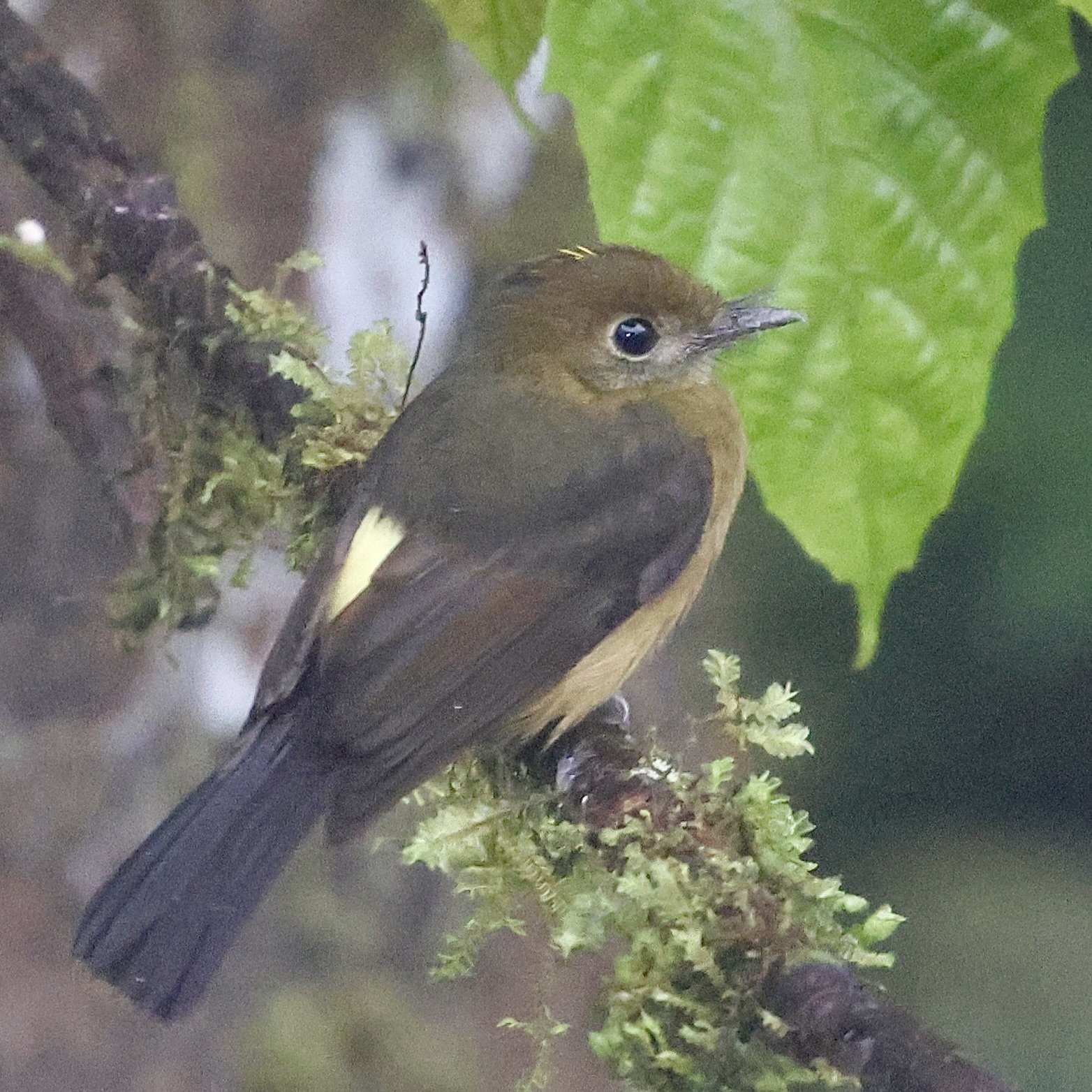
Tawny-breasted Myiobius
Myiobius villosus Northern Andean subtropical forest
 Eastern Andean foothill forest
 Lower Yungas forest
-
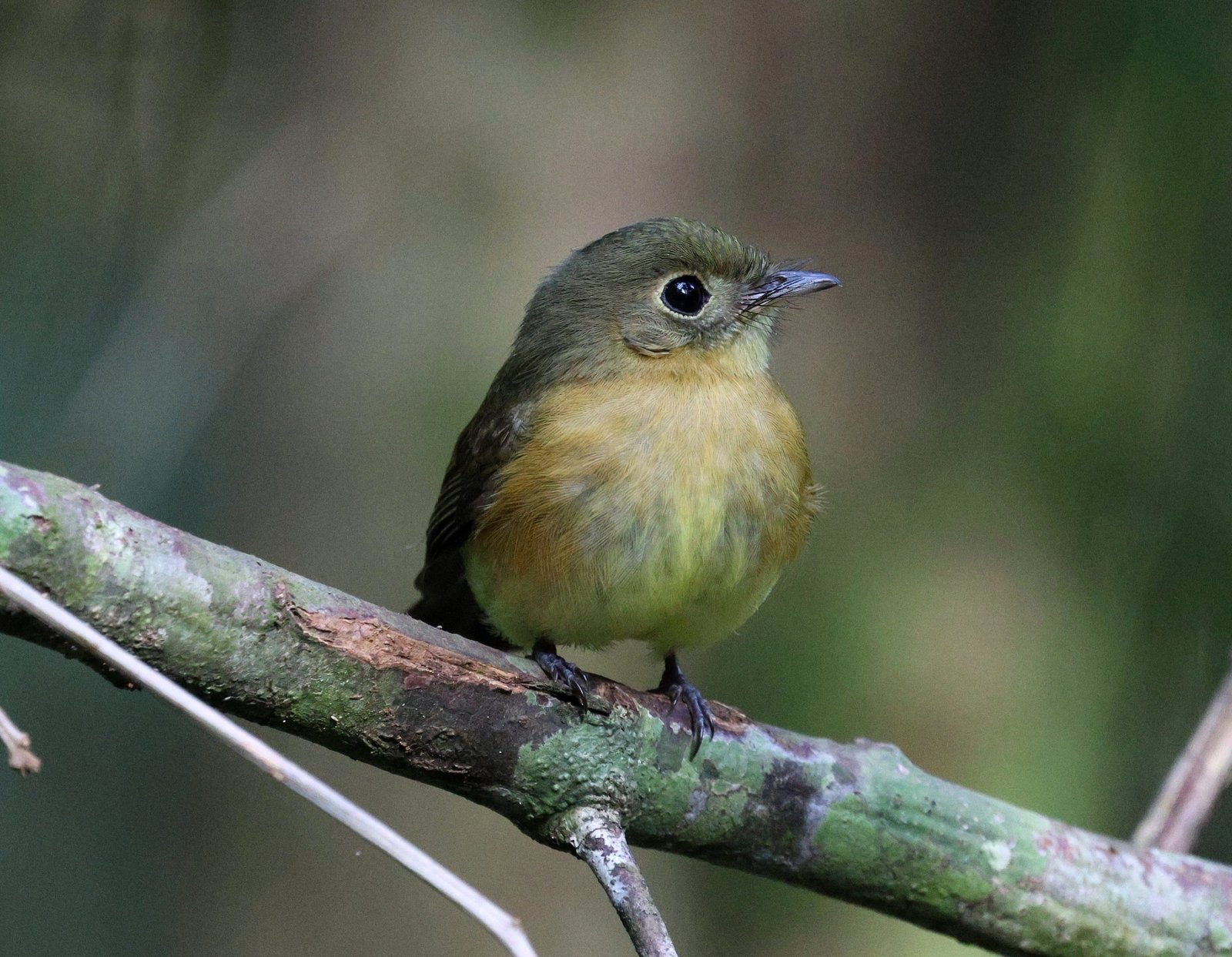
Whiskered Myiobius
Myiobius barbatus Amazonian terra firme rainforest
 Chocó rainforest
 Western Ecuador humid forest
- Eastern Andean foothill forest
 Secondary forest and forest edge
-
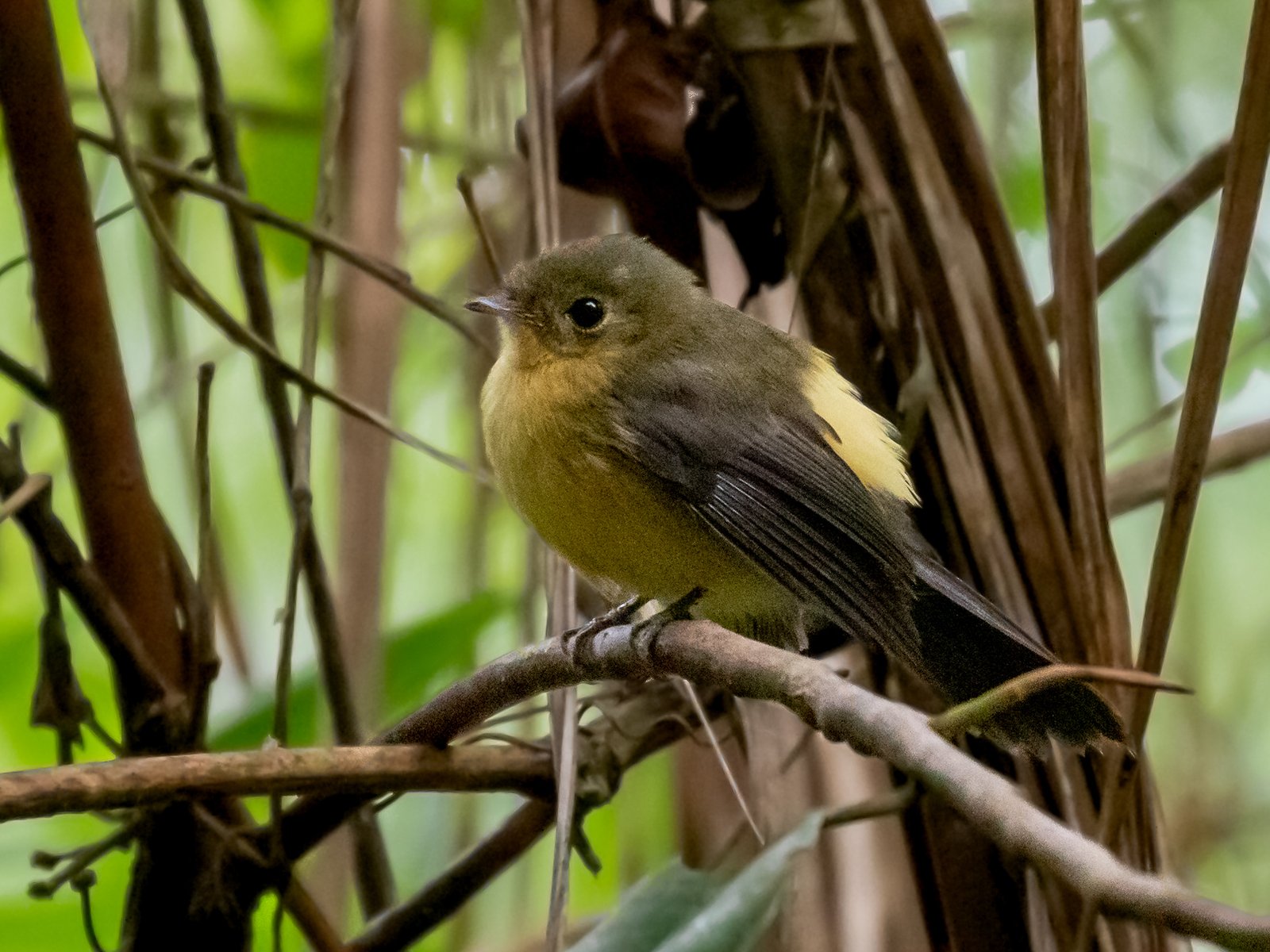
Black-tailed Myiobius
Myiobius atricaudus- Western Ecuador humid forest
 Várzea, igapó and river islands
- Chocó rainforest
- Amazonian terra firme rainforest
- Secondary forest and forest edge