All species › Swifts › Swifts › American Black Swift
American Black Swift | Cypseloides niger
Zwarte gierzwaluw | Vencejo negro | Taperuçu-negro-americano
The American Black Swift is a large, dark swift that breeds from Alaska and Canada to Central America and the Caribbean. Studies with geolocators showed that breeding birds from North America winter in the Amazon basin of Brazil. In the guide area the species is only a rare vagrant or passage migrant, with very few records.
Voice
Rarely vocal; soft, twittering plik-plik calls, mainly at the nest site.
Recording: Richard E. Webster — CC BY-NC-SA 4.0 · xeno-canto
Identification
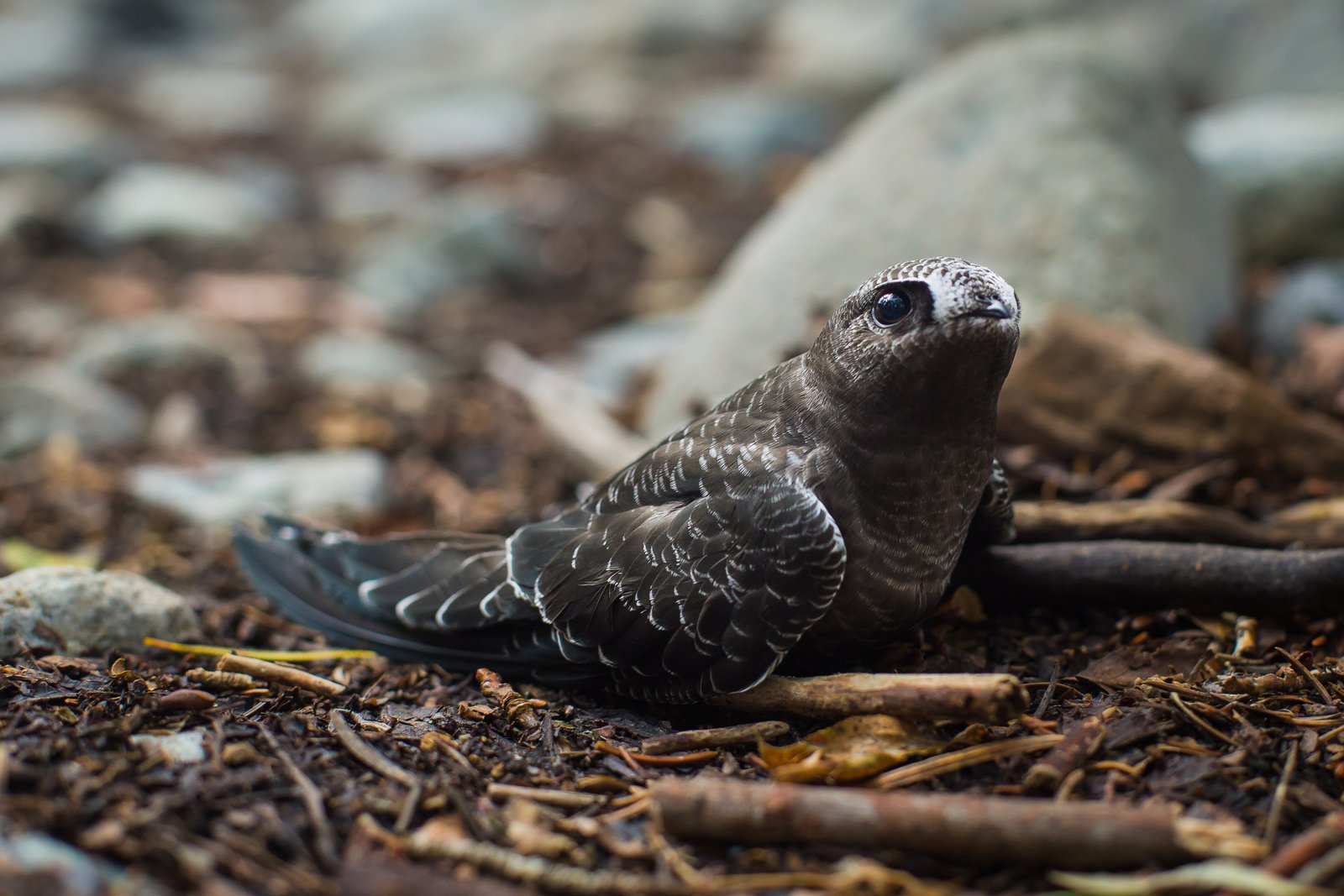
17–18 cm, with long, fairly broad wings and a slightly notched tail, a little more deeply forked in the male. The plumage is almost entirely blackish brown, with a frosted greyish-white forehead in fresh plumage. Females and juveniles have pale, scaly fringes to the feathers of the belly and undertail coverts. It often flies with slow wingbeats and long glides.
Confusion species
White-collared Swift Streptoprocne zonaris is larger, with a white collar; juveniles sometimes show a faint collar. White-chinned Swift Cypseloides cryptus is smaller, with a shorter, square tail and a larger head. Rothschild's Swift Cypseloides rothschildi is browner, with a square tail, and occurs only in Bolivia. In the field a single bird can often be identified with certainty only from photographs.
Habitat
In the breeding range over mountains and coasts, with nests on wet rock faces behind waterfalls and in sea caves. In the winter quarters it hunts high over lowland rainforest. It catches flying insects, often at great height.
Where the bird is most at home, classified by the vegetation units of the Andes and the west coast.


Range and movements
In the guide area only a rare vagrant; there are very few, partly unconfirmed records, mainly from the north (Colombia). Migrants to the Amazon basin may pass over the north of the guide area. Outside the guide area it breeds from south-eastern Alaska and western Canada to Central America and on some Caribbean islands; North American birds winter in the western Brazilian Amazon.
How and when to look
In the northern autumn and spring look for large, dark swifts in flocks of other swifts over the lowlands and foothills. A record can only be properly documented with photographs or sound recordings.
Conservation status
Vulnerable. The North American population has declined steeply; possible causes include the decline of flying insects and changes in water flow at nest sites due to climate change.
Scientific name
Cypseloides niger | (Gmelin, 1789)
Gmelin described the species in 1789 as Hirundo nigra; because it was later moved to another genus, the author and year stand in brackets. The genus Cypseloides was introduced in 1848 by Streubel. The genus name combines the genus Cypselus (from Greek kupselos, 'swift') with Greek -oidēs, 'resembling'. The species name comes from Latin niger, 'black', after the dark plumage. The specimen the first description was based on came from Hispaniola.