All species › Passerines › Tapaculos › Ampay Tapaculo
Ampay Tapaculo | Scytalopus whitneyi
Ampaytapaculo | Churrín de Ampay | Macuquinho-de-ampay
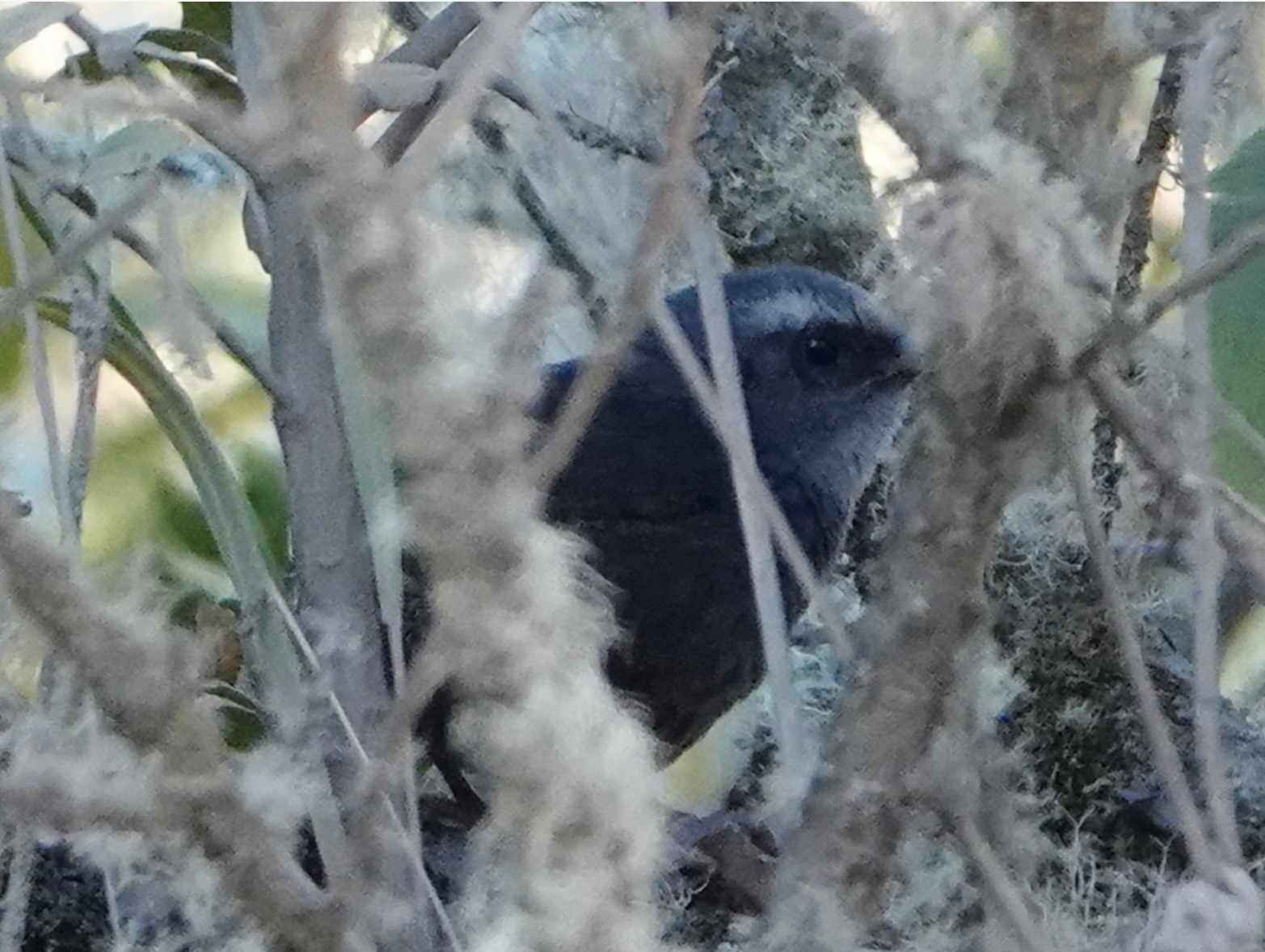
The Ampay Tapaculo is a small, dark grey tapaculo of the high Andes of central Peru, described as a species only in 2020. It lives hidden like a mouse in dense shrubbery, bunchgrass and low forest around the treeline. The name refers to the Ampay forest above Abancay, where the first specimens and sound recordings were collected; the scientific name honours the American ornithologist Bret M. Whitney.
Voice
The main song is a single short note repeated about one and a half to two times per second, sometimes for a minute and a half or longer. There is also a long series of regularly repeated, churring notes (trrr), lasting up to a minute. The songs of birds in Ayacucho and Apurímac differ slightly.
Recording: Niels Krabbe — CC BY-NC-SA 4.0 · xeno-canto
Identification
10–11 cm, round and short-tailed, often with the tail cocked. The male is dark slate-grey, with a darker face, a paler crown forming a faint pale eyebrow, and a paler throat. The wing feathers have brown to rufous tips; the flanks and undertail coverts are ochre-brown with dark bars. The female is dark rufous-brown above, with a distinct pale eyebrow, a pale grey throat and breast and a warm brown belly. Juveniles, as in related tapaculos, are browner and densely barred.
Confusion species
Puna Tapaculo Scytalopus simonsi lives mainly further south-east, on the puna and in Polylepis woodland; the female is warmer rufous and the song differs. Vilcabamba Tapaculo Scytalopus urubambae lives east of the Apurímac, in the Cordillera Vilcabamba. Jalca Tapaculo Scytalopus frankeae lives north of the Mantaro; the male has a silvery eyebrow and the song consists of long series of churrs. In this region tapaculos are separated mainly by voice and range.
Habitat
Shrubbery and bunchgrass on steep, rocky slopes, montane forest edge and patches of Podocarpus and Polylepis, at roughly 3150 to 4500 m. It lives on or just above the ground in dense vegetation and presumably feeds on small invertebrates. Nothing is known about the nest.
Where the bird is most at home, classified by the vegetation units of the Andes and the west coast.


Range and movements
Only in Peru, in two areas about 100 km apart: in Apurímac between the Apurímac and Pampas rivers, including Ampay, and in eastern Ayacucho south of the Mantaro. Absent from Colombia, Ecuador, Bolivia and the Galápagos. Does not occur outside the guide area.
- Resident
- dark = core range, pale = thinly spread
How and when to look
Visit the Ampay National Sanctuary above Abancay and listen in the early morning along the forest edge and in the shrubbery around the treeline for the long series of identical notes. Singing birds sometimes appear briefly on a rock or low branch.
Conservation status
Not Evaluated. The known range is very small, although suitable habitat nearby has hardly been surveyed. In the protected area of Ampay the species is common, in Ayacucho scarce and local; the describers considered Near Threatened appropriate.
Scientific name
Scytalopus whitneyi | Krabbe, Fjeldså, Hosner, Robbins & Andersen, 2020
Krabbe, Fjeldså, Hosner, Robbins & Andersen described the species in 2020 and placed it straight away in the genus where it still stands. The genus Scytalopus was introduced in 1837 by Gould. The genus name combines Greek skutalē or skutalon, 'stick', with pous, 'foot'. The species name whitneyi honours Bret M. Whitney, American ornithologist and expert on South American bird sounds. The specimen the first description was based on came from Cerro Turronmocco, Apurímac, Peru.