All species › Passerines › New World sparrows › Apurimac Brushfinch
Apurimac Brushfinch | Atlapetes forbesi
Apurímacstruikgors | Atlapetes de Apurímac | Tico-tico-de-apurímac
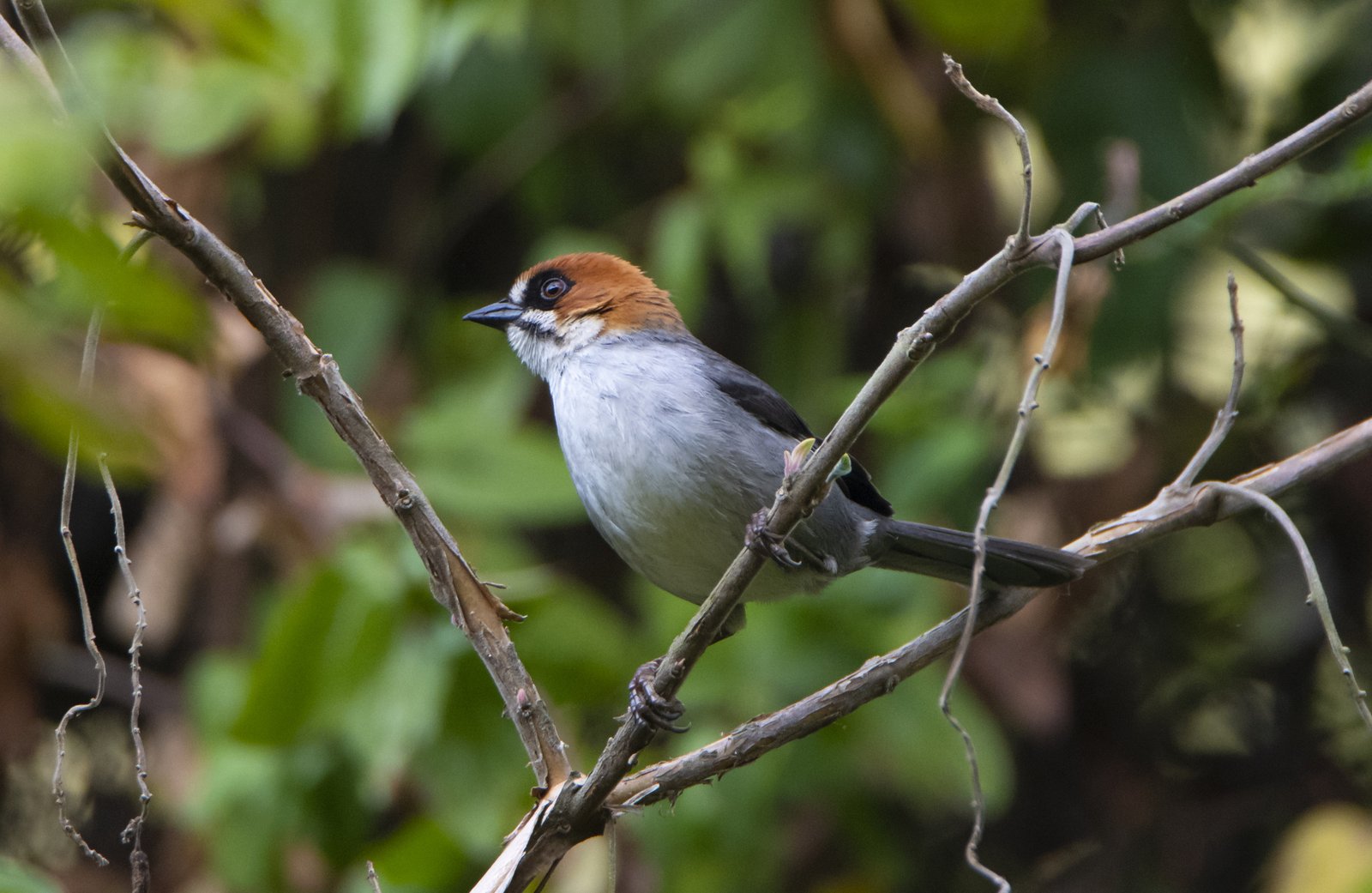
The Apurimac Brushfinch is a grey brushfinch with a rufous head from the mountain valleys of Apurímac and adjacent parts of southern Peru. It was described in 1947 as a subspecies of Rufous-eared Brushfinch, but turned out not to be closely related to it. The name refers to the department of Apurímac, where the first specimen was collected.
Voice
The song is a hesitant series of thin whistles and slow trills. Excited pairs duet with high chattering; the call is a series of high pi notes.
Recording: Niels Krabbe — CC BY-NC-SA 3.0 · xeno-canto
Identification
18–19 cm. The head and nape are mostly rufous, with a black forehead and a white spot above the lores. The throat is white, with a white lower cheek and a thin black line below it. The upperparts and underparts are grey. The sexes are alike. Juveniles are browner, with a whitish throat and a brown-mottled breast and flanks.
Confusion species
Black-spectacled Brushfinch Atlapetes melanopsis in the Mantaro Valley, further north-west, has a large black patch around the eye. Cuzco Brushfinch Atlapetes canigenis around Cusco has only a rufous crown, a grey face and no white throat. Rusty-bellied Brushfinch Atlapetes nationi on the western slope has a dark crown and a cinnamon belly. Rufous-eared Brushfinch Atlapetes rufigenis also has a rufous head, but lives much further north.
Habitat
Montane scrub and Polylepis woodland in the mountain valleys, roughly between 2700 and 4100 m; also at the edges of montane forest with Podocarpus, as on Ampay. It forages in pairs low in the vegetation and on the ground for insects and seeds.
Where the bird is most at home, classified by the vegetation units of the Andes and the west coast.


Range and movements
Only in Peru: from far eastern Ayacucho through much of Apurímac to just into western Cusco. Absent from Colombia, Ecuador, Bolivia and the Galápagos. Does not occur outside the guide area.
- Resident
- dark = core range, pale = thinly spread
How and when to look
Ampay National Sanctuary above Abancay is a place to look for it, in scrub and at forest edges. Pairs are active in the early morning and duet when excited.
Conservation status
Least Concern. The range is small and the population is thought to be declining through deforestation; on Ampay Podocarpus is still being cut. Part of the forest is protected and reforestation is under way. Locally fairly common.
Scientific name
Atlapetes forbesi | Morrison, 1947
Morrison described the species in 1947 and placed it straight away in the genus where it still stands. The genus Atlapetes was introduced in 1831 by Wagler. The genus name comes from Greek: the mythical titan Atlas and petēs, 'flyer'. The species name honours Sir Courtenay Forbes, British ambassador to Peru, who assisted the describer Alastair Morrison during his travels in Peru. The specimen the first description was based on came from Pomayaco, Pampas valley, Apurímac, Peru.