All species › Passerines › New World sparrows › Black-spectacled Brushfinch
Black-spectacled Brushfinch | Atlapetes melanopsis
Zwartbrilstruikgors | Atlapetes de anteojos | Tico-tico-de-óculos-pretos
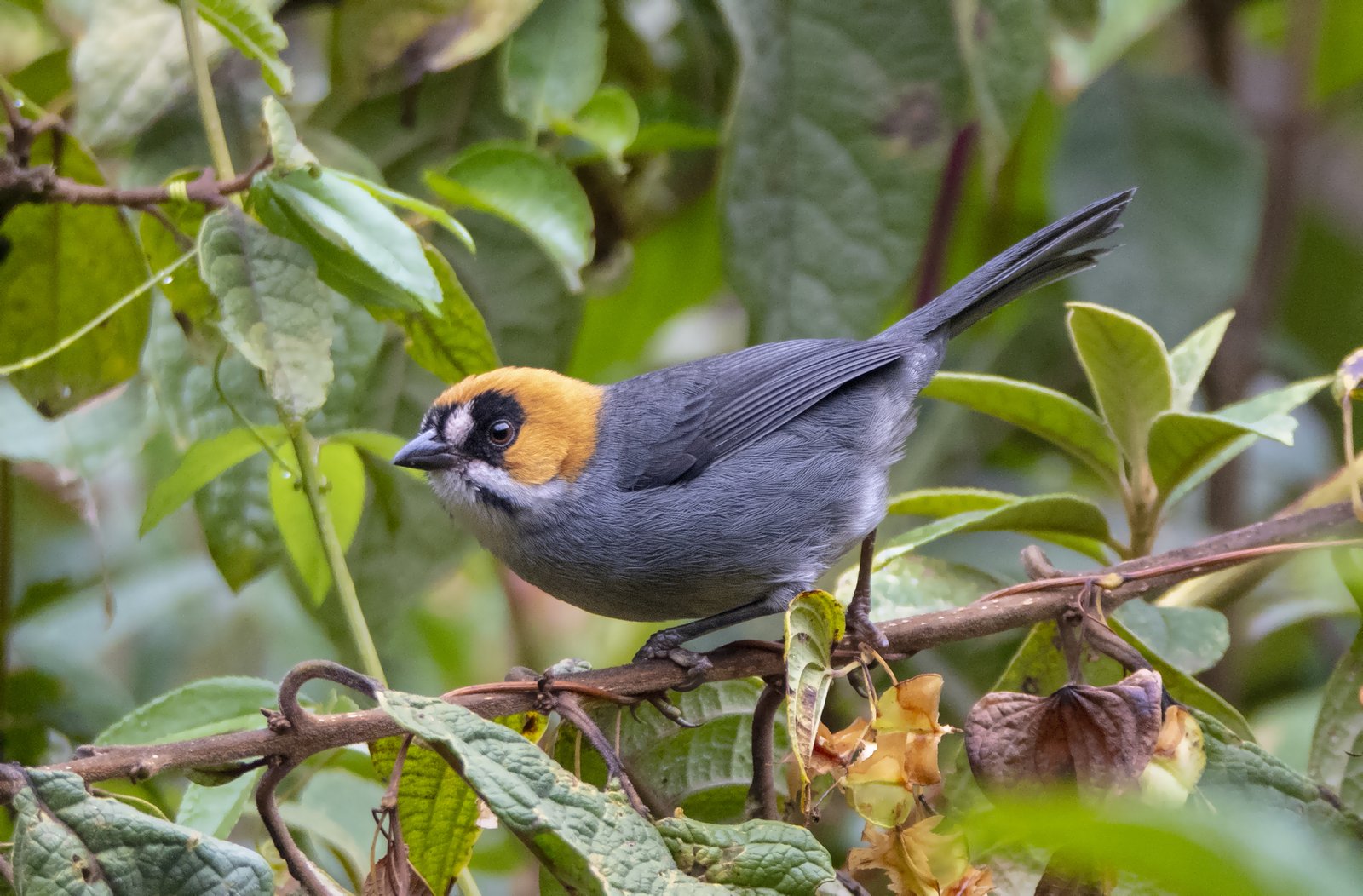
The Black-spectacled Brushfinch was described only in 1999 and occurs only in the upper Mantaro drainage in central Peru. A large black patch around the eye on an orange-rufous head gives it its name. It lives in scrub and at forest edges, often on steep, rocky slopes.
Voice
The song is a simple whistled phrase, sometimes followed by repeated descending notes. Pairs duet when excited; the call is a lisping whistled note.
Recording: GABRIEL LEITE — CC BY-NC-SA 4.0 · xeno-canto
Identification
17–18 cm. The head and nape are mostly orange-rufous, with a black forecrown and lores and a large black patch around the eye. A white streak runs above the lores; the lower cheek is white, with a black line below it. The upperparts are grey, the tail black and the wings blackish; the underparts are grey, with a paler throat. The sexes are alike.
Confusion species
Apurimac Brushfinch Atlapetes forbesi lives further south-east and lacks the large black patch around the eye. Rusty-bellied Brushfinch Atlapetes nationi on the western slope has a dark crown and a cinnamon belly. Rufous-collared Sparrow Zonotrichia capensis is smaller, with a streaked back and a rufous collar.
Habitat
Edges of montane forest and scrub on the slopes and in the side valleys of the Mantaro, between about 2500 and 3400 m, especially on steep, rocky sites and in ravines where natural vegetation remains. It forages low in the bushes for insects and seeds.
Where the bird is most at home, classified by the vegetation units of the Andes and the west coast.


Range and movements
Only in Peru, in the upper Mantaro drainage in the departments of Junín and Huancavelica. Absent from Colombia, Ecuador, Bolivia and the Galápagos. Does not occur outside the guide area.
- Resident
- dark = core range, pale = thinly spread
How and when to look
Search vegetated ravines and shrubby slopes along the Mantaro and its side valleys in the early morning, when pairs sing and duet. Look for the black patch around the eye in the orange-rufous head.
Conservation status
Near Threatened. The range is small and the population, estimated at 1500 to 7000 mature individuals, is thought to be declining. Burning of slopes for pasture prevents the regeneration of natural vegetation, except on steep, rocky sites and in ravines. From 2000 to 2021 the species was listed as Endangered.
Scientific name
Atlapetes melanopsis | Valqui H & Fjeldså, 2002
Valqui H & Fjeldså described the species in 2002 and placed it straight away in the genus where it still stands. The genus Atlapetes was introduced in 1831 by Wagler. The genus name comes from Greek: the mythical titan Atlas and petēs, 'flyer'. The species name comes from Greek melas, 'black', and opsis, 'face', for the black mask; it replaced melanops (1999), which was preoccupied. The specimen the first description was based on came from Mantaro valley, central Peru.